
The Athletic has live coverage of the First Four from 2026 Men’s March Madness.
Homer Drew sat comfortably in his Phoenix home on a Sunday afternoon, an eye fastened on the clock, waiting for his grandkids to arrive. He didn’t want to waste a second of their visit.
The calendar had rolled to March, a month that for the 41 years he coached never belonged to peace or stillness.
It had been nearly 30 years since the moment that would forever define his career, one that made an arena tremble with the particular voltage that only this month knows how to generate.
BEAT OUR EXPERTS
Predict how you think the tournament will
play out. Can you beat one of our experts?
In 1998, his Valparaiso team had 2.5 seconds left in the NCAA Tournament’s first round against fourth-seeded Ole Miss. The ball rocketed the length of the floor, then redirected to Bryce Drew, Homer’s son, just beyond the perimeter.
Bryce Drew gathered the ball in rhythm and sent it flying toward history. The chalkiness of the bracket collapsed — one blink, and a No. 13 seed from northwest Indiana had turned March on its head.
Forever known simply as “The Shot,” the miracle carved Valparaiso into the mythology of March, embodying the moment the tournament always seems to deliver, where an afterthought program can conquer the brightest stage.
But with another tournament nearing all these years later, Homer Drew had been hearing a different version of the game.
“Dad,” his sons have told him, “be happy you retired.”
Bryce and Scott Drew — both head coaches, with Scott winning a national title at Baylor in 2021— tend to end the conversation when it wanders toward what college basketball has become and what it means for those improbable jolts of magic — ones that feel the most fragile to Drew.
For generations, March Madness delivered on its name. A tournament in which impossibility gives out and the bracket bends to the whims of teams buried deep. Valpo. Or Fairleigh Dickinson. Or VCU. But across the sport, coaches and former players increasingly wonder whether the delicate alchemy that produced those runs is disappearing. In a landscape governed by money and movement, are Cinderella stories becoming harder to conjure?
The 2025 NCAA Tournament opened with the customary early tremors — seven first-round games when teams topped better-seeded opponents, followed by four more in the second round. But the total of 11 lagged behind each of the previous three years, and once opening weekend passed, the bracket recalibrated around the sport’s giants.
Only one double-digit survivor lingered — No. 10 Arkansas, out of the mighty SEC — before Texas Tech extinguished its run in the Sweet 16.
By the final weekend, the bracket looked almost preordained: all four No. 1 seeds marched into the Final Four for the first time in 17 years and just the second time.
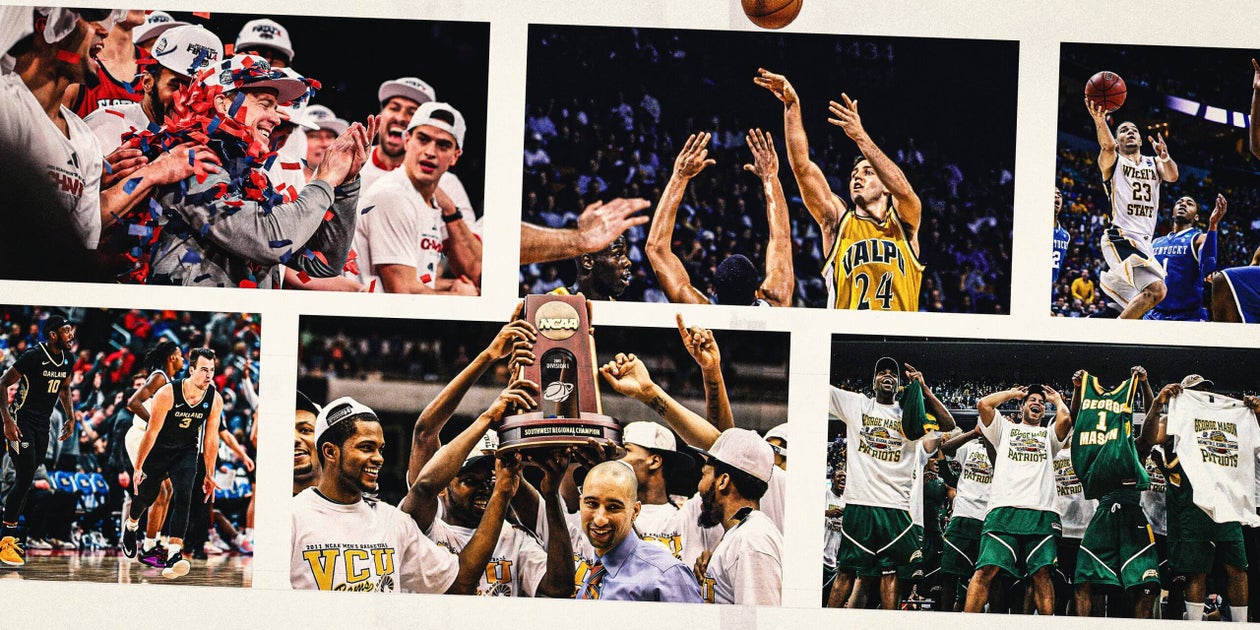
Whether Cinderellas are going the way of phone books is up for debate. But if so, what becomes of March — the month that delivered George Mason’s 2006 Final Four run, VCU’s charge there five years later or Florida Atlantic’s unlikely trip to the national semifinal three years ago?
Some around the sport do caution against that leap, with only a small sample of single-elimination games in the era of player compensation and immediate eligibility for transfers. ESPN analyst and former Duke center Jay Bilas, for one, warned of jumping to conclusions, arguing the sport’s new economics may spread talent more widely.
The tournament’s design safeguards some possibility of chaos — every conference champion earns an automatic bid, funneling dozens of low- and mid-majors into the bracket each year with a chance to rattle it. This March’s candidates include No. 10 Santa Clara and No. 11 Miami (Ohio) and No. 13 Hofstra. Of course, changes could be coming there, too.
“The average fan wants to see a 16 (seed) beat a 1 and a 15 beat a 2,” said Tobin Anderson, whose No. 16 Fairleigh Dickinson team knocked off top-seeded Purdue in 2023. “That’s what the beauty of the NCAA Tournament is.”
Like Cinderella gliding unnoticed into the ballroom, the teams that wind up warping March’s history often arrive from towns most couldn’t place on a map.
All winter, they live in leagues that float somewhere outside the sport’s spotlight. Tuesday nights unfold in half-filled gyms, broadcasts buried on secondary networks, rosters stitched together from players overlooked by blue-blood recruiters.
Then March arrives, and somewhere in the bracket the glass slipper finds its foot.
For a weekend or two, the country learns their names. Fans Google for more, and, almost overnight, become fluent in the lore of a school they barely realized played Division I days earlier. The way the tournament unveils new characters to the country each spring has always been part, if not the part, of the enchantment.
“People get excited when a team like Valparaiso has arrived,” Homer Drew said.
The magic has never been randomness alone. Behind many of the tournament’s most cherished overthrows was something less visible than magic: time. And that’s what, in 2026, is disappearing.
Those teams were rarely assembled in a hurry. They were grown, a low- or mid-major staff finding the guard who bigger programs passed on, the undersized forward without the recruiting stars, the late bloomer. Players who came back year after year.
Anderson’s Fairleigh Dickinson squad achieved one of the most memorable upsets in tournament history without star power. It was defined by “great chemistry,” a unit that had “gone through their lumps and taken some losses” enough to develop cohesion strong enough to unsettle younger, perhaps more gifted high-major opponents.
“When you have a group of guys that are highly connected around a common cause,” said Shaka Smart, the current Marquette coach who helmed the 2011 VCU team remembered for its “havoc”-inducing defense, “it gives you a chance to do something really special.”
Valparaiso’s 1998 sorcery grew from experience — its five leading scorers were upperclassmen, and nearly 80 percent of the team’s scoring capital returned from the previous year. VCU’s starting lineup featured four seniors and a junior. Florida Atlantic’s 2022-23 Final Four folklore followed a similar blueprint, returning 77.5 of its minutes and 82.1 percent of its production.
That was the sport’s quiet bargain: Mid-majors developed their rosters in peace, the powers harvested and raided less aggressively, and every March a few veteran teams arrived armed with enough scar tissue and institutional memory to make the bracket buckle.
The Wichita State Shockers teams in the early 2010s — with future pros Fred VanVleet, Cleanthony Early and Ron Baker anchoring the roster — rode that continuity to a Final Four run in 2013 and an undefeated regular season in 2014.
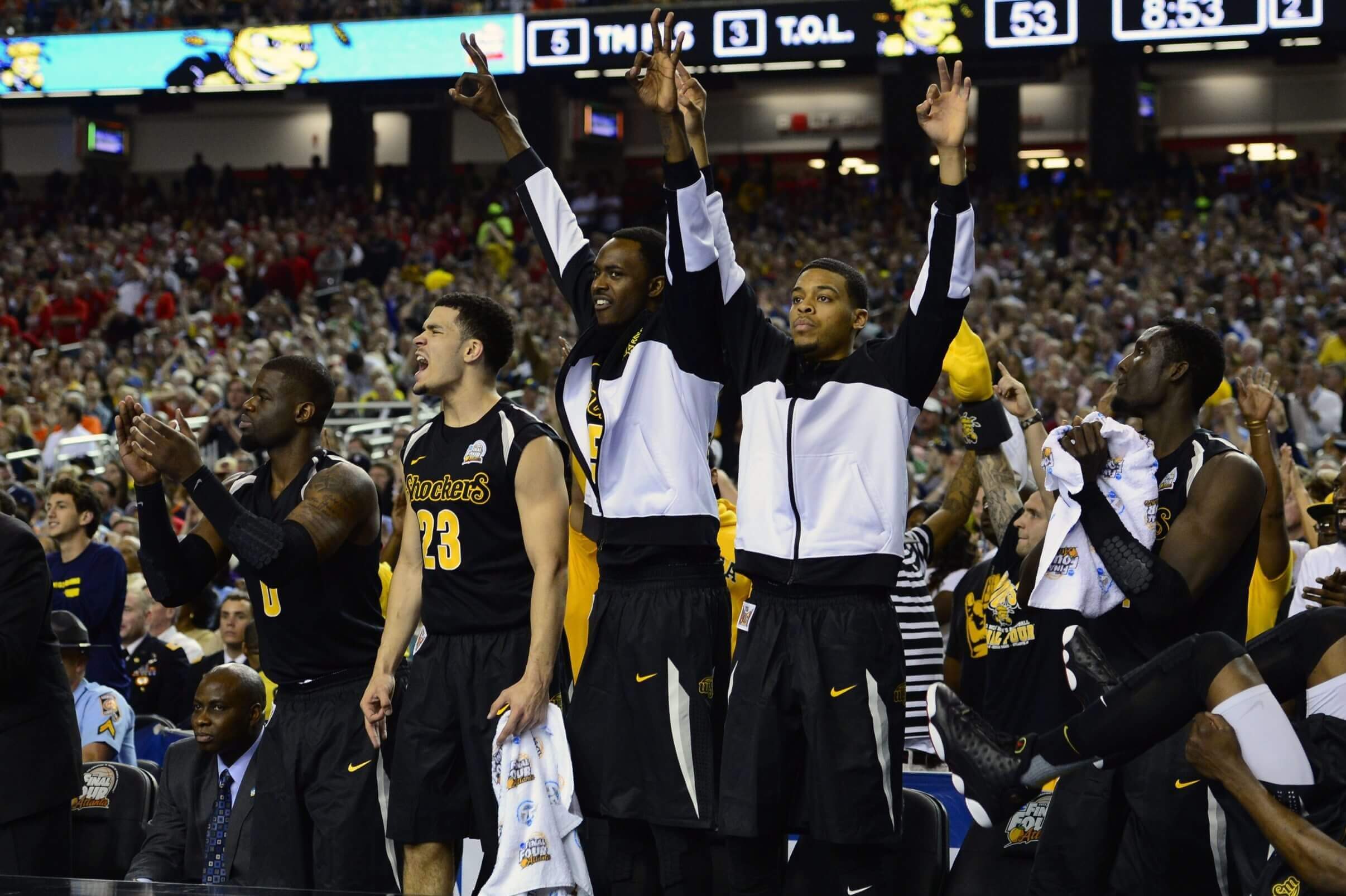
The 2013 Wichita State Shockers made it all the way to the Final Four before falling to Louisville in a national semifinal. (Bob Donnan / USA Today)
Those players, Smart said, “complemented each other so well, and they knew each other so well in terms of what they needed on the court.”
But now … “It’s going to be hard to have that as a mid-major.”
Roster continuity has grown increasingly rare. The number of Division I men’s basketball transfers has surged from 957 in 2019 to 2,530 in 2025 — the latter number making up 40 percent of the total men’s basketball players in the season. The NCAA Tournament field reflects the churn: The 2025 bracket included 297 total transfers, up from 213 the year before, according to Timark Partners. While transferring affects all levels of the sport, the top players identified and developed by the mid-majors often leave for bigger paydays at power conference schools.
“Mid-majors are like prep schools now,” said Jim Larranaga, who coached George Mason to the Final Four in 2006 and later piloted Miami to the 2023 national semifinals. “It’s really to prepare to make more money at a high major.”
Anderson described the familiar ache of the mid-major life cycle: guiding a player’s growth, then watching as the powerhouses come calling just as the payoffs should have begun.
Tony Skinn, George Mason’s second-leading scorer during the Patriots’ 2006 run and now the coach of his alma mater, said the sport’s new financial reality, in which rosters are reaching a reported $20 million, as at Kentucky, has widened the divide between the sport’s “haves and have-nots,” so much so that both Skinn and Smart said keeping the rosters that fueled their Cinderella runs today would be “next to impossible.”
Even programs that strike on a winning formula watch it unravel the following season. Saint Peter’s retained 18.9 percent of its minutes and 16.2 percent of its scoring after stunning its way to the Elite Eight in 2022 — also losing coach Shaheen Holloway, who took over his alma mater, Seton Hall. Oakland brought back 26 percent of its services following its 2024 upset of Kentucky as a No. 14 seed.
Florida Atlantic’s 2023 Final Four team was a rare exception, returning more than 90 percent of its minutes the next season. Its coach, Dusty May, came back too, but then departed for Michigan, a top seed in this season’s tournament.
Even amid the swirl of money and movement, March remains volatile. Its volcanic potential hasn’t evaporated so much as moved. Upsets still tear seams in the bracket, and lower seeds still claw their way into the second weekend.
Instead of the lightly recruited mid-major rosters growing old together, today’s Cinderella is assembled through the portal. Experience still wins March — it’s just built differently.
Smart said the modern bracket buster could look like a power-conference team seeded lower in the field stocked with guys seasoned by years in college basketball. He pointed to UCLA’s First Four-to-Final-Four run in 2021 as the modern template, an 11-seed powered by veteran players who caught fire.
“You’ll still see an 11 seed make a deep run, but it’ll be more a team like that as opposed to our team in 2011 (at VCU) or George Mason or Wichita State,” Smart said.
“If you’re talking about lower seeds advancing in the NCAA Tournament,” Smart added, “I think we will continue to see that. If you’re talking about teams coming from the Colonial or the Horizon or the Missouri Valley going to the Final Four, I don’t think we will see that.”
Others around the sport offer a similar narrowed forecast.
“The days of an NBA All-Star and another NBA (draft) pick playing at Butler are over,” UCLA coach Mick Cronin said, a nod to the 2010 Butler team that made the title game behind Gordon Hayward and Shelvin Mack.
Skinn said the next VCU or George Mason may be few and far between. More likely, he said, mid-majors will toast to Sweet 16 runs that in another era might have stretched deeper into March.
But recent brackets offer reason for both alarm and restraint.
Just two years before the chalk Final Four of 2025, Florida Atlantic stormed to the national semifinal as a No. 9 seed. Princeton broke into the Sweet 16 as a No. 15 seed. No. 5 seed San Diego State, out of the Mountain West, sprinted to the national championship game.
The next season brought Oakland stunning Kentucky as a No. 14 seed. No. 13 Yale toppled No. 4 Auburn.
As such, not everyone around the sport is ready to declare the Cinderella blueprint obsolete. Bilas warned against reading too much into a single tournament.
“Every year people take one data point and try to make a trend out of it.” Bilas said. “And that’s not reality.”
In Bilas’ view, NIL and the portal have, in some ways, spread out the talent at the power conference level, broadening the number of teams capable of competing. A study by Timark Partners and AD Advisors tracking more than 14,000 Division I men’s basketball transfers since 2019 found roughly 65 percent either moved down a level or failed to find a new roster spot entirely — a reminder that portal movement is not always a one-way escalator up.
“If the same people that were predicting the demise of college sports were predicting the weather,” Bilas said, “none of us would go outside.”
P.J. Couisnard, who averaged 10.2 points and 6.2 rebounds when Wichita State earned a Sweet 16 berth in 2006, sees a way through the current turbulence.
“Always a possibility for a Cinderella,” said Couisnard, now an assistant at his alma mater, “especially in these days where a school might spend whatever they got to to get one of them players that could carry you through March Madness.
“Give it time. … This is completely new. We are only (five) years into NIL.”
Even some of those most sentimental about the sport’s traditional landscape stop short of declaring Cinderella dead.
Anderson believes March remains fertile ground for surprise. Double-digit seeds will keep landing punches, he said, and veteran teams with continuity can still become dangerous come March. But the runway is shortening — and for the 14s through 16s, liftoff is becoming harder.
Even Homer Drew, 81 and long retired, is torn. He believes the sport’s new economics assist power-conference teams and could eventually “water down the Cinderella stories,” but warned it may take several more years of data before declaring the era done for.
If the old version of Cinderella is indeed being boxed in, there is polarizing debate on how to proceed.
Tournament expansion, an idea the NCAA has flirted with the past few years, is feared by some coaches as a move that could push the imbalance even further. Anderson said “no one wants” a bracket so sprawling that the sport’s smallest programs are pushed even deeper to the margins.
“We want to protect the game,” he said. “No one wants it to be where the small schools get knocked out. The tournament, that’s our baby. We got to make sure we take care of it.”
Expanding the field from 68 to 72 or 76 is expected to be revisited after this year’s tournament. Skinn argued that a modest expansion could pry open a few more seats at the table for mid-majors in a tournament ecosystem increasingly shaped by power-conference schedules and the metrics that reward them.
Drew imagined a far more radical fix — a 128-team field that would drastically widen the tournament’s doorway.
Optimists believe March will always manufacture wonder — a veteran mid-major that somehow stayed intact, a portal-built underdog catching heat or a power-conference sleeper cresting at the right time. Pessimists see something more delicate fading away: the classic mid-major climb from obscurity to folklore.
And maybe that is the real question hovering over March: not whether the bracket will crack, but whose fingerprints will be left holding the pieces.