
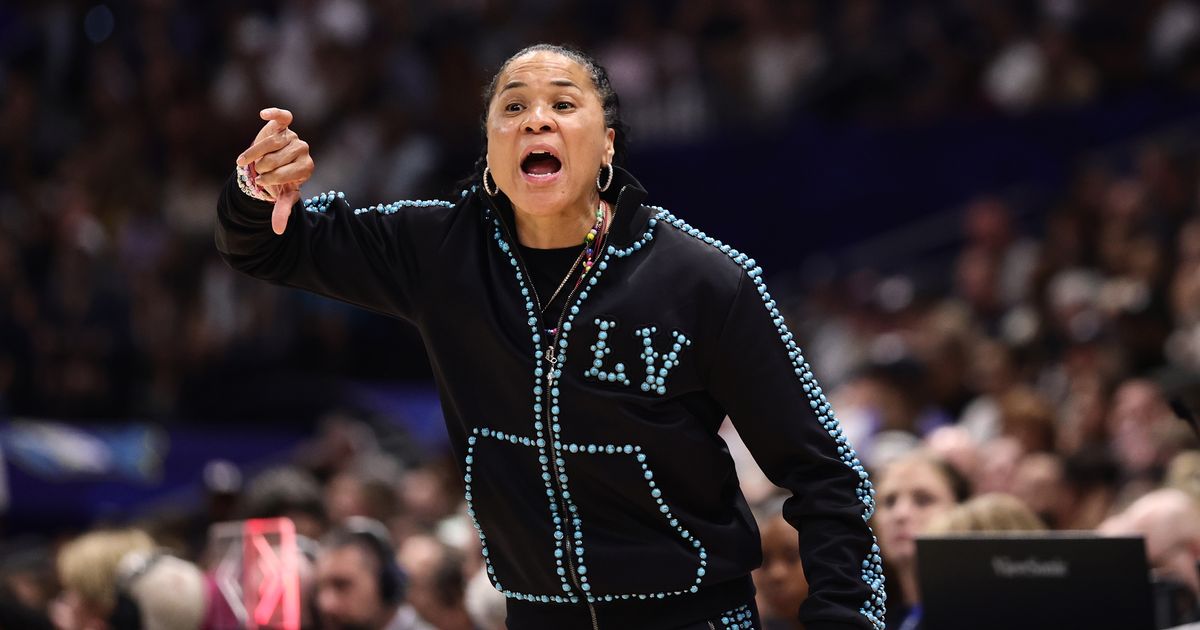
Dawn Staley is calling on ESPN and the NCAA to renegotiate their TV deal, saying women’s basketball has outgrown its current value and deserves more
19:13 ET, 30 May 2025Updated 19:13 ET, 30 May 2025
 During her 16 seasons, Staley has led South Carolina to three NCAA women’s basketball national championships(Image: Getty)
Dawn Staley has never been afraid to speak her mind — and now she’s calling on ESPN and the NCAA to give women’s college basketball the money she believes it deserves.
At a recent book event in Columbia, South Carolina, the national championship-winning coach, who recently spoke on the spirited Caitlin Clark and Angel Reese rivalry, called on both sides to revisit the NCAA’s eight-year, $920 million media rights deal with ESPN, signed in January 2024. That deal includes broadcast rights for 40 championships — including women’s basketball — and pays the NCAA roughly $115 million per year.
“We should get more money from ESPN,” Staley said. “We’re in a television deal. When we signed the deal three or four years ago, we weren’t where we are today. Let’s go back to the table and let’s talk about where we are today. Let’s negotiate in good faith.”
READ MORE: Travis and Jason Kelce buy professional sports team to add to business portfolioREAD MORE: Angel Reese benched during Chicago Sky’s first win of WNBA season
Staley’s comments reflect a broader push for equity in media rights across college sports, especially as the profile and popularity of women’s basketball continues to soar. This year’s NCAA championship game between Staley’s South Carolina team and UConn drew an average of 8.5 million viewers — the third-highest audience in women’s college basketball history, even without superstar Caitlin Clark in the final.
By contrast, CBS and TNT pay a combined $1.1 billion annually for the rights to the men’s NCAA tournament. While the men’s title game averaged roughly three times more viewers than the women’s, the difference in payouts is staggering: ESPN’s entire NCAA package is worth nearly 1,000% less than the men’s deal, and the specific allocation for women’s basketball ($65 million in annual “units”) is about 1,700% smaller.
Staley, who in 2021 became the highest-paid black women’s basketball coach in the country after negotiating salary parity with South Carolina’s men’s coach, is no stranger to changing the financial landscape.
“I want ESPN to step up to the plate,” she said. “Give us a little bit more — from [college] to the WNBA.”
Content cannot be displayed without consent
Staley isn’t alone in her criticism. Hall of Famer Cheryl Miller recently blasted the WNBA’s new media deal — reportedly worth around $200 million annually — as a “lowball” figure, saying the league should have secured at least $100 million more.
“We need tough and fair negotiators and visionaries,” Miller said during All-Star weekend. “And we need a bully — we need a bully behind the table that’s willing to say we’ll break up the pieces and go from there.”
Some experts estimate that if the NCAA were to separate women’s basketball into its own media deal, it could command between $81 million and $112 million annually — far more than the current $65 million allocation.
With women’s sports from basketball to volleyball drawing record audiences, Staley’s message is unmistakable: it’s time for decision-makers to keep pace.