
A loss to the Denver Nuggets is not something that sends you into a spiral. You are not losing your mind over it, especially against a team that has consistently given the Suns problems over the past few seasons. Nikola Jokic presents a challenge that very few teams solve cleanly, and Phoenix has felt that reality time and time again.
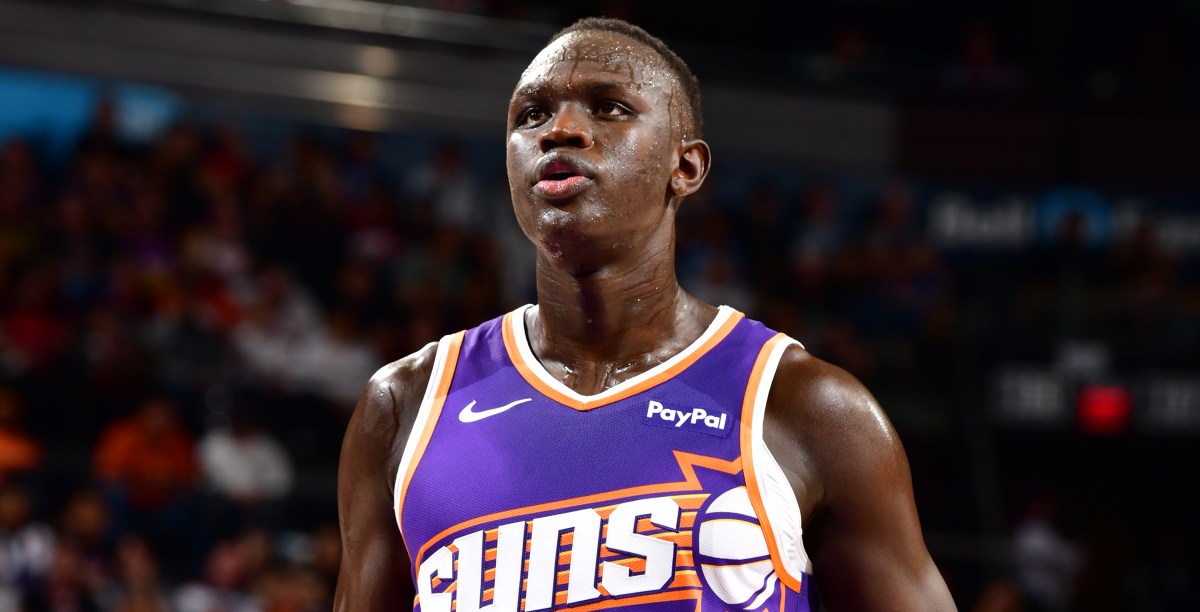
Even so, the game on Tuesday night felt like there was something left on the table. It felt like an opportunity that slipped away in a stretch of the season where those chances are limited. Which is why this moment matters, because it opens the door to something else. It is time to give Khaman Maluach a little more run.
Phoenix is operating in a unique space right now. The standings have created an interesting cushion. After the loss to Denver, they sit 4 games back of the sixth seed and 3.5 games ahead of the eighth seed, which places them firmly in the seventh slot heading toward the Play-In. That reality brings a different kind of urgency. The final nine games still carry weight, but the focus shifts toward refinement, preparation, and finding the best version of yourself before the postseason begins.
That is where development enters the conversation. Wins matter, they always do, but this stretch invites a little experimentation. It invites moments where you see what certain players can do in meaningful situations, where growth can occur in real time. Giving Maluach more opportunities fits into that idea, allowing him to experience the pace, pressure, and responsibility that come with it.
At the same time, help is on the way. Dillon Brooks and Mark Williams are nearing their return, and the hope is that they are back soon enough to find their rhythm before the postseason arrives. Conditioning, timing, chemistry; all of it needs to come together quickly. So the Suns find themselves at this intersection, balancing development with preparation, looking ahead while still managing the present, trying to make the most of every possession that remains.
I think back to my thoughts on the developmental strategy as it pertains to Khaman Maluach and Rasheer Fleming. Before the season began, before we knew this team would find this level of success, I had a pretty clear picture of how it could unfold. Break the season into three segments.
Early on, you establish your culture, you define who you are, and the rookies spend most of their time learning through the G League. There, they can adjust to speed, spacing, and structure without the pressure of nightly NBA minutes.
As the calendar flips to January and moves toward March, that is when you start layering them in. Around 15 minutes a night, providing real rotation minutes, letting them feel the game, make mistakes, respond to them, and begin to understand what is being asked of them at this level. Then comes the final stretch, the part of the season where I thought Phoenix would be fighting to get into the Play-In, not firmly nestled into it. This is where the minutes open up, where those young players are on the floor more consistently, gaining experience against real competition, and building a library of film you can use to help them grow.
The season did not follow that script, and that is a good thing. This team found its identity early. The connectivity arrived faster than expected, competitiveness became part of the foundation, and it created an environment where every game carried weight. Because of that, the runway for those young players has been tighter. Rasheer Fleming has carved out his role over the past month, earning his way into the rotation, while Maluach has been handled with more care.
And that approach makes sense. You are talking about a 19-year-old big, and confidence matters at this level. You cannot rush that process. Patience, right? You cannot throw him out there before he is ready and risk shaking that foundation. With Maluach, the patience is intentional. It is about building him up the right way so that when his moment comes, he is prepared to meet it.
At the same time, with where the Suns sit over these next few games before Mark Williams returns, there is an opening to take a little of the bubble wrap off. This is the window. This is where you can stretch Khaman Maluach a bit, give him more than 11 minutes, especially in a game where he looked productive and where the team clearly needed rim protection. Teams are going to keep attacking Phoenix in the paint — that is not changing — and having someone who can deter that, even in short bursts, carries value. Until Williams is back, Maluach can be that presence.
Confidence matters, and you can understand the thought process. If you leave Maluach out there too long against Nikola Jokic, there is a risk it goes sideways, and that can linger. That is part of the equation. But development requires progression. At some point, you have to elevate the test. You have to see how a player responds when the challenge gets real.
A matchup with Jokic is about as real as it gets. He puts everyone in difficult spots, he forces you to react, and he punishes every mistake. If Maluach struggles in that environment, you frame it correctly. You focus on what he did well, you show him where he can improve, and you remind him that Jokic does this to everyone. That is part of the growth process, and it is a step that eventually has to be taken.
The “disease of what if ”creeps in. What if Khaman Maluach had closed the final four minutes, especially once Denver leaned into attacking the paint and took advantage of lineups that did not offer resistance inside? You could see it unfolding. Jokic finding angles, carving space, operating without much obstruction. Maluach gives you size, he gives you length, he gives you a presence that at least makes those looks more difficult. He can contest, he can alter, he can step to the line and hold his own. It leaves you wondering if a different look changes the feel of those final possessions, if it gives Phoenix a better chance to get over the top.
You also understand the other side of it. The likely outcome could have been Jokic and Jamal Murray pulling him into every action, dragging him into the two-man game, forcing decisions, forcing rotations, and testing him possession after possession. That is a brutal assignment for anyone, let alone a young big still learning the league. But even in that scenario, there is value. You get the film, you get the reps, you get the experience of being in it, and that becomes part of the learning process.
Mark Williams is on the way back, and when he returns, those minutes tighten quickly. That window for Maluach gets smaller. Which is why right now matters. A game against Utah on Saturday presents a clean opportunity, a chance to extend him, to give him 25 to 30 minutes, to see how he handles a larger role instead of defaulting back to heavier minutes for Oso Ighodaro. That is not about impatience. It is about recognizing a moment where development and circumstance align.
Patience has been the message all season, and it still applies. You want these young players to grow the right way, to build confidence, to earn what they get. Minutes should never be handed out. They should be taken. If Maluach has not shown enough in practice, then holding that line makes sense, and it is the right call from the coaching staff. But if he has, if he is trending in that direction, then this is the stretch where you lean into it, where you give him that runway and see what he does with it.