
It has been two decades since the NBA last cracked itself open and added something new, so if you are a younger fan, expansion is more myth than memory. It’s something you have heard about but never actually lived through.
The last time it happened was 2004 with the arrival of the Charlotte Bobcats, and if you were around for that, you remember the vibe. That strange orange, that washed out blue, all that gray floating around like a fog that never lifted. It felt off. It looked off. They played off. Eventually, they course-corrected, flipped back into the Charlotte Hornets in 2014 and reclaimed the history, while the New Orleans Pelicans took on a new identity after carrying the Hornets name since their relocation in 2002. It was musical chairs with logos and legacies as the league was trying to clean up its own timeline.
Go back even further, and the numbers start to feel like a fever dream. From 1995 to 2004, there were 29 teams. Before that, from 1989 to 1995, it was 27. You have to rewind all the way to 1980 to find the last time the NBA had an even number of teams. The 80s were chaotic in their own way. Expansion here, relocations there, a mountain of white powder off yonder…
And now, 22 years later, expansion is back in the bloodstream. It has been whispered about for years and floated in conversations. The suggestions? Two new teams, new markets, new money, and new chaos. But today it shifted from theory to motion. The NBA Board of Governors gave the green light to begin the process.
Which two cities feel inevitable when you talk about expansion? Seattle and Las Vegas.
It has been building toward that for years, and now it feels like the league is finally ready to make it real. Two new teams planted in the Western part of the country means something has to give, and that usually means one Western Conference team slides over to the East to balance things out.
That is not new territory for the NBA. The Milwaukee Bucks entered the league alongside the Suns and did so as an Eastern Conference team. They shifted to the West two seasons later, won the 1971 title out there, and then found their way back to the East following expansion in 1980. The league has always adjusted its map when it needs to.
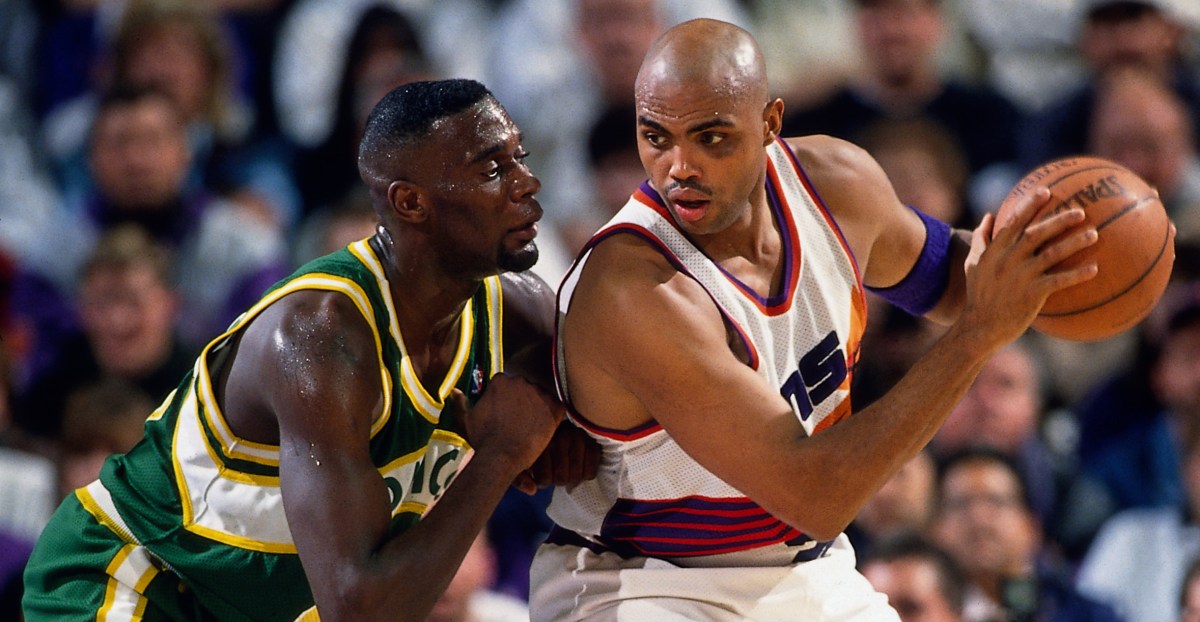
Seattle feels like the easiest call. The Seattle SuperSonics were not only iconic, but they were also consistently relevant from 1967 to 2008. There is real history there. A 1979 championship (if only Alvan Adams had remained healthy…grrrr), six division titles, three trips to the Finals, and a fan base that showed up and stayed loud through it all. When the franchise moved in 2008 and became the Oklahoma City Thunder, it left a hole in Seattle that never really closed. Those green, gold, and white colors still mean something, still live in the memory of the game, and it is hard to find anyone who would push back on bringing basketball back to that city.
Las Vegas is where the conversation gets a little murkier.
I am not fully sold on why it should be first in line for a franchise. Yes, the Vegas Golden Knights have been a success. They continually sell out, the energy is real, and the city has supported them in a way Phoenix never quite did for the Coyotes. That part is undeniable. The numbers say the population sits around 700,000, which places it right in the middle of NBA markets, and on paper, it checks the boxes.
But Vegas carries a different feel. It has always been transient. It’s built on visitors, built on turnover, and built on the idea that people come and go. Sin City, sure. That’s the postcard version. What it really feels like is a corporate cesspool, thick and humming, chewing through broken dreams while desperate souls line up to feed it. The lights scream opportunity, the reality whispers extraction, and somewhere in between, unregulated inflation keeps the whole machine running hotter and hungrier than ever.
Maybe that is shifting. Perhaps it is becoming more rooted than it used to be. But the identity still lingers. There is a reason I haven’t been back since 2021. The costs have climbed, and everything feels designed to pull more from you at every step. What used to feel like a manageable gamble now feels like a guaranteed drain. You used to go knowing you would lose some money. Now you go knowing you are going to lose a lot, and for me, that takes something away from it.
Which brings you back to the basketball conversation, and it opens up a different set of questions.

ABA Basketball: Pittsburgh Pipers Connie Hawkins (42) in action vs Indiana Pacers at Indiana State Fairgrounds Coliseum. Indianapolis, IN 10/7/1967 CREDIT: John F. Jaqua (Photo by John F. Jaqua /Sports Illustrated via Getty Images) (Set Number: X12732 )
There are other cities that breathe this game, that have history, and have fan bases ready to pour themselves into a team. St. Louis, which was once home to the ABA’s Spirit of St. Louis, sits right in the middle of the country with deep basketball roots. Kentucky was the former host of the ABA’s Colonels. Their population lives and dies with the sport, from college to every pickup run in between. Pittsburgh has its own history, its own connection points, and its own stories tied to the game. All three have ABA ties, with Pittsburgh being the city where Connie Hawkins first played professionally. Those places would embrace a team with everything they have.
But we all know how this works. The NBA is a business. It follows the money, it follows the growth, and it follows the markets that promise the biggest return. And right now, that trail leads straight to the greed-filled streets of Las Vegas. The capital is there, the investment groups are there, and when you have that kind of financial gravity, it pulls a franchise with it. For better or worse, that is the reality of how decisions like this get made.
Then the conversation shifts to alignment, because if Seattle and Las Vegas arrive, someone has to move. Memphis and New Orleans sit at the front of that line. Minnesota lingers there, too. Geography starts to matter in these moments, and when you look at the map, it is not hard to connect the dots. Memphis sits east of the Mississippi River, New Orleans is right there with it, and from a travel standpoint, sliding one of those teams into the Eastern Conference cleans things up.
But let me take a quick detour into fantasy land, because there is a part of me that cannot help but think about it. What if the Phoenix Suns were the ones who moved East? Not because it makes sense geographically, not because it fits neatly into the travel grid, but because of what it could mean.
The Eastern Conference has lived a different life than the West for a long time. The depth has not been the same, the nightly grind has not been the same, and when you scan the standings year after year, you can see it. Take the same record, drop it into the East, and suddenly you are looking at a team sitting two or three spots higher. That is reality. Since the 2004 expansion, the West has produced more champions (13–8), and it reflects the weight of that conference over time.
And when you think about the Suns, a franchise that has been chasing that title for decades, they are always fighting through the tougher bracket. Always navigating a conference that feels like a gauntlet. It is hard not to wonder what it would look like on the other side. Forget the rivalries, forget the travel, forget the tradition for a second. Put Phoenix in a position where the path is a little cleaner, where the climb is a little different, and see what happens!
It will not happen, and everyone knows it. The league will make the logical move, the clean move, the one that balances the map. But there is a part of you that looks at it and thinks, what if?
All facetiousness aside, I am not someone who is pounding the table for expansion. I like the league where it sits right now. It feels balanced, it feels deep, and it feels like every night carries weight. And if you add two more teams, that means it’s two more teams tanking at the end of the season, and who wants that Jazz? Pun intended.
If the goal was to get a team back in Seattle, there were other paths to get there. You could have looked at relocating the New Orleans Pelicans, a franchise that has struggled to build a consistent fan base, with an ownership group that often feels more invested in the New Orleans Saints. That was an option sitting there the whole time.
That said, I am not against it either. Expansion brings conversation, it brings energy, and it gives the league something new to chew on. Expansion draft scenarios, protection lists, roster construction; it all becomes part of the fabric for a while. And when you step back and look at the talent pool, the NBA can handle it. The international game continues to grow, the skill level continues to rise, and the collegiate pipeline keeps producing players who are ready to contribute. There is depth across the league — real depth — and spreading it across 32 teams does not feel like a stretch.
Maybe it even brings a little more parity into the mix. Maybe it flattens things out in a way that creates more opportunity for more teams to matter. And for younger fans, this is something new, something they get to experience for the first time. Expansion is not a theory to them anymore. It becomes real, the way it once did with the Charlotte Hornets, the Miami Heat, the Orlando Magic, the Minnesota Timberwolves, and later the Vancouver Grizzlies and the Toronto Raptors. There is something fun about watching the league grow in real time.
At the same time, there is an edge to it that is hard to ignore. Expansion is not driven by nostalgia or balance. It is driven by money, by ownership groups, by valuation, by the business of the league continuing to expand its footprint. That is the trade-off. $7 to $10 billion. That is what the going rate is for one of these two teams.
Growth brings opportunity, it brings excitement, it brings new stories, and it also leans further into the corporate machine that drives everything. That tension exists everywhere now, not only in sports, but across the landscape. The small, the local, the intimate…those things feel harder to find. The big keeps getting bigger, and the league, like everything else, moves with it.
Expansion is coming, not because the game needed it, not because the map demanded it, but because the money called for it. And the league answered. Las Vegas may not feel like it earned it in the purest basketball sense. It may not carry that same organic heartbeat as other cities that live and breathe the game, but it carries something louder, something heavier, and that is extractive capitalism. That is the reality of modern sports.
Still, through all of that, there is one piece of this that cuts through the noise. The return of the Seattle SuperSonics. The green, the gold, the history, and the fans who never let it go. You can question the why behind expansion, you can roll your eyes at how it came to be, but when Seattle gets its team back, it will feel right. Even in a system driven by business, there are moments that belong to the game, and that one will.