
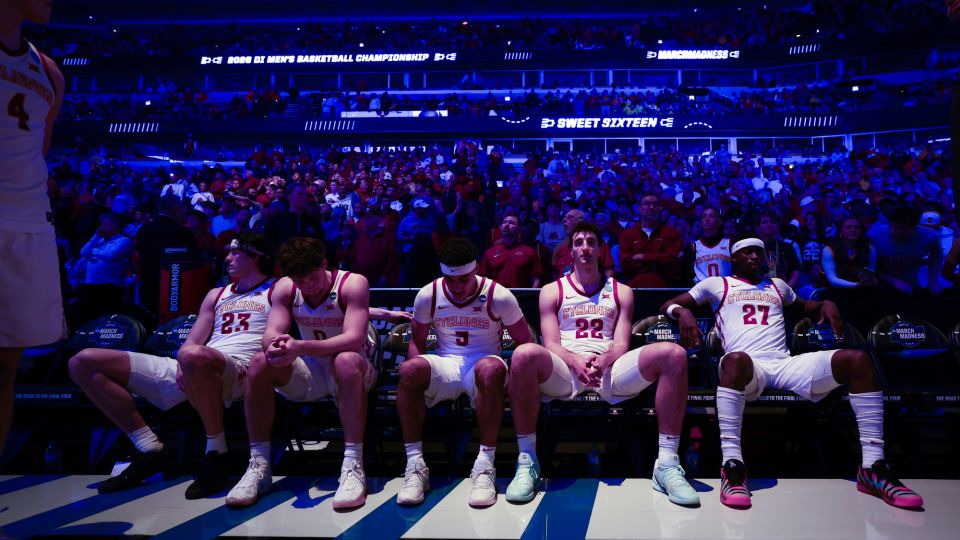
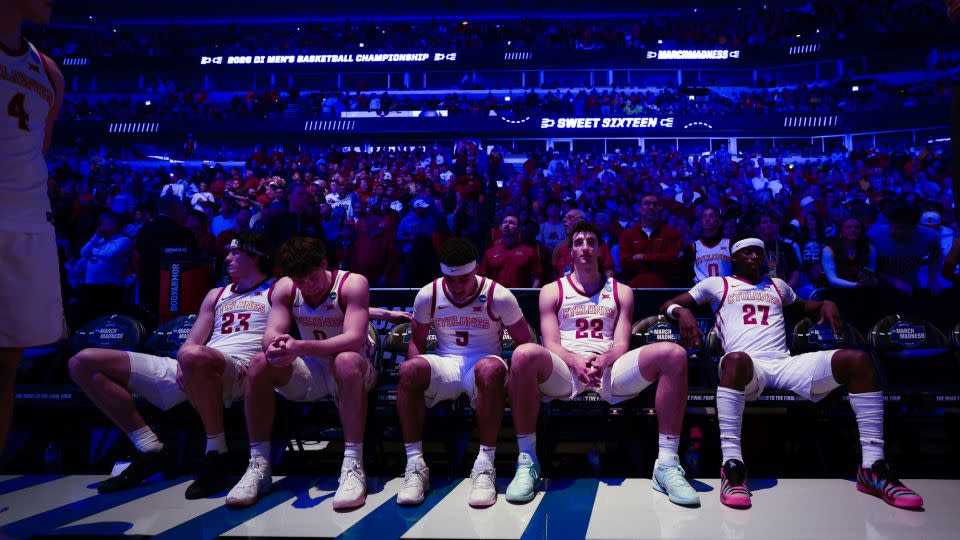
The Iowa State Cyclones during their game against the Tennessee Volunteers during the Sweet Sixteen round game of the 2026 NCAA Men’s Basketball Tournament held at the United Center on March 27, 2026 in Chicago, Illinois. The Iowa team went on to lose the game. – Tyler Schank/NCAA Photos/Getty Images
There is nothing quite as loud as the silence in a locker room when a season ends.
It is deafening, a pin-drop quiet that feels near sacred. As reporters, our job is to infiltrate that sacred space, to barge in with notebooks and cameras and ask questions that no one wants to answer, that very often no one yet has answers for.
It’s not the best part of the gig and over the course of a very long career, I have visited more than a few devastated locker rooms.
I have watched Zach Edey sit off by himself, trying to come to grips with losing a national championship, and remember the stunned silence in the Butler locker room after Gordon Hayward’s buzzer-beater missed in 2010. For three consecutive seasons, I saw Villanova players stare blankly after one improbable NCAA Tournament loss stacked on top of another, until the tide finally turned in 2016.
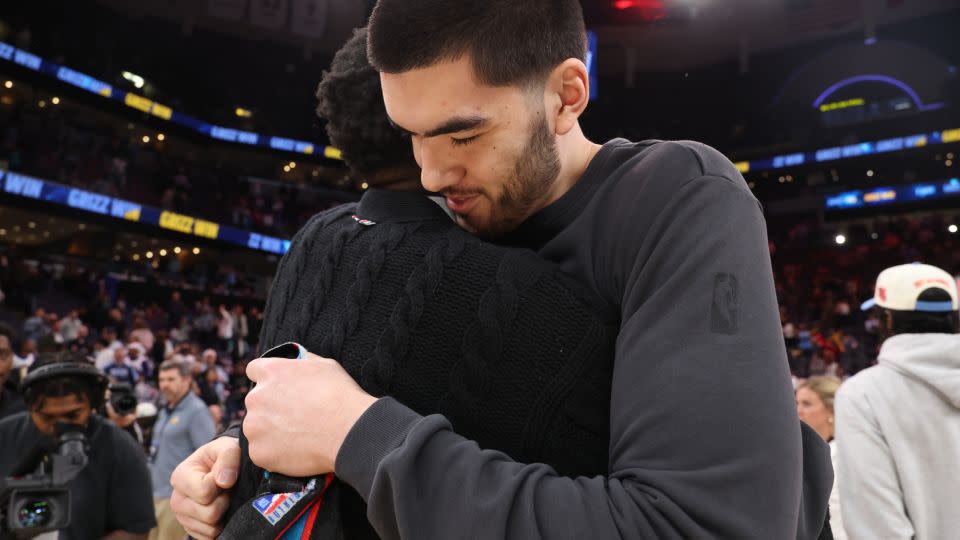
Zach Edey #14 of the Memphis Grizzlies hugs Jaren Jackson Jr. #20 of the Utah Jazz after the game on February 20, 2026 at FedExForum in Memphis, Tennessee. – Joe Murphy/NBAE/Getty Images
And so, I thought, as an empathetic human, I understood the enormity of the emotions, that it wasn’t the loss athletes mourned so much as the abrupt end of it all.
Shrug out of the uniform and pack it away for months. Stow up the practice gear because there is no practice tomorrow or the next day. No film to break down.
No walkthrough. No pre-game meal. Just a blank day with hours to fill and a television inexplicably still showing an NCAA tournament that has the nerve to continue on.
Except that’s not all of it. When Michigan State’s rally against Connecticut ran out of gas last night, so did my son’s four-year run as a Spartan manager. It is one thing to walk into a losing locker room as a reporter and feel like an interloper; it is another altogether to walk in as a mom and see your child falling to pieces.
Because then it’s not just some person in a jersey that you know from a snapshot of his life. It’s the four-year-old boy and diehard sports fan who went to a Philly area pre-kindergarten in head-to-toe Yankee gear after the 2009 World Series.
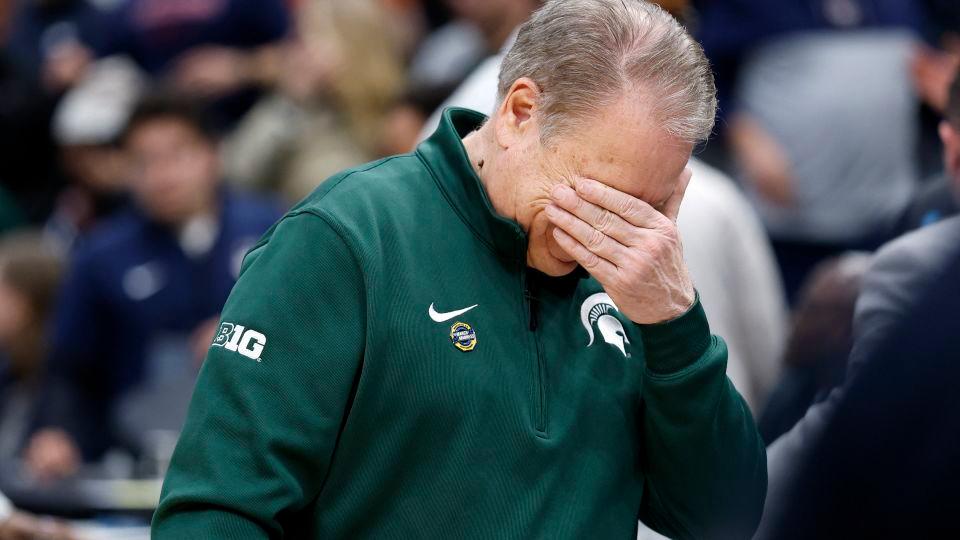
Michigan State Spartans head coach Tom Izzo reacts after losing to UConn Huskies in a Sweet Sixteen game of the East Regional of the men’s 2026 NCAA Tournament at Capital One Arena, in Washington, DC, on March 27. – Amber Searls/Imagn Images/Reuters Connect
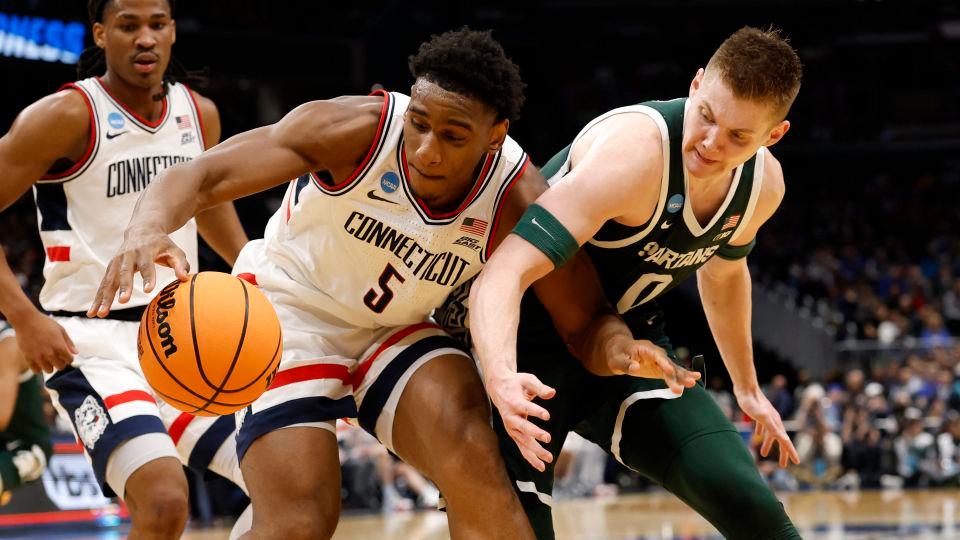
UConn Huskies forward Tarris Reed Jr. (5). And Michigan State Spartans forward Jaxon Kohler (0) attempt to get a loose ball in the first half during a Sweet Sixteen game of the East Regional of the men’s 2026 NCAA Tournament at Capital One Arena. – Geoff Burke/Imagn Images/Reuters Connect
It’s the middle-school kid who chatted up Ryan Arcidiacano on the day of Villanova’s championship parade. It’s the high school boy who talked surfing with Mark Few and later used Covid-19 asynchronous learning as an excuse to tag along to a work trip to Gonzaga and talk more surfing with Mark Few.
It’s the senior who was devastated when his first college choice rejected him and the college freshman who walked into East Lansing and found a home, a family, a fit and promptly forgot about that other college.
It’s the man who on Thursday night broke down UConn’s tendencies over beers and bar food and, less than 24 hours later after the loss, looked – in my eyes at least – like that four-year-old boy.
What ended for my son – what’s ending for countless sons and daughters in this and every NCAA tournament – is their childhood. And as this tourney heads toward its conclusion, perhaps we’d all be wise to try and at least remember that.
To remember what it’s like to stand right around the corner from college graduation and into the great abyss of adulthood, to want desperately to hold onto that last shred of college freedom and for what is happening right now, right here, to never ever end.
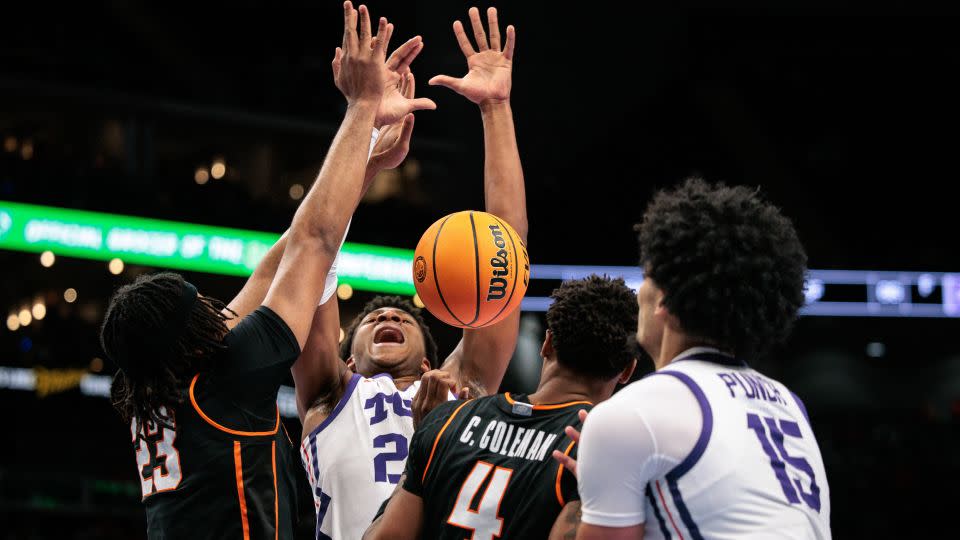
TCU Horned Frogs forward Xavier Edmonds (24) loses the ball after colliding with Oklahoma State Cowboys center Benjamin Ahmed (23) during the first half at T-Mobile Center, in Kansas City, Missouri on March 11. – William Purnell/Imagn Images/Reuters Connect
Perhaps that sounds naive with the current climate of college athletics, but money doesn’t make you a grown up. It just gives you grown-up problems. There is, in fact, a distinction between being paid like a pro and being a pro, and college athletes are still college kids in all their goofy, irresponsible glory.
They leave practice, order DoorDash and play video games. They exist in the beautiful cocoon of a college campus, where everyone is the same age and their best friends are their teammates and their teammates are their housemates, and getting a dog feels like a major commitment. They are dependent on someone else’s tax form because they are still very much dependent and have not yet – and should not yet have to – figure it all out.
That’s what hit me at least in that Michigan State locker room. I did not see a bunch of well-paid professionals angry that the Spartans lost a game or bummed that a season was over.
I saw a bunch of college kids coming to grips with the end of something they weren’t quite ready to let go of.
And finally, I understood. Who, after all, wants their childhood to end?
For more CNN news and newsletters create an account at CNN.com