
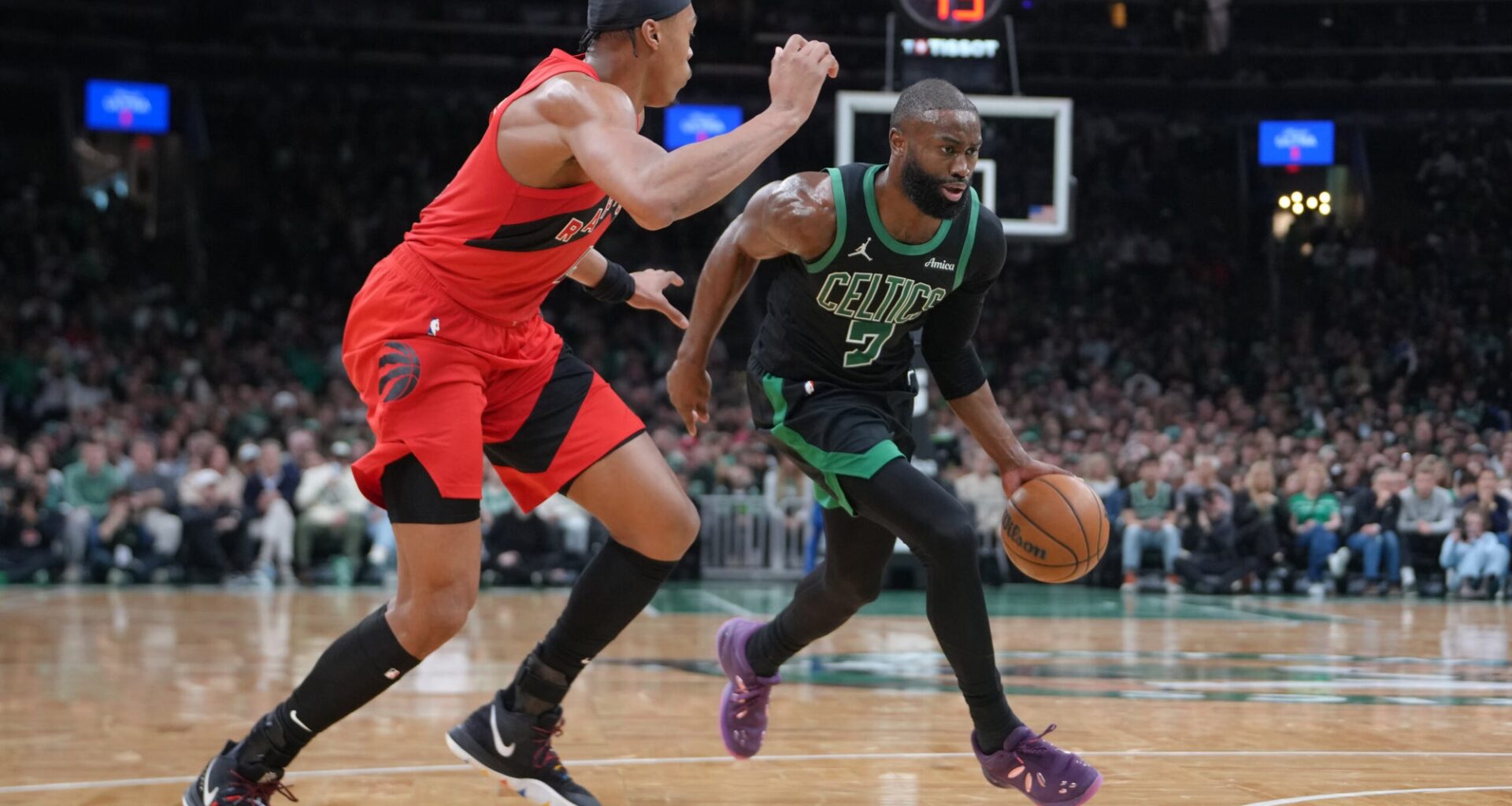
Over the course of this season — and every season since Joe Mazzulla took over — there are usually a handful of key numbers that lead to a Celtics win.
In a standard Boston victory, it usually dominates in shot margin, threes and turnovers. It did none of those on Sunday afternoon at the TD Garden. The Celtics struggled from three, hitting their second lowest total this season with eight. They also turned the ball over 15 times, with 14 coming in the first three quarters.
The Raptors, who raised their physicality in a game they needed, came in and handled Boston for a good portion of the game.
But the Celtics turned it on late, executing in the key stretch while Toronto faltered. The Raptors turned it over 11 times in the fourth, melting down when the pressure was turned up on them. Boston, led by a fully healthy squad for just the second time this season, appeared poised and simply just the better team.
But that’s the way it is supposed to be at this stage. The Celtics are a title contender, and the Raptors are likely a first-round exit.
Here are five takeaways from the 115-101 win…
Queta, Celtics dominate the paint 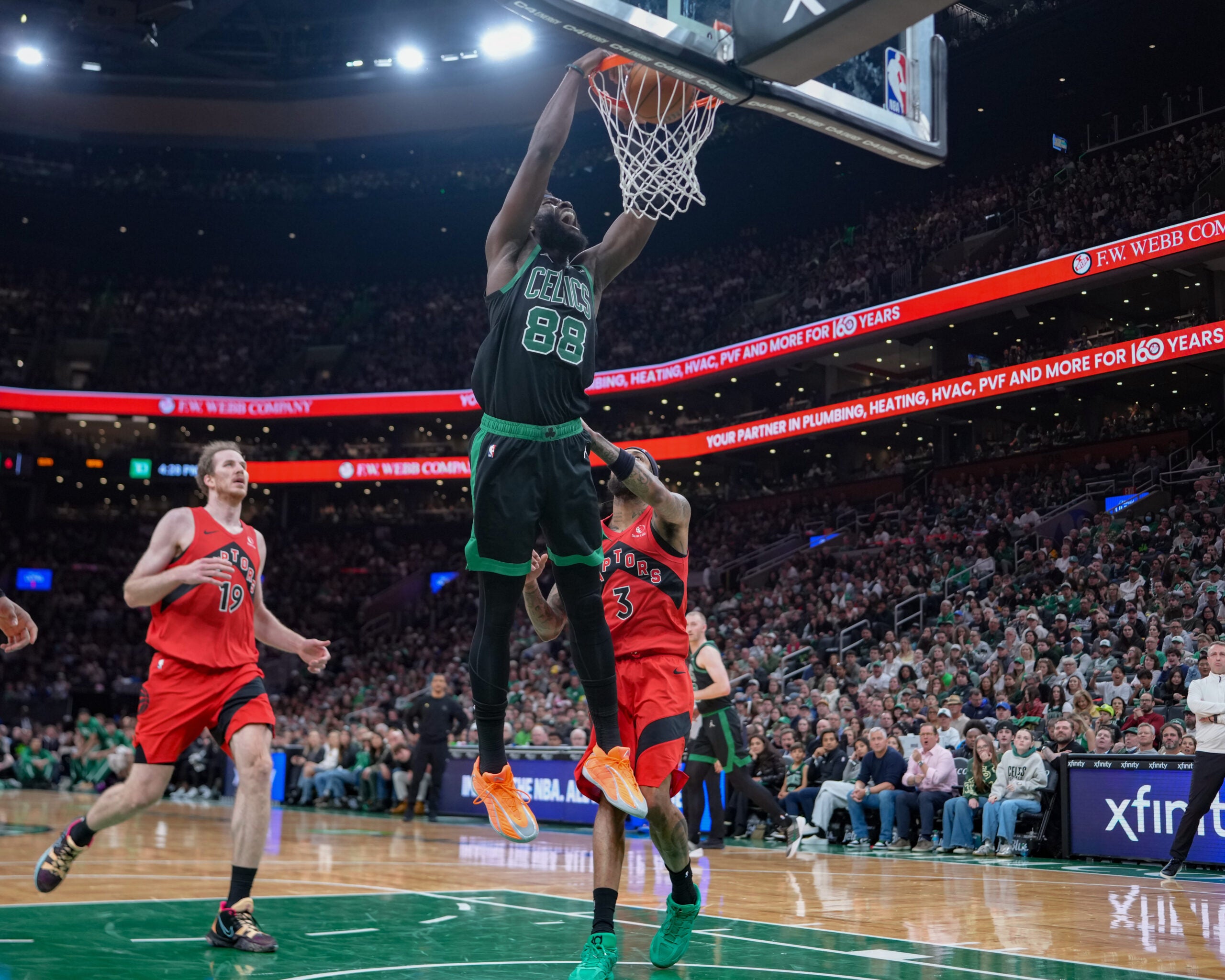
Neemias Queta has been the biggest surprise on this Celtics roster this season. That statement is only continuing to be enhanced throughout the final stretch of the season, and it continued on Sunday.
Queta dominated the paint against the Raptors, scoring 18 points on 9-for-10 shooting. The big man got off to a fast start as well, pouring in 16 points in the first half.
The Portugal native has been red hot in the scoring column as of late, putting up at least 15 in his last four games, which is a career high. He also was a game high +30 in a game which was tight for most of the way.
With Nikola Vucevic returning to the floor, Luka Garza supplying the team with meaningful minutes and Queta looking more and more comfortable as the starting center, what was once the team’s biggest question mark has sneakily become one of their strengths.
Vucevic wasn’t all that impressive in his return on Sunday, scoring just four points and was a -15 in eight minutes, but he did show flashes as he was settling into the rotation before the injury. With more practice time on the horizon for the Cs, Vucevic should help fortify the frontcourt along with Queta.
Turnovers plague Cs 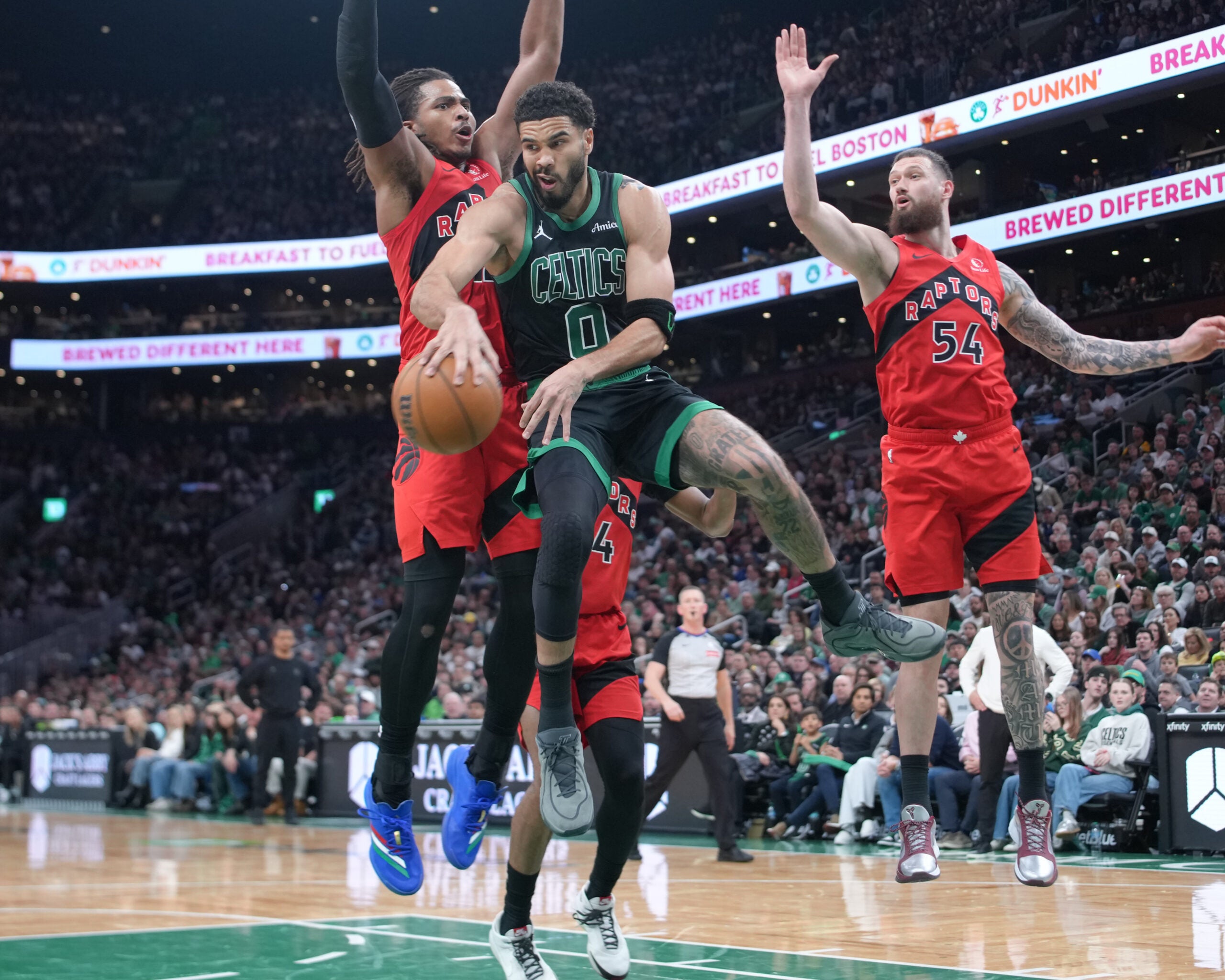
Boston was playing with fire for most of the day against the Raptors. It was a little more concerning that it was Jayson Tatum and Jaylen Brown who were the main culprits. The two superstars combined for 10 turnovers, with Tatum committing five in the first half and Brown turning it over four times in the third.
Mazzulla constantly harps on “live-ball turnovers” and how they are the ones that truly hurt a team. That was certainly the case as the Raptors scored 26 points off turnovers.
Fortunately for the Cs, most of the damage was done in the first three quarters as they committed just one in the fourth. That alone was a big reason why they were able to pull away, outsourcing Toronto 35-24 in the final frame.
Boston’s 15 turnovers was the fourth-highest total it has recorded all year.
The turnover issues certainly isn’t a trend, but with the physicality ramped up by the Raptors — which will happen throughout the playoffs — it is something to monitor. A high turnover number like Sunday’s can sink a team deep in the spring.
Bench struggles 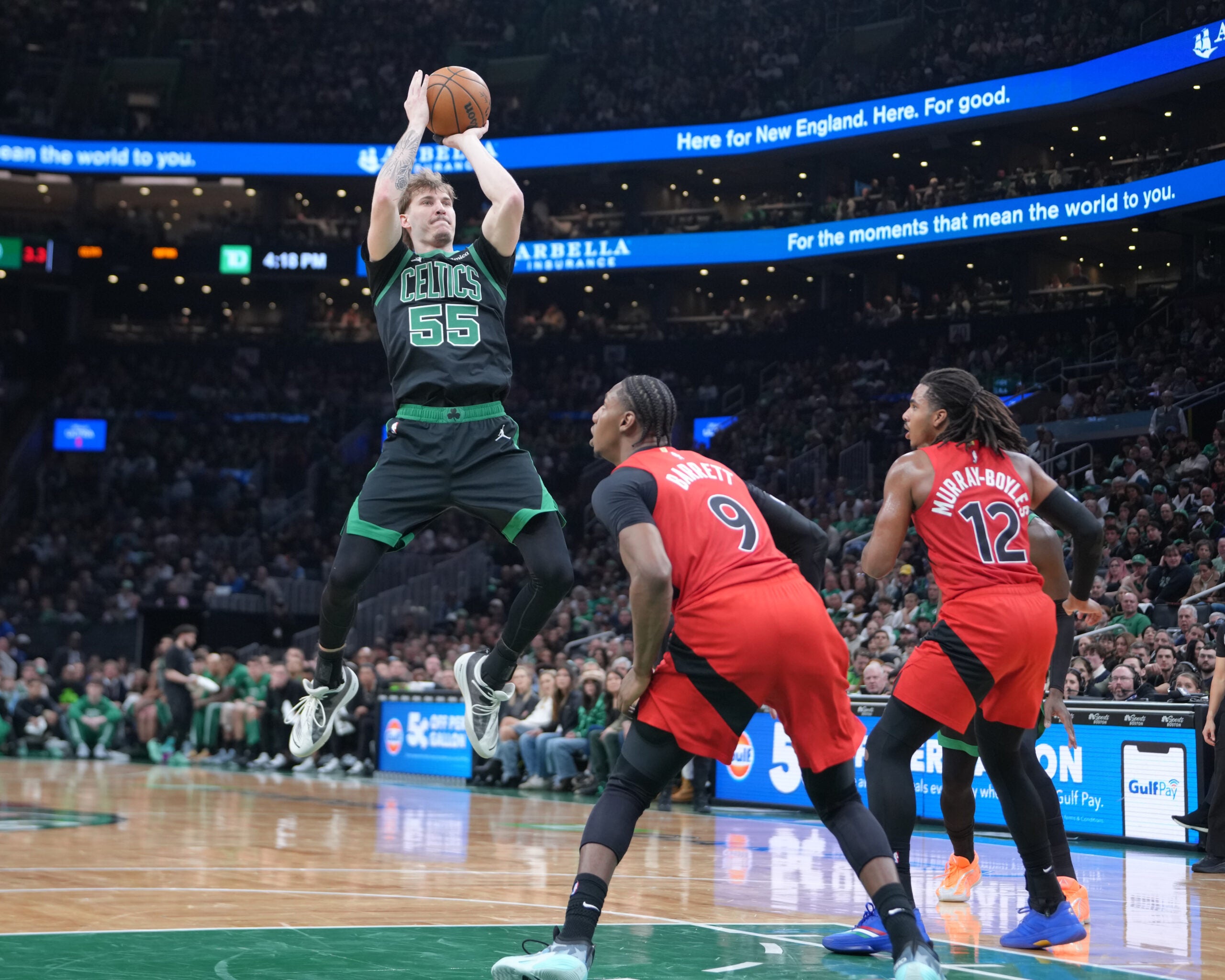
Speaking of question marks heading into the postseason, Boston’s bench struggled throughout much of the afternoon.
Payton Pritchard saved the box score with 17 points, 11 of those coming in the fourth, but it was an otherwise quiet day for the rest of the second unit. Baylor Scheierman scored just five on 2-for-8 shooting while Vucevic managed just four in limited minutes.
Like the turnovers, it’s not time to raise the alarms, but bench players are the ones that tend to struggle the most in the postseason. Will players like Scheierman, Hugo Gonzalez and Jordan Walsh be able to replicate regular season success in small stretches against more physical, tougher teams?
It’s a question that could decide Boston’s fate.
Pritchard back as the sixth man does relieve some of those issues as he has seen his fair share of postseason minutes, and knows what he will go up against from opposing defenses.
That said, the Celtics will need their second unit to step up at some point, and they’ll need productive postseason minutes from guys that have no experience.
Threes don’t fall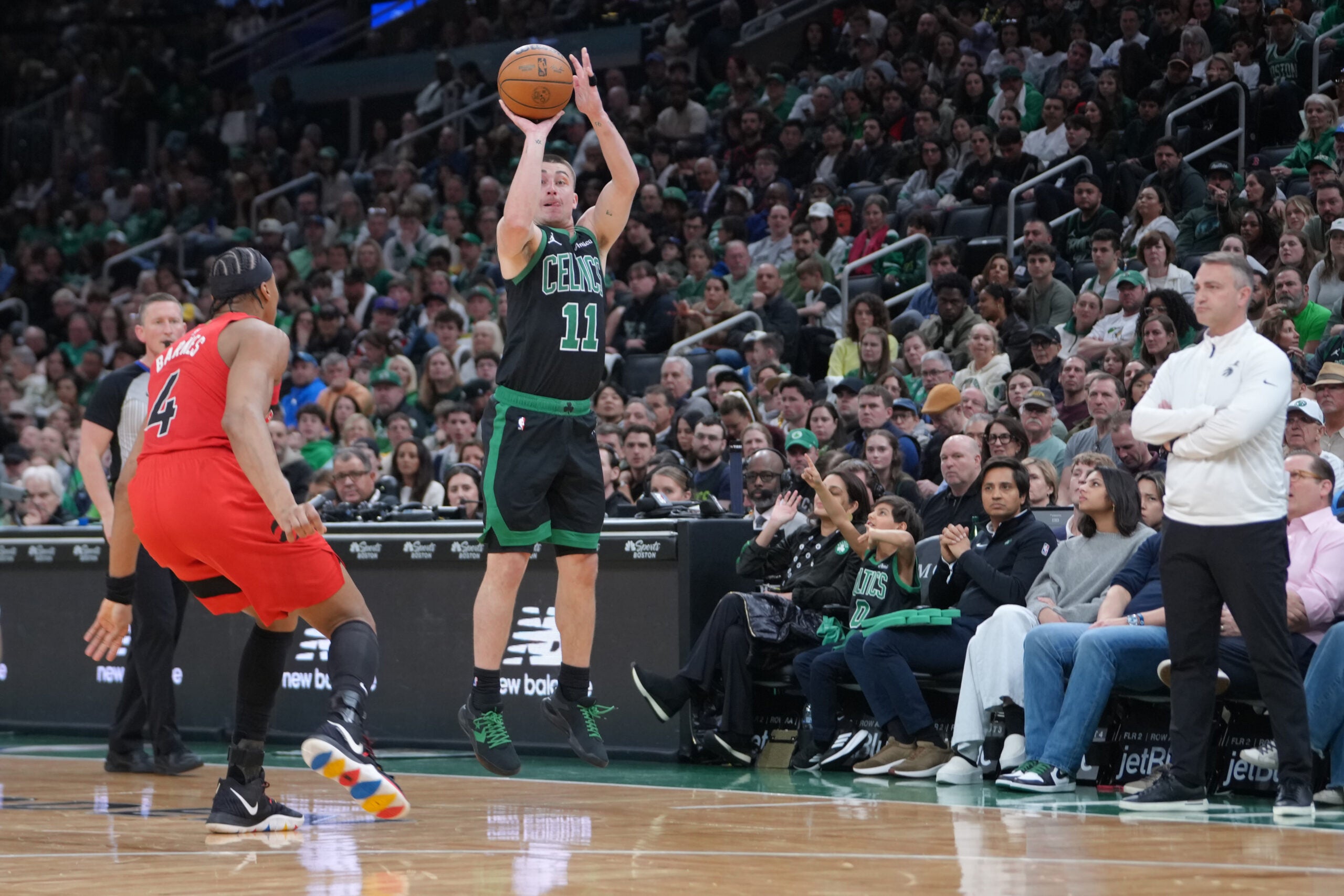
The Celtics shot about as poorly as they have all season on Sunday. But strangely enough that could almost be taken as a positive heading into the postseason.
Boston hit just eight threes and shot just 28% from the floor in what was its second lowest total of the season. On the other side of the coin, Boston did score 76 points in the paint which is the most it has ever scored in the play-by-play era.
So while the shooting fell off, the Celtics didn’t just keep going back to the well in the hopes that it might turn around. Instead they went to the paint against a team that was challenging them offensively, and because of that they earned their 53rd win.
Boston averages just over 41 threes a game, but on Sunday it took just 28.
After last season in which the narrative was the Celtics lost due to their lack of versatility, it should be a positive that they adapted when the shot clearly wasn’t falling.
Two
Boston’s magic number is down to two.
With a combination of either two Celtics wins or Knicks losses, Boston would clinch the No. 2 seed and home court through the first two rounds of the playoffs.
Boston and New York face off on Thursday in a game which either could have a whole lot of meaning or none at all. The Celtics will have a handful of chances to clinch the spot throughout the final week of the season with games against the Hornets, Knicks, Pelicans and Magic.