
The Detroit Pistons weren’t supposed to look like this without Cade Cunningham.
Not this sharp. Not this connected. Not this dominant.
When Cunningham suffered a collapsed left lung in mid‑March, Detroit lost its offensive organizer, its late‑game decision-maker and the player who had carried them to the top of the Eastern Conference.
The Pistons had every excuse to slip. They didn’t.
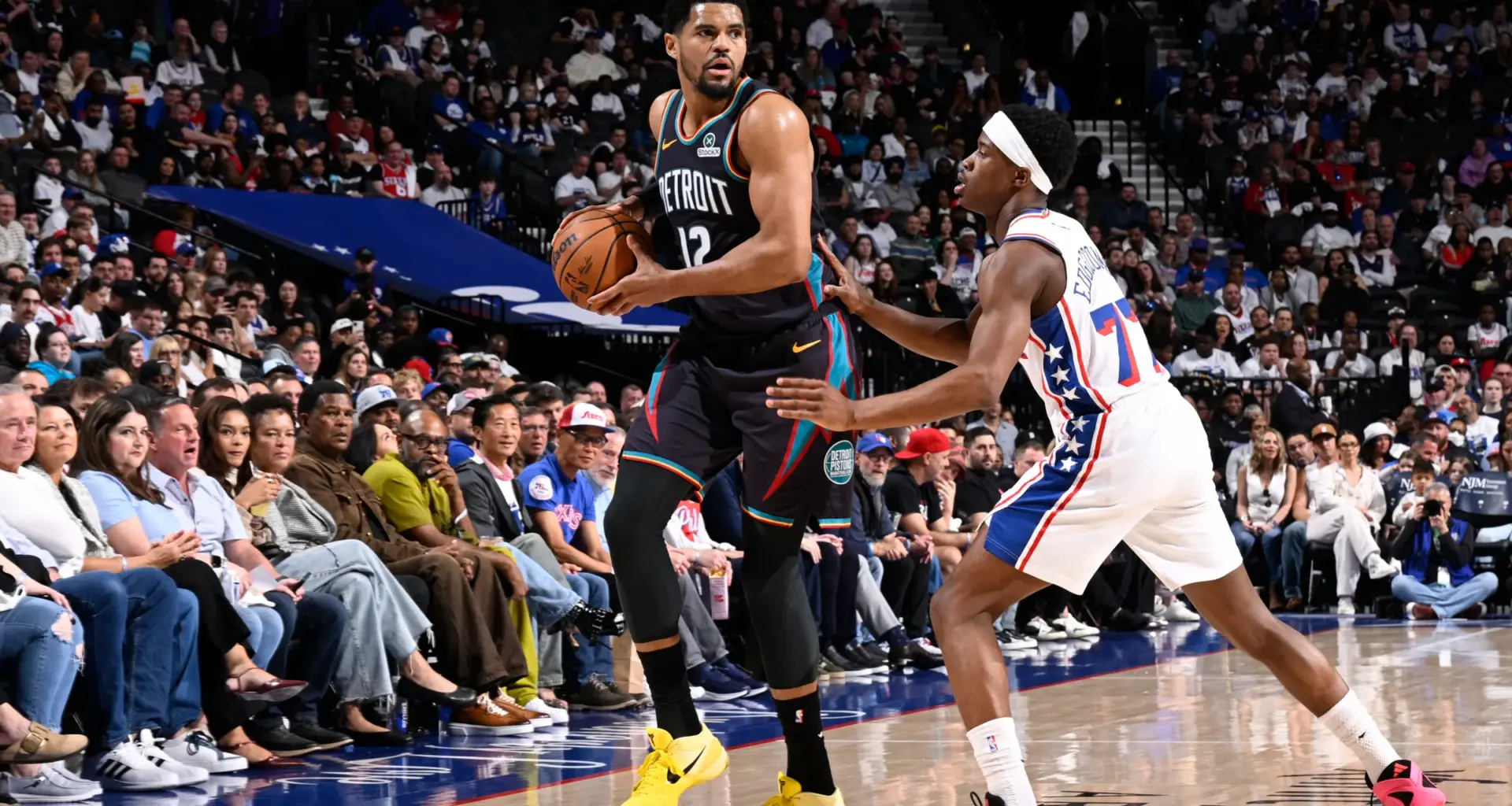
With a 116-93 win over the Philadelphia 76ers on Apr. 4, Detroit secured the No. 1 seed in the East, a testament to a roster that has grown sturdier, deeper and more defensively connected than at any point in the Cunningham era.
And that’s the story: not that the Pistons are surviving without their star, but that they look completely prepared for life without him — at least for now.
Without Cunningham’s steadying presence on offense, Detroit has leaned fully into its defensive backbone. The Pistons have been winning games by dictating tempo, controlling the paint and forcing opponents into uncomfortable possessions. Detroit’s rotations are sharper, their communication louder and their physicality more pronounced.
As of April 5, the Pistons are 9-2 since Cunningham went down, with their only losses being to an Atlanta Hawks team that had won 14 of their last 15, and in overtime to the league’s top team in the Oklahoma City Thunder — by a combined five points.
The Pistons held their opponent to 110 points or less in seven of those contests — almost double the league-average rate — and Ausar Thompson was named the Eastern Conference Defensive Player of the Month for March.
This is the version of the Pistons that head coach J.B. Bickerstaff has been trying to build — a team that can win ugly, win tough and win without needing to score 120 points.
At the center of the operation is Jalen Duren.
Duren’s growth has been one of the Pistons’ most important developments this season — he’s controlling the glass, protecting the rim and giving Detroit a physical presence that keeps opponents honest.
With Cunningham out, Duren’s role has expanded from complementary big to foundational piece. In that span, he averages 25.5 points and 10.5 rebounds on 73% shooting.
If Duren has taken upon Cade’s role as the anchor, Daniss Jenkins is filling in as the spark.
The Pistons haven’t asked Jenkins to replicate Cunningham’s production, but they have asked him to keep the offense organized, defend his position and avoid mistakes.
And he has delivered — Jenkins doesn’t try to put on Cunningham’s cape; he just plays clean, tough, winning basketball. And the Pistons have fed off it.
Since taking over the starting duties, Jenkins has averaged 18.3 points and 7 assists with efficient scoring and limited turnovers.
Jenkins’ poise has helped Detroit maintain structure, and his defensive effort has fit seamlessly into the Pistons’ new identity.
The Pistons have proven they can win without Cunningham. They can defend. They can grind. They can close out games with toughness and discipline.
But the ceiling? That still belongs to Cade.
Before the injury, Cunningham was averaging 24.5 points and 9.9 assists — production matched by only a handful of players in NBA history. He was the engine of Detroit’s offense, the late‑game decision-maker and the player who elevated everyone around him.
His absence has forced the Pistons to grow in ways that may ultimately benefit them. They’ve learned to win without leaning on him. They’ve learned to defend at a higher level. They’ve learned to trust their depth.
But if Cunningham returns at full strength — and there is optimism he should be back in the playoffs — Detroit becomes something far more dangerous.
They become complete.
For now, the Pistons look suited for life without their star. But if Cunningham returns, and is seamlessly inserted into the operation that has grown so much in his absence, Detroit could reach new heights just in time for a playoff run.