
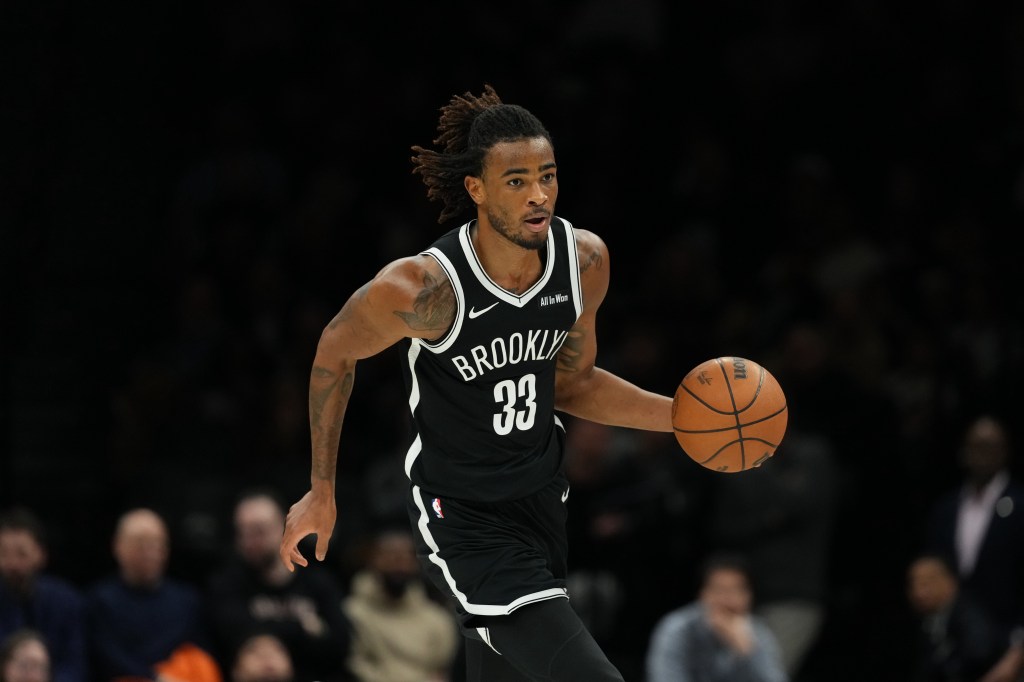
Nic Claxton didn’t try to spin a difficult season into something it wasn’t.
He called it rough. He admitted there were nights when the mental side of it tested him. He spoke openly about the finger injury he’d been dealing with since January, said he needs to be better on the glass and graded his own defense with unusual candor, saying he was “OK” and could be more consistent protecting the rim.
For a player who’s already spent years growing up in public, that kind of self-audit felt fitting.
Claxton is 27 now. He’s no longer just the springy young center with switchability and upside. On this version of the Nets, he’s also one of the adults in the room, one of the players asked to help hold things together while the franchise tries to build its next chapter. That was part of his job this season, and by his own telling, it changed him.
“For me personally, I feel like it’s been a good year,” Claxton said. “I feel like I matured a lot. I was able to help the young guys on and off the court and I can take a lot of positives from the season.”
That isn’t empty reflection. The season gave him enough substance to say it.
Claxton averaged 11.7 points, 6.9 rebounds and 3.7 assists in 69 games while shooting 57.1% from the field. His 253 assists were a career high and led the Nets, a useful marker for how much his offensive game has expanded. He also posted a career-best free throw percentage after what he described as a complete reworking of his routine at the line.
That part of his season deserves attention. Claxton didn’t just survive a developmental year. He kept stretching his game. He talked about staying in love with the process, writing down what he wants to add each offseason and refusing to get bored with improvement. Last summer, he said, he added a slow step that helped him score and draw fouls. This summer, he already has more in mind. That curiosity has value for Brooklyn.
Claxton said one of the hardest parts of this season was the constant lineup churn and the challenge of playing with so many younger teammates at this stage of his career. Still, he said he embraced it, tried to keep himself in a good mental space and focused on bringing positive energy each day regardless of whether the Nets were winning or losing. He also pointed to his daughter as his “why,” saying her presence helped him stay focused and sane through the demands of the year.
That answer may have said as much about his season as any stat did.
Brooklyn needed more from Claxton than rim runs, switches and finishes. It needed perspective. It needed patience. It needed someone who could help younger players through the kind of year that can wear on a locker room. Claxton said he took pride in doing that, and when he spoke about Nolan Nolan Traoré’s growth after his G League stint, it was clear he’d been paying attention to more than himself.
Claxton knows his rebounding has to improve. He knows the Nets’ defensive scheme placed different demands on him, especially when he was pulled higher at the level. He knows next season has to ask more from him and from the group around him. That, more than anything, is where this season starts to point forward.
This was a year for development across the roster. Claxton gave Brooklyn some of that in his own game, especially as a passer and free throw shooter. He also gave the Nets something else: a veteran presence that didn’t seem to drift even as the losses piled up and the roster kept changing around him.
Now the standard shifts.
The Nets can talk all they want about growth, learning curves and long-term plans. Claxton sounds ready for a different conversation, one that puts more weight on winning and less on silver linings.
“Next year with us not having a pick, it is time for some expectations to win games,” Claxton said. “That’s honestly what I’m looking forward to the most for sure.”