
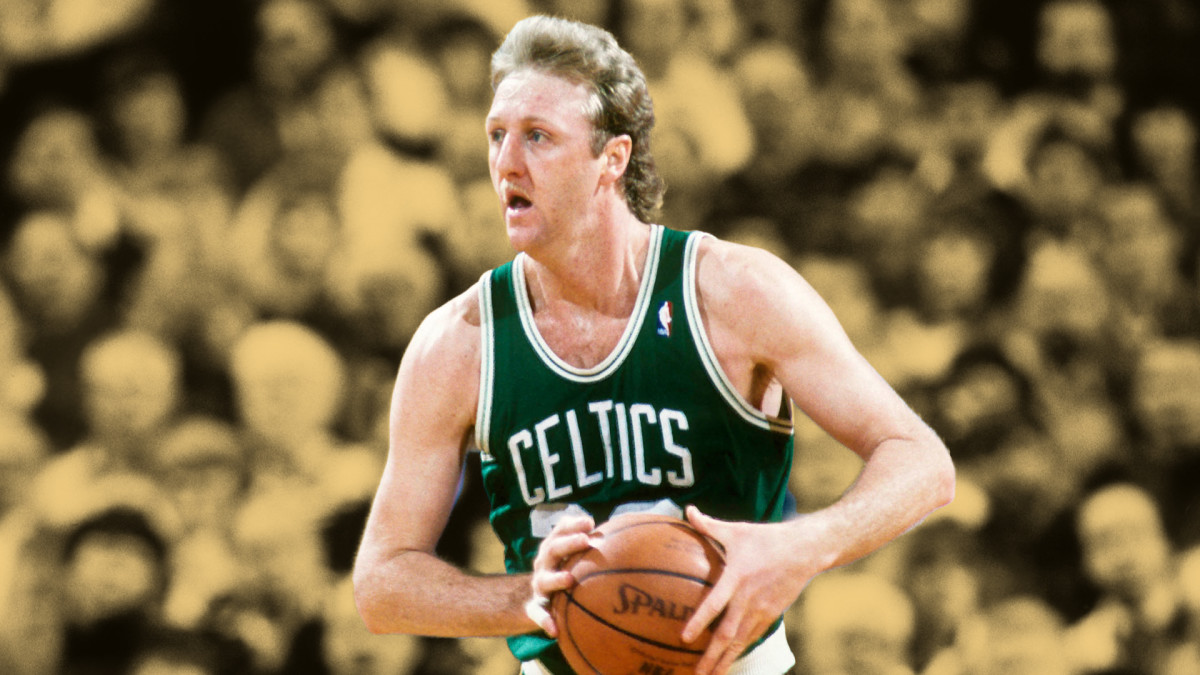
Larry Bird was the epitome of the Boston Celtics’ culture. His name carried the weight of championship banners, and his game embodied the grit, fire, and unrelenting competitiveness that made Boston a basketball city.
With three championships and three MVP awards, from the parquet floor to the rafters, Bird’s presence loomed large, not just as a player, but later, as a mind trusted to help restore the franchise to its former glory.
Bird’s front office role
When the Boston icon retired in 1992, he didn’t look elsewhere. He stepped straight into the Celtics’ front office and named special assistant to CEO Dave Gavitt. It was a natural move — he couldn’t picture himself working for any other team. The city, the colors, the legacy, they were all a part of him until everything went sideways.
Advertisement
“I knew my days with the Celtics were over when I told our owner that Sherman Douglas was the most valuable guy on our team, and then he traded him a month later,” Bird said.
That trade was more than just a roster shuffle. For Bird, it signaled a break in his unspoken bond with the organization. Sherman Douglas played with heart, toughness, and leadership. Bird saw that value, even if the front office didn’t.
At the time, the Celtics were far from their ’80s dominance. The 1992-93 team finished with just 48 wins, and by 1994, the franchise was hovering around mediocrity. Bird had hoped to help reverse the decline, and Gavitt’s vision made that possible. Gavitt was a basketball mind who understood how to motivate players and how to manage the personalities in a locker room.
He started small, like repainting the practice locker room, but those details mattered. Players noticed. Bird noticed. Gavitt treated him respectfully, talked basketball in a way that resonated and shared a creative vision for the team’s future. But Gavitt’s time in Boston was short-lived.
Advertisement
Though officially framed as a resignation, it was a forced exit, according to Bird — quietly orchestrated by the franchise ownership. The decision left Bird, the three-time MVP, disillusioned.
And in hindsight, it hurt the Celtics more than anyone realized. Gavitt was the kind of executive who would’ve understood Bird’s high regard for a player like Douglas. With him gone, Bird found himself surrounded by decision-makers who didn’t see the game the same way he did.
Clash of views
By October 1995, Bird had logged three years in the front office, and the dynamics had shifted. The team was now under the stewardship of Paul Gaston, a business-oriented owner who lacked the basketball acumen Bird admired in Gavitt.
Advertisement
Meanwhile, Bird’s former teammate, Michael Leon Carr, was installed as general manager. It might’ve seemed like a natural pairing on paper, but it didn’t translate into trust behind the scenes.
“[They] would ask my advice about certain personnel moves, then turn around and do whatever they wanted,” Bird recalled. “I mean, why ask my opinion if you don’t really care what I think?”
Gaston clarified that Bird could have “any job he wanted,” but that gesture rang hollow when Bird realized how little influence he had. Despite his basketball IQ, experience, and institutional loyalty, his input didn’t translate into action.
The Celtics, meanwhile, continued to slide. Between 1993 and 1997, they failed to post a single winning season. For Bird, a man who knew how to win and knew what winning required, the dysfunction was too much to stomach. In 1997, he walked away from Boston.
Advertisement
He took the reins as head coach of the Indiana Pacers that year, returning to his home state, where basketball was still sacred and where he could shape a team with his fingerprints all over it. Within two seasons, he led the Pacers to a 58–24 record and an Eastern Conference finals appearance.
That success was no accident. It was a product of the same vision and clarity Bird once tried to bring to Boston. A vision that was disregarded when voices like his stopped mattering.