
Longtime readers know that I am fascinated by the English language. One of the reasons for the funky nature of English is that it is derived from numerous other languages. For instance, the word “pajama” comes from Persian, while “ketchup” is from Chinese, “lemon” is from Arabic, “chocolate” is from Spanish, and, “ballet” is French — perhaps explaining why Victor Wembanyama is so balletic on the court.
Other English words are derived from other words, some of which are obvious — such as “windshield”, something which shields car passengers from the wind while driving. Other words are not so obvious. The word “fan” (as in “Spurs fans”) is derived from the word “fanatic”, not necessarily a compliment.
The different origins of the language also means that English has many words that mean exactly the same thing. For instance, the words “buy” and “purchase” have identical meanings. You can also tell which was those words has a Germanic orgin by looking at other versions of the word: the past tense of “buy” is the very Germanic sounding “bought”.
Also think about the many words that mean “very good”: wonderful, terrific, marvelous, and so on. In his novel 1984, George Orwell created a world in which the government tried to limit thought by also limiting the number of words people could use. All the words that mean “very good” were eliminated, so people could only say “good” or “double good” or for something really great “doubleplus good”.
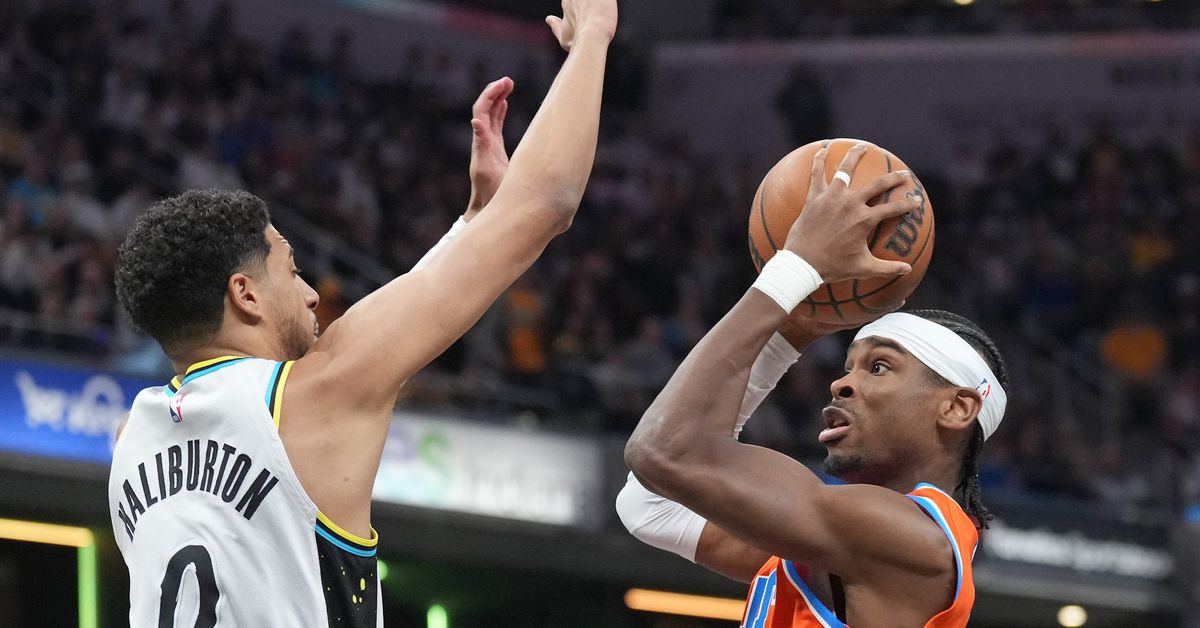
All of this is a long way to get to a word that people have used to describe this season’s Oklahoma City Thunder: Juggernaut. My curious mind wondered where that word came from. Because it rhymes with “bought”, it certainly sounds Germanic in origin. If your guess was the same as mind, we are both extremely wrong:
“An idea, custom, fashion, etc., that demands either blind devotion or merciless sacrifice,” 1854, a figurative use of Juggernaut, 1630s (Iaggernat), “huge wagon bearing an image of the god Krishna,” especially at the town of Puri, drawn annually in procession during which (apocryphally) devotees allowed themselves to be crushed under its wheels in sacrifice. Altered from Jaggernaut, a title of Krishna (an incarnation of Vishnu), from Hindi Jagannath, literally “lord of the world.”
Nope, I would not have guessed that “juggernaut” is derived from Hindi describing a huge wagon in the town of Puri, India, and neither did you. But other than the fact that other teams did not voluntarily allow themselves to be crushed under the OKC wagon’s wheels, the 2024-25 Thunder team certainly fits the definition of a juggernaut:
“A huge, powerful, and overwhelming force or institution”
OKC finished with a league-best 68-14 record (20 games ahead of the Indiana Pacers). Even more impressive, the Thunder outscored their opponents by 12.9 points per game, 3 points better than the second and third best teams, the Cavs and Celtics. If you are curious, the Pacers outscored their opponents by just 2.3 points per game, 10 points less than the Thunder per game. All of this explains why the Thunder are favored by about 6-1 to win the Finals (depending on where you bet — I don’t) and are favored by almost 10 points in Game One tonight.
But I don’t predict games or series, primarily because I am not very good at it. Instead, I root for one team or the other, regardless of which team the experts predict will win (in this case, everyone is picking the Thunder). Despite that, or perhaps partially because of that, I will be rooting for the Pacers. (Side note on the derivation of “rooting for”, something else I would not have guessed: “‘Rooting for’ is a phrasal verb or an idiom which is believed to originate from the British verb rout, which is used of cattle and means ‘bellow.’ Hence the original meaning of the phrase which is to give audible encouragement or applause to a contestant or team; cheer.”)
I will be bellowing for the Pacers for the following reasons. You can add your own:
The Pacers are the underdog. When in doubt, root for the underdog. As someone once said, “Rooting for the Yankees is like rooting for U.S. Steel”.
The Pacers, like the Spurs, originated in the old ABA. Spurs fans should root for their ABA brethren.
The Pacers play a very Spursian brand of basketball. I love this description of the Pacers from a recent Ringer piece, which could be describing the 2014-15 Beautiful Game Spurs: “They sprint the floor, identify a mismatch, force a rotation, then start popping the ball around until someone gets an open shot. It’s relentless, selfless, kaleidoscopic basketball deployed with a random flurry of drives, cuts, screens, and dribble handoffs.”
The Pacers did not steal a team from a wonderful city (Seattle) and its equally wonderful fans.
The Pacers will not sweep the Thunder, but the converse may happen. If we want more basketball, and we do, we want the Pacers to win some games and extend the series as much as possible.
OKC is a juggernaut, and a team the Spurs will need to overcome to regain their rightful place in the NBA hierarchy. This season’s Thunder have been compared to the 2015-16 Warriors, the team that kicked off their dominant 5-year stretch in which they made the NBA Finals every year, winning three times. Like this OKC team, that Warriors team had a 26-year old superstar who just won the MVP award, a youthful supporting cast, and several key veterans. While they soon became the Death Star Warriors when they added Kevin Durant, OKC has numerous draft picks in the next several drafts. This means they will be able to re-stock the team without adding anyone like KD. Those picks can also help them replace players who get priced out under the NBA’s “first apron” and “second apron” salary rules. So like that Warriors team, this Thunder will be a massive problem for the league, and the Spurs, for many seasons to come.
As a result, even if they aren’t already doing so, Spurs fan might as well start rooting against the Thunder. We certainly will be doing exactly that for the foreseeable future. Go Pacers!