
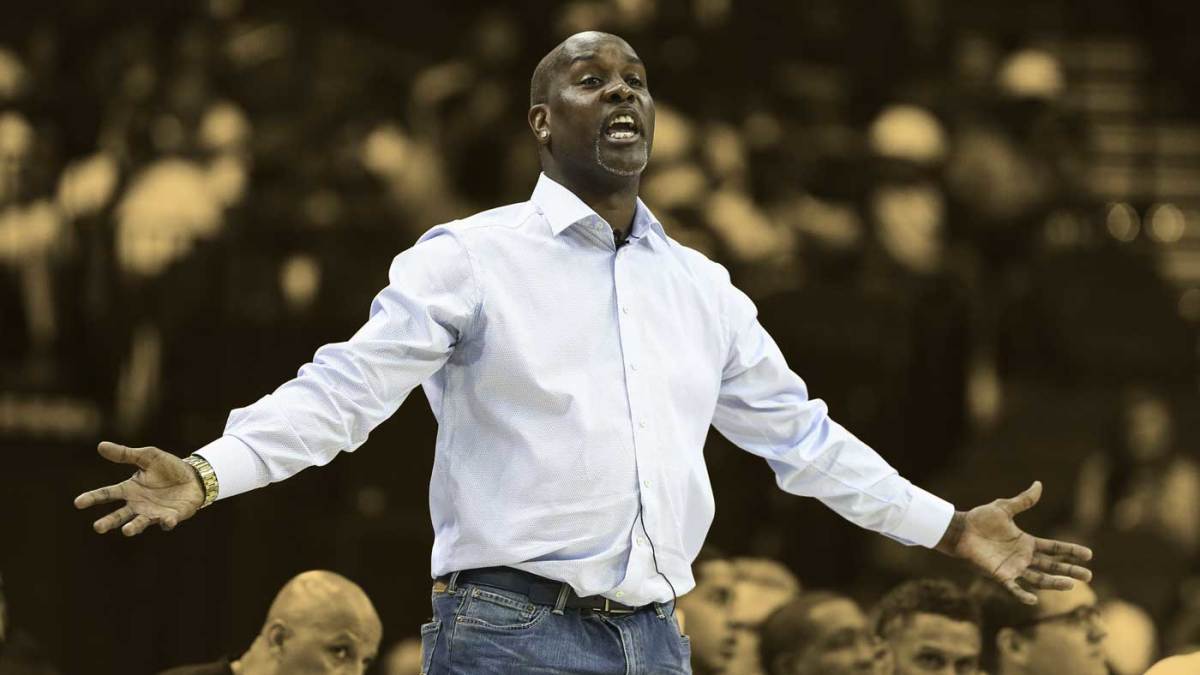
“I didn’t think we were going to pull the plug on that team” – Gary Payton was stunned when the Lakers blew up their superteam so quickly originally appeared on Basketball Network.
In the summer of 2003, the Los Angeles Lakers assembled what many believed to be an invincible roster. Gary Payton, an NBA legend with nine All-Defensive First Team nods and a reputation for snarling defense, joined forces with fellow future Hall of Famer Karl Malone, signing on with a franchise that already featured the three-time championship core of Shaquille O’Neal and Kobe Bryant.
Advertisement
On paper, it was dominance incarnate. In reality, it was one of the greatest what-ifs in NBA history.
By the end of that season, the “superteam” experiment was shelved.
Payton’s surprise
The dynasty that had once bullied its way to three straight championships in the early 2000s fractured under the weight of internal tension, injury and timing.
The unraveling was not abrupt for Payton, who joined the Lakers in search of a ring and history. It was shocking.
“Karl only played 22 games, he missed 60,” Payton recalled. “Kobe missed 35 or 36, and Shaq did too. And we still made it to the finals. But at that time, it was so broken in our thing that we couldn’t get it back, we couldn’t really get it back. And it was okay. I didn’t think we were gonna pull the plug on that team.”
Advertisement
The 2003–04 Lakers were built on veteran firepower and urgency. At 35, Malone was chasing the only thing missing from his résumé, which was a title. Payton, 35 also, had come off a stint with the Milwaukee Bucks and the Seattle SuperSonics, where he cemented his legacy as one of the game’s fiercest competitors but remained without a ring.
The Lakers, already with three banners raised behind the O’Neal-Bryant era, were looking to secure a fourth before age and egos caught up. But the dream team never had a chance to fully gel.
Malone’s knee injury sidelined him for 60 games. Bryant missed 17 regular-season contests while also navigating an ongoing legal case in Colorado that would force him to travel back and forth during the season.
O’Neal also missed time, battling his own injuries and long-standing tensions with Bryant. Despite it all, the team finished 56–26, good for second in the West and stormed through the playoffs to reach the Finals.
Advertisement
The journey, though, was grueling.
The Lakers needed six games to get past the Rockets in the first round. Then came the redemption series against the San Antonio Spurs, where Derek Fisher’s 0.4 miracle in Game 5 became the defining moment of the postseason. They swept the Minnesota Timberwolves in the Western Conference Finals.
And all of a sudden, it looked as though the old magic had returned.
The breakup
The Finals exposed every crack.
Advertisement
Against the Detroit Pistons’ disciplined, defensive-minded roster led by Chauncey Billups, Ben Wallace and a young Tayshaun Prince, the Lakers looked exhausted and out of sync. Malone aggravated his knee and could barely contribute. The team’s chemistry was visibly fractured. Detroit didn’t just beat them, no. They dismantled them in five games.
That Finals loss marked the end of the era. In hindsight, the warning signs had long been present. But even then, Payton couldn’t believe how fast the teardown came. The end came faster than anyone expected.
“But Shaq got traded and I was traded and it was crazy,” Payton said.
That summer, O’Neal was dealt to the Miami Heat in exchange for Lamar Odom, Caron Butler, Brian Grant and a future draft pick. The trade ended the most dominant duo of the modern era and made it clear: the Lakers were Kobe’s team now.
Advertisement
Payton was shipped to the Boston Celtics as part of a multi-player trade involving Rick Fox and Marcus Banks. He’d later land in Miami, where he eventually got his ring in 2006 — ironically alongside O’Neal. But the sting of that 2004 breakup lingered.
The Lakers would miss the playoffs the next season, while Payton went from starter to role player in a supporting cast. Malone, whose championship window closed for good after that final, retired in 2005. The Lakers, who had once been the league’s most intimidating empire, suddenly became a franchise in transition.
This story was originally reported by Basketball Network on Jun 9, 2025, where it first appeared.