
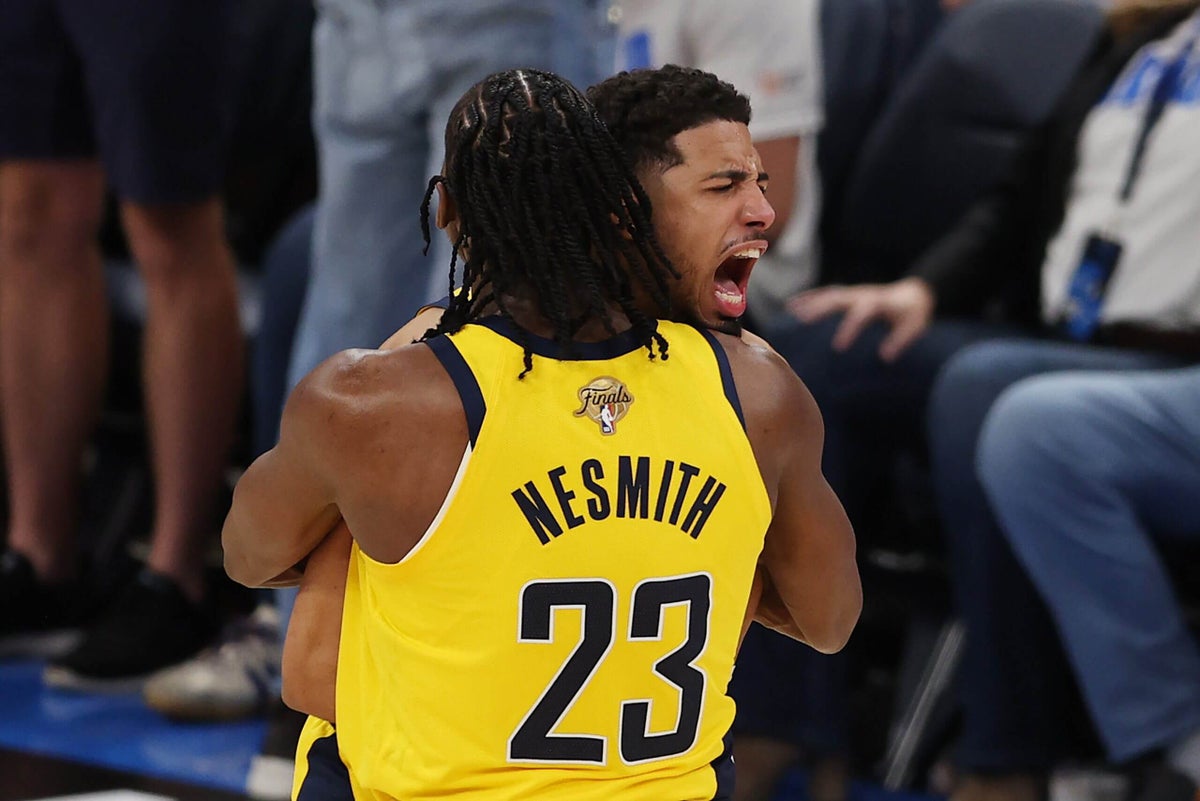
The ’90s were a more innocent time for NBA jerseys.
The only patch worn by players across the league during the 1995-96 regular season was one depicting the NBA logo on either the left or right shoulder depending on the team. No manufacturer or sponsor logos, just a stitched silhouette of Jerry West.
But the league introduced a revamped logo and branding for the Finals in 1996 between the Chicago Bulls and Seattle Supersonics, updating what had been in place since 1985 with a more modern look and feel. The new logo included a stylized depiction of the Larry O’Brien Trophy, so to help highlight the change, a second patch, an isolated version of that trophy, was added to the front of each team’s jerseys.
And so the NBA Finals jersey patch was born — starting a tradition that has lasted 29 years and counting. Although in that time, the patch has changed and controversially migrated from its place of prominence on the front of each player’s jersey to the back of it. It’s also a key element on some of the most valuable basketball collectibles of all time.
From ’97 until 2003, the NBA Finals patch changed every season — first switching to utilize the full Finals logo, then just different variations of the O’Brien Trophy. In 2002, with the then New Jersey Nets facing the Los Angeles Lakers, the Finals and the NBA logo patches were merged together on the left shoulder to make room for a U.S. flag and red, white and blue ribbon patch on the right side to honor the victims of 9/11. In 2010, another significant change came when the Finals patch moved to a ball design that is still being used so teams would no longer be wearing the trophy before they won it.
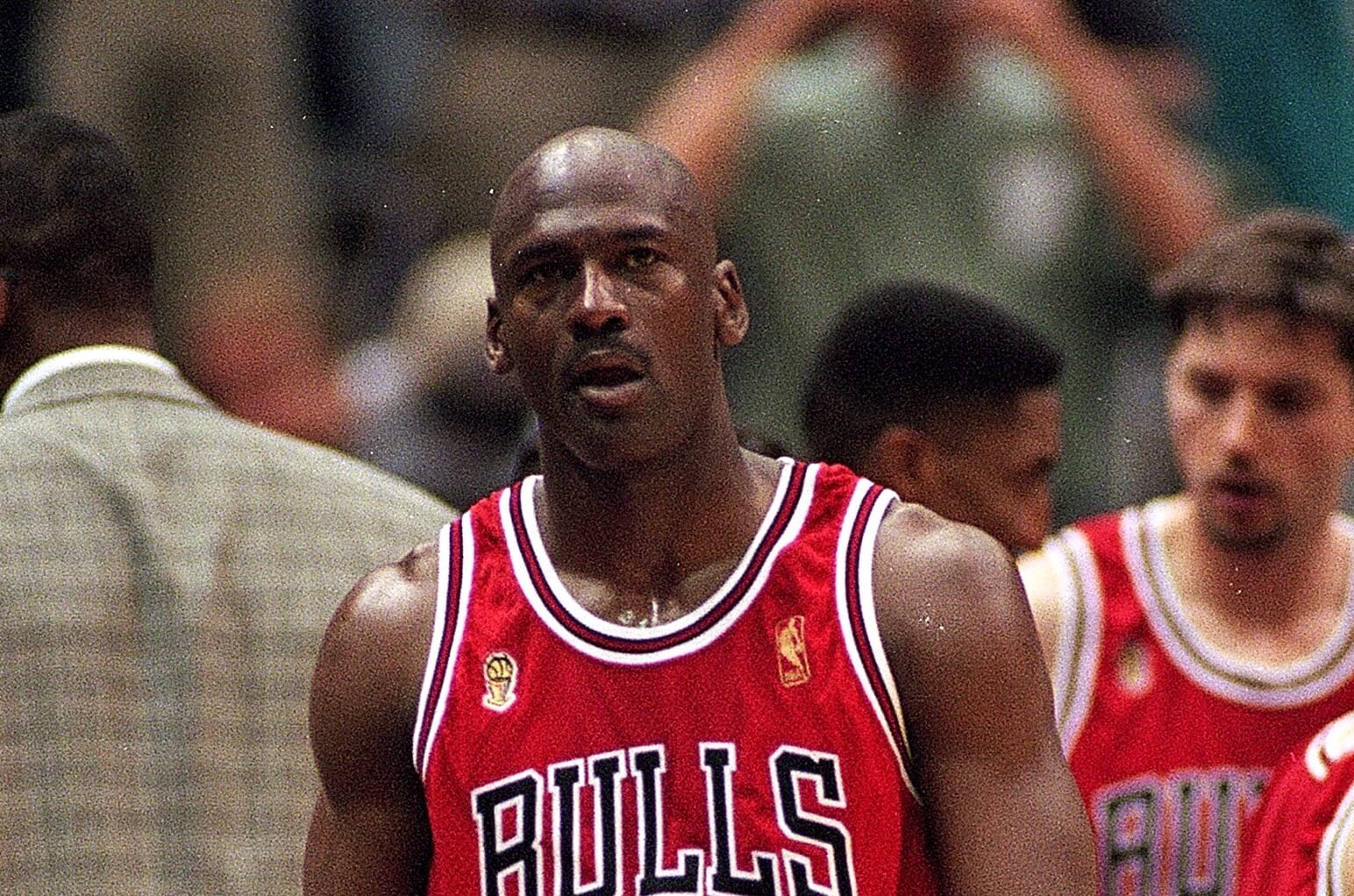
Michael Jordan wearing an early NBA Finals patch in 1997. (Photo: Brian Bahr/Allsport)
The next major change came in 2015, when the Finals patch followed the NBA logo to the back of the jerseys, above each player’s name, in a move widely seen as an effort to clear space on the front for the eventual approval of sponsor logos. On the back neckline above the Finals patch, a small gold secondary patch was added to highlight the total number of championships each team has won (neither team in this year’s Finals are wearing those, however, because the Indiana Pacers have never won one and the Oklahoma City Thunder’s only NBA title came in 1979 when the franchise was still the Supersonics — they have declined to wear the patch since they were introduced).
With the Finals patch now on the back, the front shoulder spaces were completely bare for the 2015, 2016, and 2017 series between the Cleveland Cavaliers and Golden State Warriors. This was the proverbial calm before the corporate sponsorship storm, though.
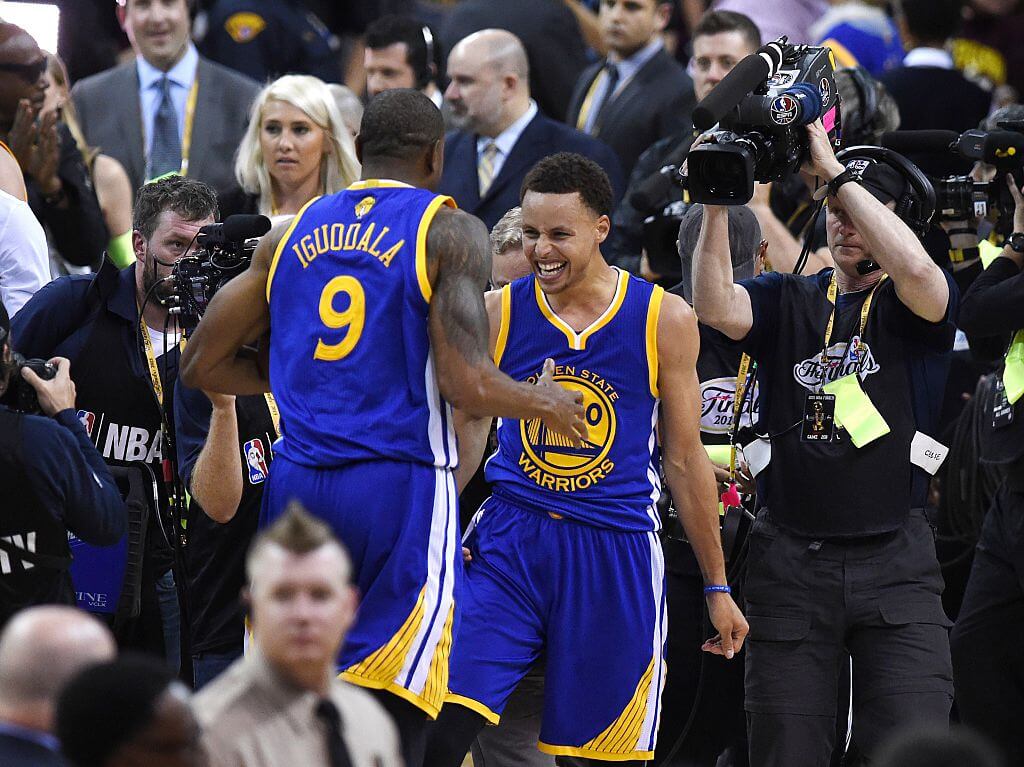
The Golden State Warriors’ Andre Iguodala and Steph Curry celebrate winning the 2015 NBA Finals. The Finals patch is on the back of the jerseys and nothing is on the front except the team logo. (Photo: TIMOTHY A. CLARY/AFP via Getty Images)
By the 2018 Finals, new NBA jersey manufacturer Nike had its Swoosh on the right front shoulder spot for all teams league-wide, while franchise-specific sponsor patches started to occupy the left shoulder spot, with the Finals patch remaining on the back. That’s how the configuration remains today.
Although arguably less prominent, the NBA Finals patches still hold importance for the teams involved.
To mark their first Finals appearance since 2000, the Pacers have been adding the patch to jerseys sold at its team store for $20.
A game-worn Finals patch can command a far higher price tag, though. In December 2022, a Panini trading card featuring a full NBA Finals patch worn by LeBron James in Game 2 of the 2016 series sold for $195,948 (the same card sold again in May 2023 for “just” $156,000). Another Panini card with a Finals patch worn by Steph Curry in Game 2 of the 2017 series sold for 130,960.90 in October 2023.
Panini LeBron James 2016 NBA Finals Game-Worn Logoman Patch Auto 1/1… pic.twitter.com/0xSXpIjrzh
— Best Cards Ever 🏆 (@CardsBoulevard) May 17, 2025
The highest priced full game-worn jersey bearing a Finals patch to date is also the most expensive basketball jersey ever: Michael Jordan’s 1998 NBA Finals Game 1 jersey, which sold for $10.091 million in September 2022, following the success of The Last Dance docuseries.
“Patches typically add value to a jersey’s market value because they signify unique, one-of-one moments,” says Sotheby’s vice president Brendan Hawkes. “Collectors value patches as a sort of easter egg that adds a distinctive element, differentiating jerseys from standard-issue pieces.”
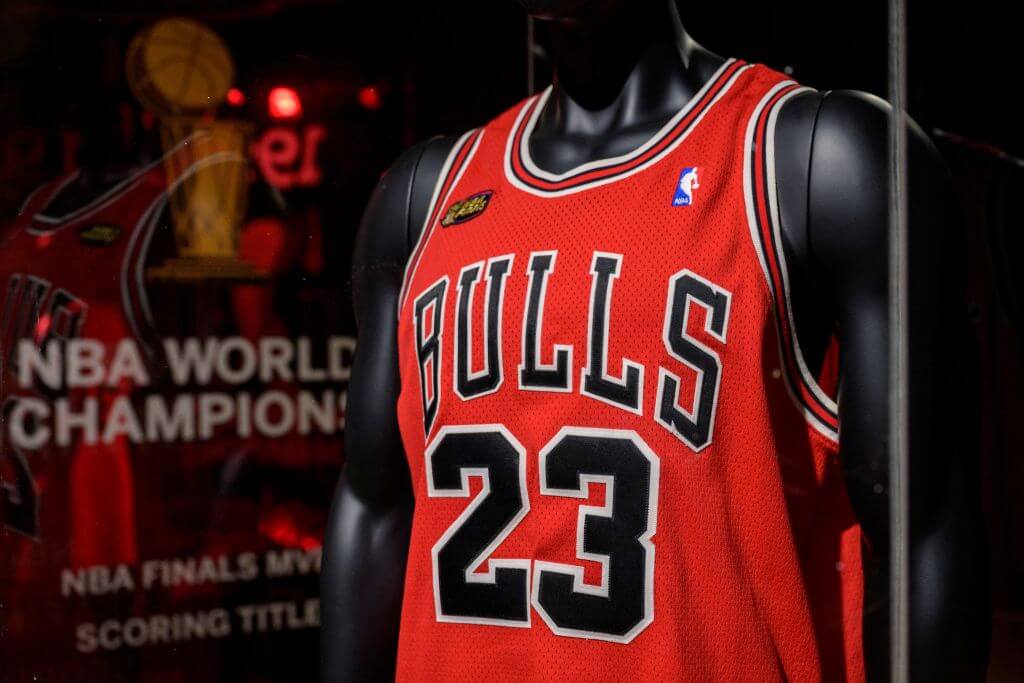
Jordan’s 1998 NBA Finals Game 1 jersey on display in 2022. (Photo: ANGELA WEISS/AFP via Getty Images)
So will the Finals patch remain on the back of jerseys forever? Unless something changes with the NBA’s front-of-jersey sponsorship deals, that seems to be where it will stay.
For certain occasions, like to celebrate Kobe Bryant and Bill Russell after each of them passed, the NBA has had small patches above the Nike logo, so a smaller Finals patch could perhaps occupy that spot at some point. Or maybe a central placement on the front of the jersey between the neckline and team name/logo — although some jersey designs might limit that possibility.
Jersey patches are quite literally a small thing, but as with the push to bring back the NBA Finals logos on the court, they’re a visual cue that contributes to establishing the specialness of an event. They can help us identify specific moments in sports history and the the emotions attached to them. Or they can advertise a truck stop. While the latter is more valuable to owners, the former has proven to be more valuable to fans.
The Athletic maintains full editorial independence in all our coverage. When you click or make purchases through our links, we may earn a commission.
(Top photo: William Purnell/Getty Images)