
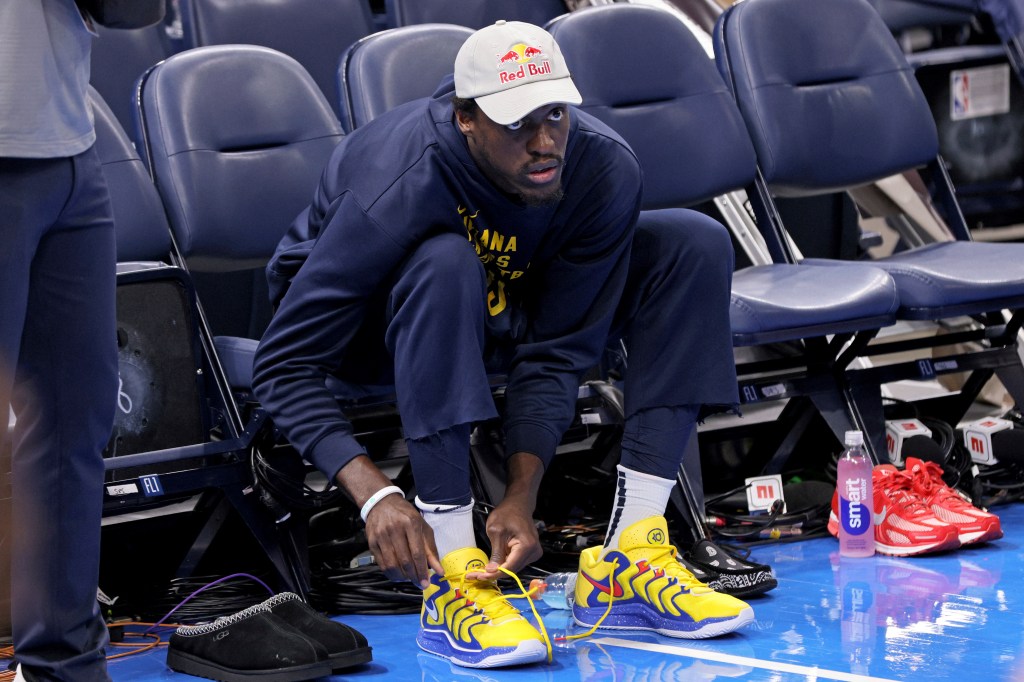
Q: Ira, I like how your readers always want to trade everyone for something different. Look at Pascal Siakam on Sunday against the Thunder. He was like Bam Adebayo on offense. But everyone says that was a great trade for Indiana. – Carl.
A: With all due respect to Tyrese Haliburton and what he has done in these playoffs, there is only one superstar in these NBA Finals, and that’s Shai Gilgeous-Alexander. Other players are up at times, down at times, sort of like Bam Adebayo with his offense. The key to the type of success that Indiana has found this postseason is finding pieces that mesh. The Heat had that when Jimmy Butler was at his most interested. Now, with the decline of some of the bench elements, it has been a bit more wonky, including trying to make it mash with Kel’el Ware. But, no, you don’t trade just to trade. You trade to try to build something that meshes, as the Pacers have.
Q: Trade for Zach LaVine. – Mayo.
A: Um, yeah, no. First, if you are to have three oversized contracts on the books, it had better be three players you believe form a championship core. Tyler Herro, Zach LaVine and Bam Adebayo likely fall short of that designation. It is why Bradley Beal, even with the hurdle of the no-trade clause, made such little sense for the Heat amid the Jimmy Butler trade exploration. The fact that Chicago traded off Zach for pennies on the dollar says plenty. The next LaVine suitor likely will be looking to exchange a bad contract in exchange. All of that said, Zach’s current contract would expire when a Tyler extension would kick in, so there is that.
Q: Ira, you know why Micky Arison deserves to be in the Hall of Fame? Because he isn’t James Dolan. – Pace.
A: I’m not sure that being better than one of the 29 other owners is exactly the platform for candidacy to Springfield. But there also is plenty to be said about Micky Arison and his family acting with the type of patience and prudence not seen when James Dolan and the Knicks summarily axed Tom Thibodeau in the wake of New York advancing to the conference finals for the first time in a quarter century. In the Heat’s darkest hours, there typically has been a sense of what “we” can do better, rather than scapegoating.