
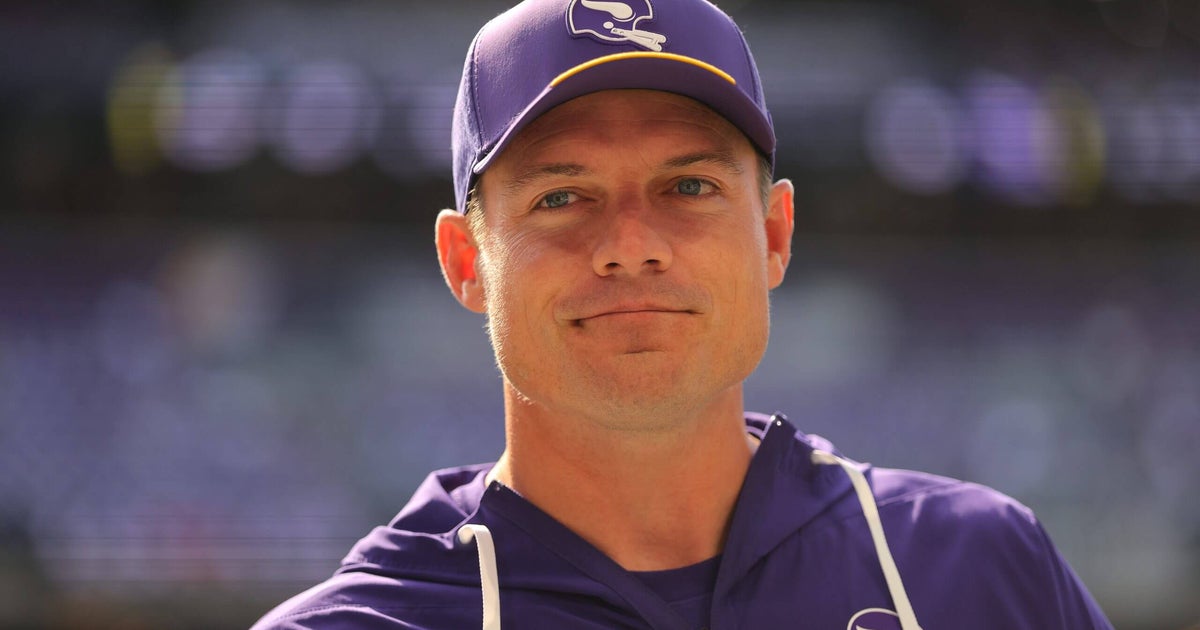
EAGAN, Minn. — Reach the inner circle, and you earn an opportunity to establish a name. Sean McVay has. Mike Macdonald is starting to.
First, they became NFL head coaches. Then, their success on offense or defense became something of a brand. Pundits praise their systems and play calls. Players rave about their knowledge, explanations and adaptability.
The media ecosystem, which often rewards glitz and glamor, almost adds incentive to pursue that guru status.
On Sunday evening, following his team’s impressive comeback victory over the Green Bay Packers, Minnesota Vikings coach Kevin O’Connell came close to admitting this. His team had won a massive season opener in semi-ugly fashion. In the aftermath, O’Connell explained how experience helped him realize that the most elite coaches in the inner circle care not about the appearance but about the final result.
“I don’t think, in some of the adversity (the Vikings have faced in recent years), I’ve coached very well,” O’Connell said. “Trying to maybe worry about the stat sheet (hurt the team). Trying to maybe worry about what it’s going to look like when you pick up the newspaper. Statistically, are people going to think you’re a good coach?
“It’s about winning.”
Vikings rally late to beat Packers
That this came pouring out in response to an otherwise mundane question about quarterback Carson Wentz speaks to its revelatory nature.
It also doesn’t hurt that O’Connell backed those words with action.
After months of discussion about revamping the team’s run game, O’Connell stuck with the ground game against the Packers, even despite early struggles.
In fact, the Vikings ran the ball 27 times when trailing Sunday. That’s the second-highest total since O’Connell became the Vikings’ head coach in 2022. In 2024, in a sloppy matchup with the Jacksonville Jaguars, Minnesota ran the ball 28 times to ease pressure on then-quarterback Sam Darnold.
Unprompted, Vikings right tackle Brian O’Neill brought up O’Connell’s run-game commitment after the game. The Vikings only averaged 3.6 yards per carry, with a subpar 32.1 percent success rate. Critically, though, running back Jordan Mason broke free for a 28-yard outside-zone hit on the team’s go-ahead drive. Both he and Aaron Jones scored on short touchdown runs.
“We weren’t really hitting any big ones,” O’Neill said, “but we just kept calling them and calling them and calling them. And, like, that’s pretty cool. Eventually, they’re going to pop. And they did.”
O’Connell arrived in Minnesota with considerable offensive acclaim. He had helped reorient the Los Angeles Rams’ offense around the strengths of Matthew Stafford. His work played a major role in the Rams’ Super Bowl LVI title.
Speak with his former players and colleagues, and they will laud O’Connell’s innate ability to identify coverages in real time and formulate a concise plan of attack amid the noise of competition.
With this backdrop came high expectations. He would design an offense around superstar receiver Justin Jefferson. He would create a beneficial environment, centered on positivity, around veteran quarterback Kirk Cousins. And O’Connell validated many of those beliefs. That, paired with his real-time piloting of Josh Dobbs’ extraordinary Vikings debut in 2023, earned him a particular reputation.
Sam Darnold’s bounce-back 2024 season provided punctuation. The Vikings won 14 regular-season games, and O’Connell was named the NFL Coach of the Year.
Maintaining the prestige of an offensive mastermind means building atop what has already been accomplished. That becomes harder when the quarterback position shifts from a trustworthy veteran to a raw second-year player.
O’Connell entered the 2025 season intending to streamline the task for J.J. McCarthy. That attempt, and McCarthy’s own issues with accuracy and reliability, didn’t jibe with the desire to target Jefferson and light up the scoreboard.
Eventually, O’Connell altered the recipe to a simpler blend. The Vikings utilized heavy personnel on early downs to stay efficient, and they schemed third-down concepts angled toward the sidelines. Those choices won.
“You learn it doesn’t matter what the stat box looks like,” O’Connell said in the lead-up to Sunday’s game. “It doesn’t matter what the EPA (expected points added) looks like. You need to know those things to know how teams may view what you’re successful at. But none of those things matter. Winning is the only thing that matters.”
The offseason signing of Kyler Murray gave the Vikings and O’Connell a chance to revert to their flashier plans. But they haven’t really gotten the opportunity.
Packers cornerback Keisean Nixon darted into the backfield to torpedo a run play on the first snap. Later, linebacker Edgerrin Cooper flew around linemen and snatched Vikings running backs on two separate snaps. Minnesota’s offense trudged forward with conviction.
Rather than placing all of the responsibility on Wentz’s shoulders, the Vikings incorporated 21 or 22 personnel on almost 40 percent of their offensive snaps, the highest percentage of any game in O’Connell’s tenure. The heavy-package runs worked like jabs in a boxing ring. The Vikings chipped away at the Packers long enough to spring Mason at a critical juncture in the game.
With that said, perhaps the most underrated benefit of this strategy could surface next week.
Trot out onto the field with big bodies, and the Chicago Bears will have good reason to expect a rush around the edge. Start messing with opponents’ expectations effectively, and the Vikings can create mismatches on the field. Find success, and an NFL coach just might force his way into the elite tier of the coaching inner circle.