
The words “the pride and joy of Illinois” are right there — or “dere,” if you will — in the official fight song. I was born in Chicago and raised at the corner of Ashland and Wellington, and so I could not help but balk when the Chicago Bears announced an intention to move across the state line to Hammond, Indiana, in early June.
And yet.
This summer, as I’ve made countless drives between the Land of Lincoln and my adoptive home in the Hoosier State, I’ve had time to reconsider my Illinois chauvinist’s response to the prospect of the Bears building a new stadium in Hammond.
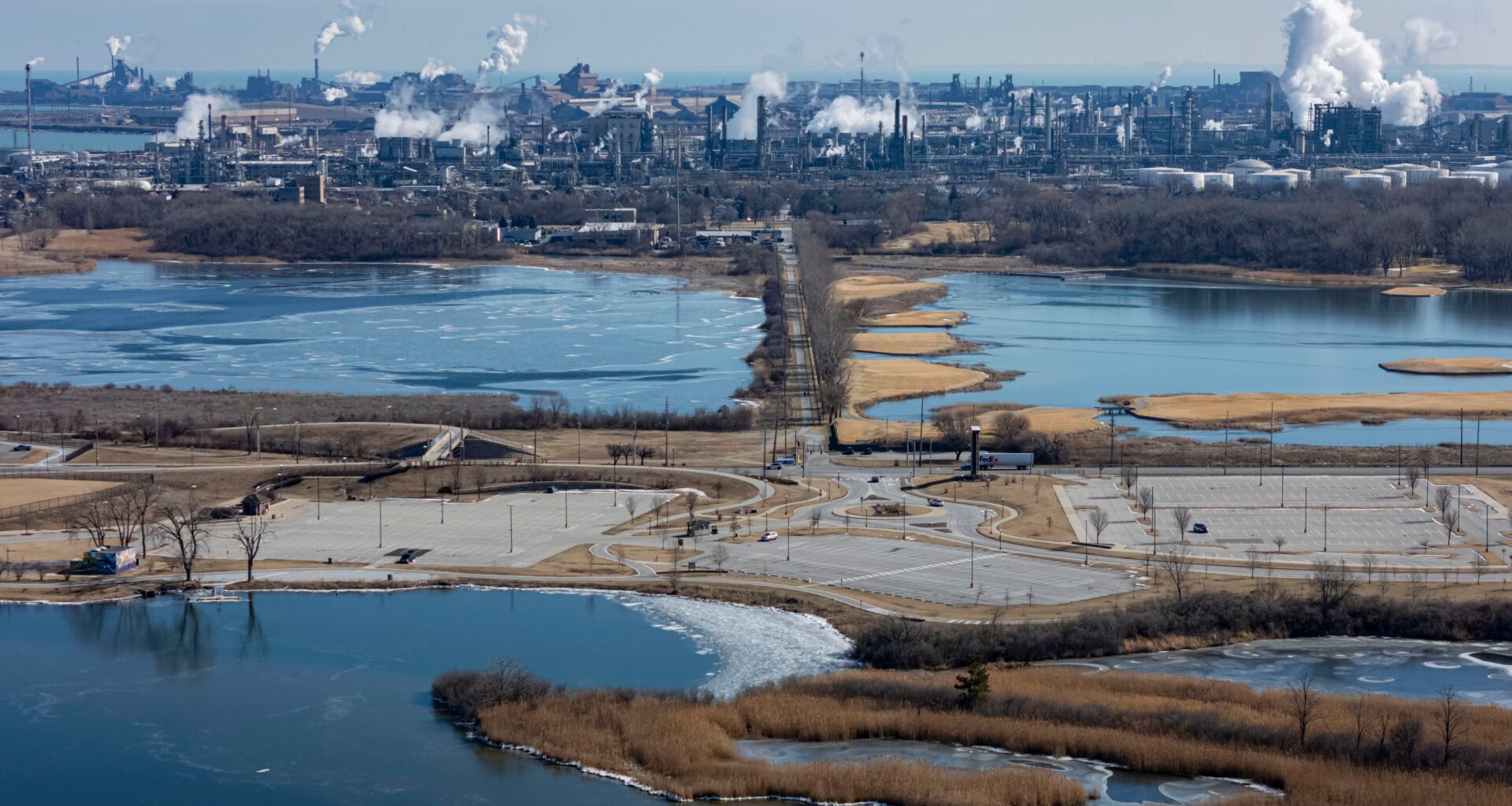
With each of those drives past the Whiting oil refinery, Wolf Lake and the Gary steel mill, what’s struck me more and more is this: You can actually feel the the spirit of Chicago, the city that works, a whole lot more vividly in Hammond (and northwest Indiana) than the leafy suburbia of Arlington Heights. Heck, Hammond probably expresses the spirit of Chicago more faithfully than much of Chicago these days. (Think Wrigleyville, post-Nashville-ification.)
If Bruce Springsteen had been born in Chicagoland, it surely would’ve been the steel mills and oil refineries of Gary and Hammond that provided the tableaux for his working-man’s rhapsodies and lunch-pail poetry. (Maybe, if the Bears were to host a Super Bowl in Hammond, Springsteen could play the halftime show.)
When you look out over those mills and refineries — and when you smell them, too — you can’t help but feel the ghosts of the Union Stock Yards, of the Pullman railcar factory, of South Works, of the men and women who made Chicago when it was at its Chicago-est. Sorry, Arlington Heights, but you just don’t get that when you walk the grounds of the old Arlington Park — which might as well have been teleported in from Kentucky’s genteel bluegrass country. And “genteel” is simply not what we do here in Chicago. It’s not who we are.
And it’s not just the aesthetics that make Hammond and the northwest corner of the Hoosier State so quintessentially Chicago. It’s the people and the culture, too.
Ann Marie Lipinski, an august former Tribune editor, once told me that perhaps the purest encapsulation of coastal cities’ misunderstanding of Chicago was in how their media covered Dennis Rodman’s role in the Bulls’ second three-peat. The sports-and-culture pundits of Los Angeles and New York marveled with shock and puzzlement at how such a flamboyant character could be so embraced by the hardscrabble, blue-collar, industrial Midwestern fanbase of the Bulls. But they were totally missing the point, Lipinski said.
The blue-collar aesthetic of our city, after all, is really just incidental to our blue-collar ethic. If you really know the spirit of Chicago and its people, you know there’s actually nothing shocking about our embracing a player who had green hair, wore dresses and dated Madonna. What we loved about Rodman, what made him one of us, was that he worked his tail off to pull down rebounds with the precision of a veteran hog butcher, who protected star Michael Jordan from Rodman’s former Pistons teammates with the ferociousness of a steelworker hammering together the beams of a LaSalle Street skyscraper.
And he got the job done. Rodman’s flashy aesthetics were entirely orthogonal to that; they simply didn’t matter to us Chicagoans, one way or the other. (See also, Caleb Williams’s fingernails versus his gutsy delivery of bulletlike throws to Rome Odunze while standing in the face of Packers linebackers.)
Today, in a time of fever-pitched cultural polarization, that spirit is fraying — if not already vanished altogether — across much of our country. But I still see it among the Hoosiers I now call neighbors in northern Indiana. I see it in my neighborhood diner in South Bend, in the deep mutual respect between the camo- and NASCAR-gear-clad patrons (who sometimes wear MAGA hats) and the owner who’s decorated her diner walls with Pride banners. Because she cooks a damn fine corned beef hash. They’ve all got a job to do, and they all take pride in doing it well. They may be Hoosiers, but as a native son of Chicago, I can’t help but think that they might have something to teach us about the highest values of our own city and state, the land of a president who preached “malice toward none and charity for all.”
That is to say, I can’t help but think that some of the best of true Chicago actually lies on the far side of the red midcentury neon lights of the Skyway, in the steel mills and oil refineries and diner booths of northwest Indiana, in the Hoosiers who inhabit them.
I look forward to standing shoulder to shoulder with those Hoosiers to cheer on the pride and joy of Illinois, in the shadow of the Indiana steel mills that built Chicago.
Will Kamin is an associate professor of law at the University of Notre Dame. He was born and raised in Chicago.
Submit a letter, of no more than 400 words, to the editor here or email letters@chicagotribune.com.