
My favorite sport has never been richer, more popular and — sigh — more broken.
Here we are less than three months from kickoff of the college football season, and the sport and its leaders have no idea how players are going to be paid, how much they are allowed to be paid and if they can enforce the so-called salary cap they have in place.
In other words, the more things change; the more they remain the same.
College football is still a multi-billion-dollar bonfire with no fire chief.
A symphony without a conductor.
A circus without a ringmaster.
The sport stands at a historic crossroads — one foot in its amateur past, the other in a professional future … a future it has no idea how to manage.
The House v. NCAA settlement — a $2.8 billion legal reckoning — is poised to reshape the game. Yet, as of today, it remains unapproved, its rules untested and its enforcement mechanisms laughably theoretical.
Under the proposed settlement, schools that opt in can begin directly paying athletes up to $20.5 million annually starting this fall. This revenue-sharing model is a seismic shift, effectively ending the NCAA’s hard-core, centurylong stance on amateurism. But it’s also a mirage. The NCAA has already washed its hands of enforcement, gladly handing the reins to the power conferences.
Enter the College Sports Commission, a new entity governed by the very conferences it’s supposed to regulate. The CSC will oversee the cap management system, a pay-for-play clearinghouse dubbed “NIL Go,” and an enforcement, investigative unit.
In other words, we’re putting a bunch of termites in charge of home repair.
Do Ohio State, Oregon, Texas and Alabama really want to have a salary cap? Do they want to give up the built-in advantage they have of being able to pay their players more than, say, Indiana, Mississippi State and Wake Forest? Do the Gators really want UCF to be able to spend as much as they do on talent acquisition?
The “NIL Go” platform is designed to scrutinize third-party NIL deals over $600, ensuring they reflect fair market value. Good luck with that. Collectives — booster-funded entities that funnel money to athletes — are technically independent of schools, and that will make regulation a legal nightmare.
Moreover, do you really think pom-pom waving, good ol’ boy state politicians are going to stand idly by while Tennessee, Alabama, Georgia or Florida are penalized for overpaying players? Of course not. Instead, they’ll just enact laws to undermine enforcement. Hell, Tennessee, for instance, has already enacted legislation prohibiting the adoption and enforcement of rules that violate state law, effectively shielding the Vols (and Vandy) from certain NCAA regulations.
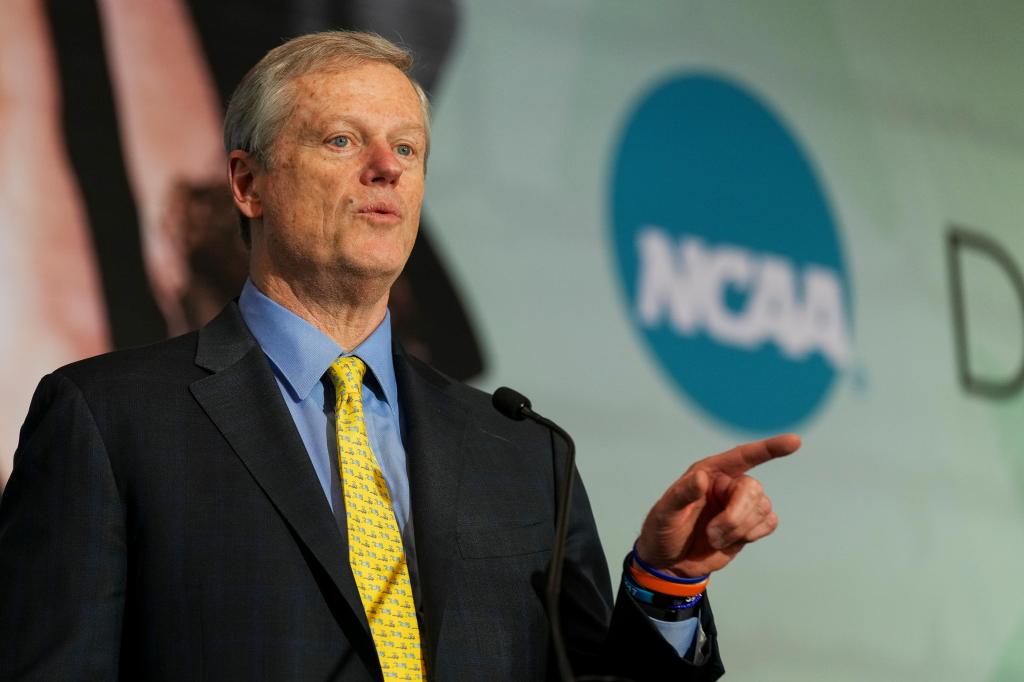
NCAA President Charlie Baker has made it clear: the NCAA will no longer enforce rules related to athlete compensation. Instead, it will focus on academic eligibility, in-game rules and championships. Smart move. The NCAA’s retreat isn’t just strategic; it’s self-preservation. By ceding control to the Power 4 conferences, the NCAA avoids the legal and political minefields associated with enforcing compensation rules. But this leaves college football even more rudderless than before, with each conference and school navigating its own course.
At least under the old, archaic NCAA system, there was the illusion of enforcement, but now that’s gone. As we’ve seen since the NIL/transfer portal era began, the schools with the most generous boosters have an undeniable advantage. And it’s not just in football, where Ohio State’s $20 million payroll last season is the main reason the Buckeyes won the national championship. We’re even seeing it in women’s softball, where Texas Tech’s multi-billionaire booster Cody Campbell gave senior superstar pitcher Nijaree Canady more than $1 million to transfer from Stanford. The Red Raiders are now in the College World Series finals against Texas.
By the way, thanks to Campbell’s bank account, Texas Tech’s football program has brought in one of the top transfer portal classes in the country. One of those transfers is former UCF defensive tackle Lee Hunter, whom sources say was paid upward of $2 million to take his talents to Lubbock.
The optimist will tell you that the House settlement will actually bring some order to the chaos in college athletics, but I’m a realist. I believe it will add even more turmoil. The combination of direct payments from schools, supplemental NIL deals from boosters, and conflicting state laws will create a convoluted system that’s even more ripe for exploitation.
Yet, despite the disarray and dysfunction, fans somehow remain loyal. College football’s popularity is undiminished, and it continues to generate billions. It is the cockroach of American sports. It can survive lawsuits, leadership voids and its own incompetence. Even with no plan, no rules and no one truly in charge, it continues to thrive. The system may be broken beyond repair — but the game refuses to die.
By every rational measure, the sport should be in crisis, but the stadiums will still be full this fall, the TV ratings will soar, and the passion will burn as hot as ever. The sport is leaderless, rudderless and directionless, but none of that seems to matter.
College football, in all its chaotic, contradictory glory, keeps rolling along. It has no commissioner, no coherent vision, no enforceable rules — but it has pageantry, tradition and Saturdays that somehow still feel sacred.
Hail to college football.
Somehow, the sport remains idiot-proof: a billion-dollar engine with no one at the wheel, blindly speeding ahead as if nothing’s wrong.
Email me at mbianchi@orlandosentinel.com. Hit me up on X (formerly Twitter) @BianchiWrites and listen to my Open Mike radio show every weekday from 6 to 9:30 a.m. on FM 96.9, AM 740 and 969TheGame.com/listen