
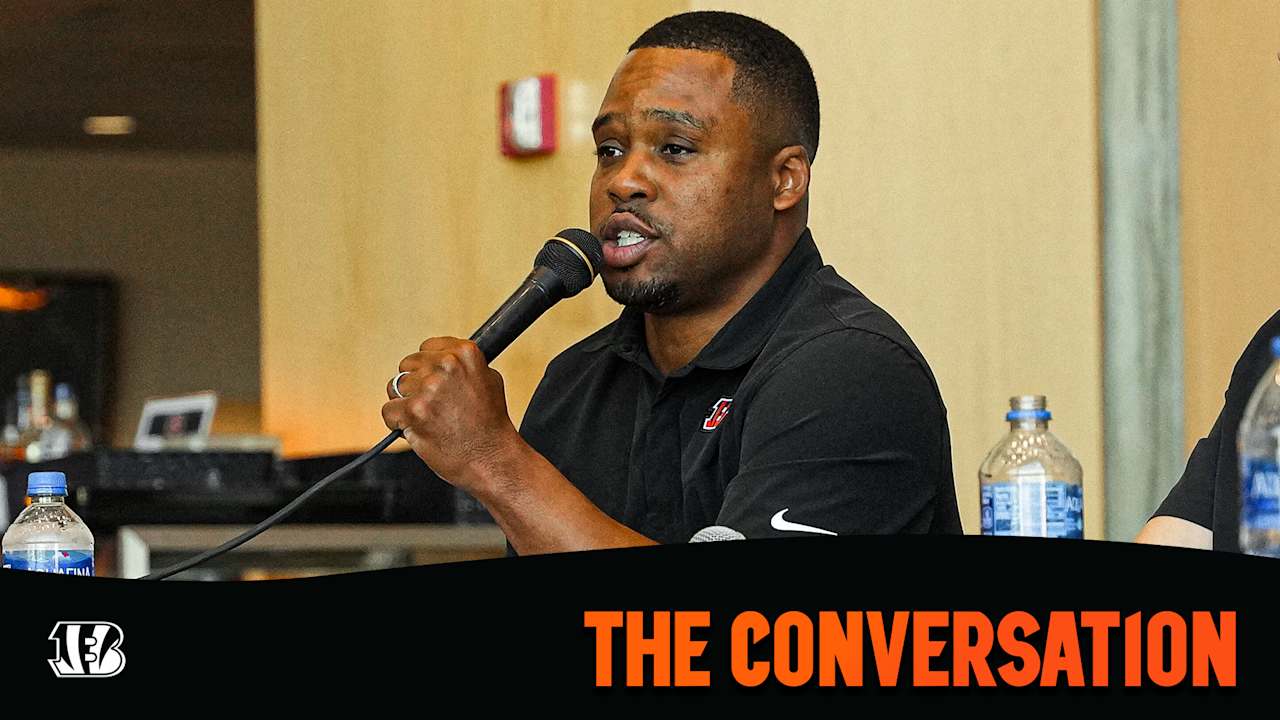
The 2025 NFL Draft is in the books. While head coach Zac Taylor and defensive coordinator Al Golden go about adapting No. 1 pick Shemar Stewart and his draft class to the Bengals playbook, guys like senior personnel executive Trey Brown have already had fleeting thoughts of the 2026 prospects.
Brown and the staff of director of player personnel Duke Tobin are re-grouping from last weekend’s extravaganza and Brown was kind enough to de-brief Bengals.com senior writer Geoff Hobson in their conversation.
GH: What did you feel like walking out of the building on Saturday night after signing your last college free agent, signifying draft weekend was over?
TB: When you add great players to the team, especially where we are as a team, where we feel like we’re really close to doing something special, I felt really good. I think every draft pick or every player we sign is critical to getting us right back to where we want to get to.
And I think this weekend was a really good example of that because we had an opportunity to add some really good pieces to our organization. When you go back to August 2024 and we sit now here in April 2025, and you have a handful of players who are really going to help you get back to what you want to get to, that’s exciting.
GH: You’ve been looking at a guy like the third-rounder, Georgia guard Dylan Fairchild, for two years. Maybe more.
TB: Absolutely. Some of these guys, three, four years. When you identify a guy, how he’s going to fit. The next thing is, well, how do you acquire him? How do you get them on the team? You know this guy’s a good player. You know he fits in your system the right way. You know he can pass protect, you know he can get to the passer, you know he can block. You know he can tackle. How do you acquire the guy? And that’s what’s so exciting about the draft.
You’ve got the evaluation on the guy, you know how he fits, and then you get a chance to acquire a guy and bring him to your organization. That’s the best thing for us in this business.
GH: Take Fairchild. Exactly how much went into scouting a rookie who has a shot to be the opening day left guard?
TB: We’ve had a lot of success identifying some guys here recently from that program. Last year, our first-round pick, Amarius Mims, came right out of the same offensive line that Dylan was on. And Mims was an outstanding prospect for us and now it’s great having him blocking for Joe Burrow at that right tackle position. When you look at the Georgia Bulldogs program, they have a lot of talented players, especially on the offense and defensive lines.
And I know from guys like myself who go into Georgia, to get the opportunity to see guys like Dylan competing with some of the best linemen in the country day in and day out at practice is something that we value when we’re evaluating a prospect like Dylan coming out for the draft. We spend time at Georgia getting to know the player, maybe from his practice habits, his approach, how competitive he is.
GH: You watch practice live, right?
TB: Absolutely, it’s a big eval for us, especially there at Georgia because it’s so highly competitive there from rep to rep. We spend time watching the practice and we get a chance to evaluate the film and when you looked at Dylan, there are a lot of things that we really liked for our offense, for our scheme when you talk about athleticism, strength, lateral quickness, being able to mirror inside against some high-level defensive tackles.
He checked those boxes, and it just wasn’t me going in there. Our college director, Mike Potts, goes in there. We also sent a bunch of our offensive staff down to the Georgia pro day to meet with him directly. To spend some time with him as, we would say, quote, unquote, get some hands on the prospect and really feel the pop off the bat. See him in person.
GH: That seemed to be critical with Fairchild because it won over offensive line coach Scott Peters. Scott said Fairchild was the firmest player he ever put hands on as a coach.
TB: I think Duke and Zac and all the guys on our staff do a great job really wanting to go out there and do the work. Because the more work you do, the more confidence, conviction you have when it’s time to make the pick. So that’s a good example on how that factored in with Fairchild. When you’ve got guys like myself and Mike going into the school and then watching the tape. Then you have your offensive coordinator, your offensive line coaches get a chance to see them in person.
We got a chance to meet with him at the combine and speak with him. We check a lot of boxes across the way where ultimately, when it’s time to make that pick, we’ve got a lot of confidence in making that pick and getting a chance to put him right into our offense at the guard spot.