
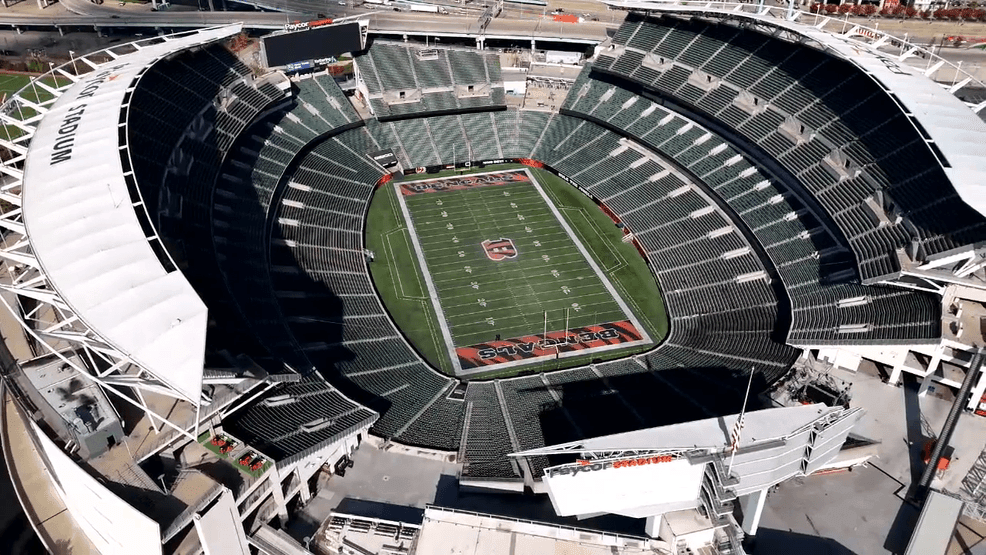
CINCINNATI (WKRC) – Hamilton County leaders on Thursday released the current bargaining positions of both the county and the Cincinnati Bengals when it comes to renewing the lease for Paycor Stadium.
Those documents showed just how far apart the two sides were as of April.
They also showed a strong reliance on state support that may or may not be there when the Ohio budget is completed by the end of June. The Bengals have until June 30 to decide whether to sign a new deal, extend the current deal by two years, or tell the county it’s letting the lease expire next June.
The current stadium deal is considered to be one of the most one-sided in favor of a pro sports team by many experts. The two sides previously agreed the 25-year-old stadium needs $830 million worth of upgrades, but it now appears the Bengals are willing to do with less than that.
“I’ve already been hired by the 218,000 people that hired me. I’ll be fighting for the taxpayers who have told me, ‘What do we get out of this? Because we are struggling,'” Commissioner Alicia Reece said. “Where is the deal that we’re supposed to get? We represent just the taxpayers. Those are the only people we are supposed to represent; that’s what we are paid to represent. Where are the taxpayers winning in this deal?”
The news comes just weeks after Hamilton County commissioners fired their long-standing lawyer, who was handling stadium negotiations, replacing him with another firm at the request of Hamilton County Prosecutor Connie Pillich, the county’s top legal officer.
The one-page Bengals term sheet from April called for the county to spend $308 million over the next two years on maintenance and upgrades. The county would then put another $300 million into the stadium starting in 2028. The teams said that those funds would pay for what it calls “required capital improvements.”
The team’s offer also said that if state money is available, the county could reduce its initial payment by up to half—or $154 million. The Bengals are asking the city of Cincinnati to contribute 50% of any revenues derived from Paycor operations through admissions and payroll taxes to be used for stadium maintenance and repairs.
In a statement to Local 12, Cincinnati Mayor Aftab Pureval said “no, absolutely not,” when asked if the city would consider giving up that revenue.
On the other side, in April, Hamilton County wanted a new deal to last 15 years and then allow the team to extend the deal for five years one more time. The county would pay $260 million, with the state of Ohio kicking in $350 million, and the team would pay $120 million through a loan from the NFL.
If the state money does come through, the county would kick in another $10 million, the term sheet states, to a total of $270 million, and it would extend the lease to 20 years.
It also calls for the Bengals to pay the county $1 million in rent for Paycor; the team currently does not pay any rent. The Bengals proposed paying $1 million in rent for just the first five years of a lease.
County administrator Jeff Aluotto told commissioners the initial proposals may not reflect the current state of negotiations, but he did not give any specifics on where talks stand now.
“To be clear, negotiations continue. As is the case in any negotiations, they ebb and flow, and we’re still hopeful of reaching a deal with the team as expeditiously as possible,” Aluotto said.
The lawyer leading negotiations for the Bengals did not return phone messages seeking comment.
Money from the state of Ohio coffers is an unknown at this point, with the General Assembly debating the state’s next two-year budget. Current proposals from both the House and Senate call for at least $600 million in state funds for the Cleveland Browns to build a new stadium and entertainment complex in the suburbs there.
But neither the House nor the Senate version includes any money for Paycor Stadium. The budget is supposed to be passed and sent to the governor by June 30.
There are other proposals to significantly raise taxes on sports betting in the state or add a user fee for each bet to raise money for stadiums throughout the state, including one backed by Gov. Mike DeWine, but it’s unclear whether those proposals will make it through the legislature.