
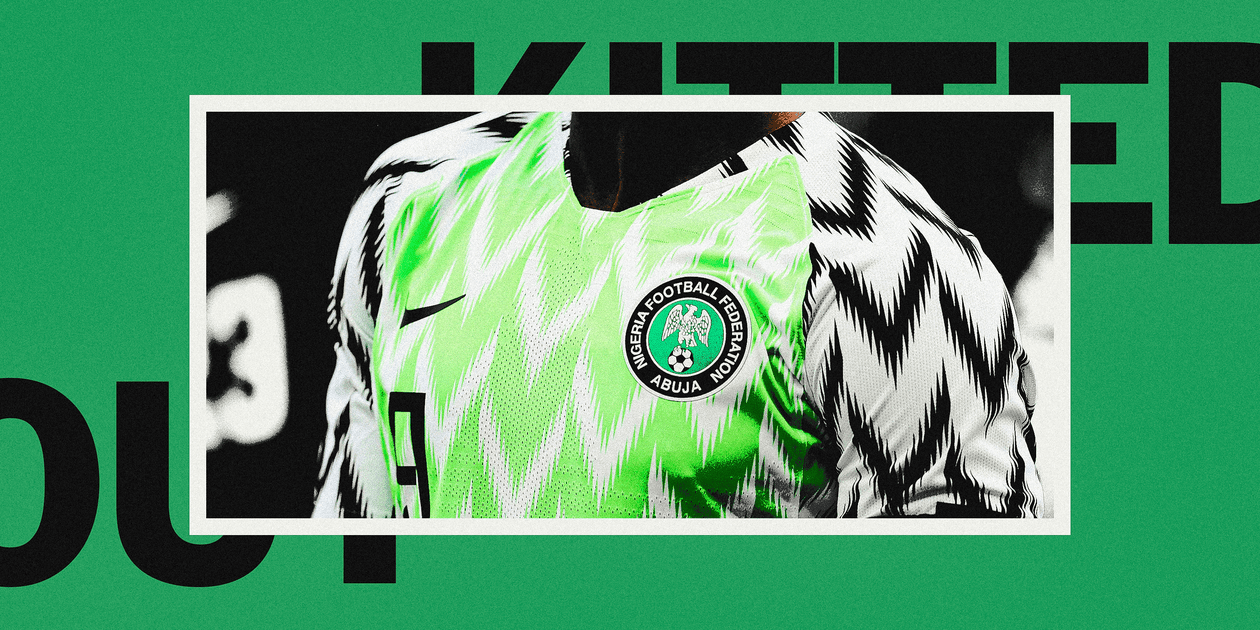
This article is part of our Kitted Out series, an exploration of the impact of soccer kits on culture and fashion.
Club teams and national teams from around the world release two, three and sometimes more football kits a year. Some clothing brands even add to the market by selling football-kit-inspired merchandise. So to make a shirt that stands out, that becomes iconic, means standing out from thousands of other creations and designs.
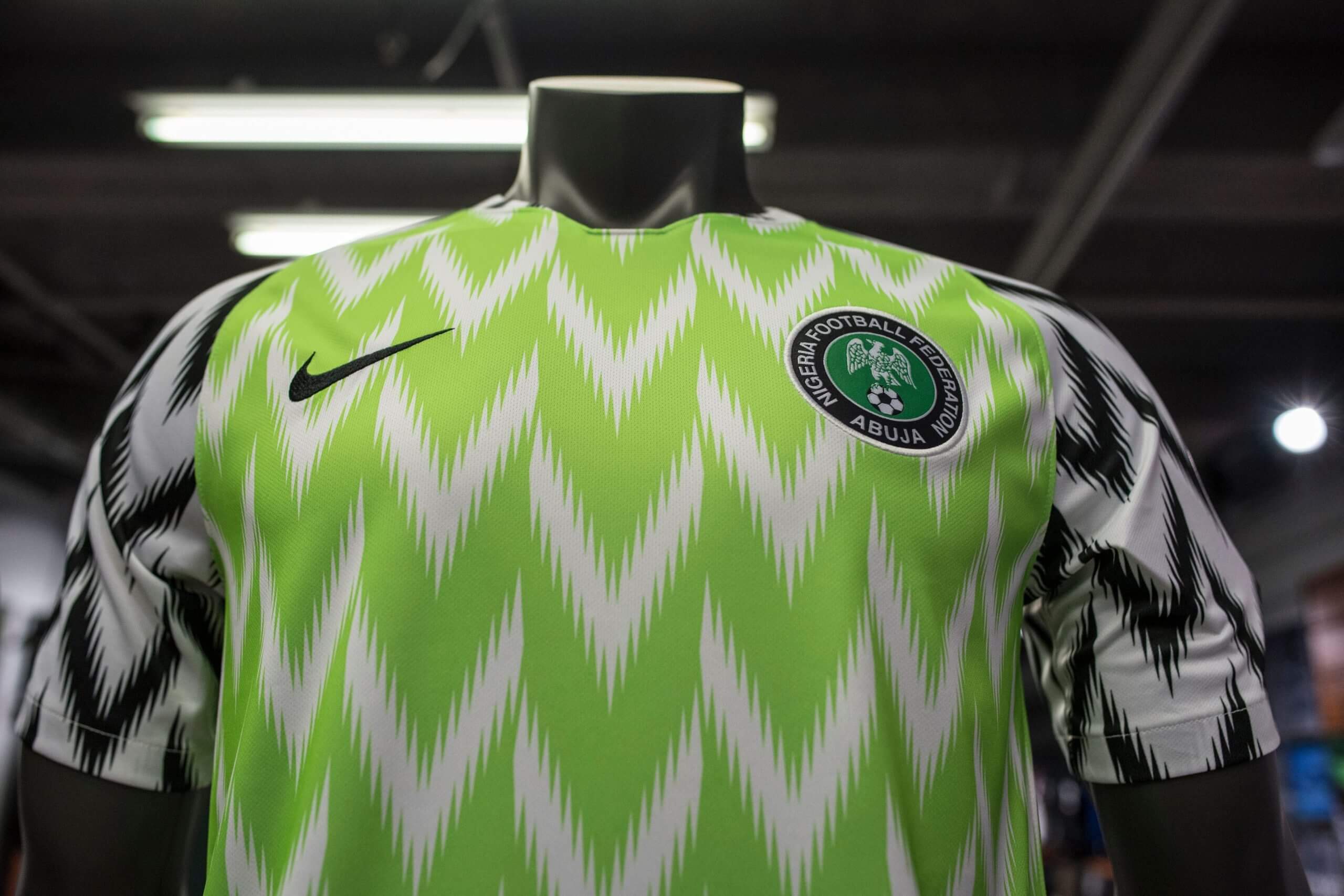
In 2018, ahead of the FIFA World Cup in Russia, designer Michael Wolff and Nike made a Nigeria home strip that went on to drive significant demand and became a modern trailblazer in the football kit market.
“It was probably the first football shirt to have this drop moment that transcended football,” Doug Bierton, CEO of Classic Football Shirts, tells The Athletic. “It wasn’t just Nigeria fans or even just football shirt enthusiasts who wanted it — it was something where everybody who became aware of it wanted one and a secondary market for that shirt was almost instantly created.
“It was the first football shirt that went straight over its RRP (recommended retail price) on launch. Prior to that, it was just sneakers doing that kind of thing.”
(Stefan Heunis/AFP via Getty Images)
When the kit was released on June 1, 2018, lines wrapped around the block at Nike’s London store, and it received three million pre-orders, according to the BBC, meaning it was sold out within minutes. The green and white home shirt was accompanied by other gear, including track jackets, bucket hats and shorts, which also rapidly sold out.
While it ended up appealing to the masses, being an international kit that people could get behind, for Wolff and Peter Hoppins, Nike senior design director from 2016 to 2020, the focus had to be on pleasing the Nigerian fans, players, and federation.
Nike’s official media release described the kit as “a tribute to Nigeria’s 1994 debut on the world stage, the 2018 home kit features the traditional green torso, with the Super Eagles-inspired black-and-white sleeves. To modernise the jersey, the feather pattern has been abstracted and the colours updated, for a bold look on pitch”.
For Bierton, it was “innovative and ahead of its time” as one of the first modern-era designs to directly reference the 90s, bringing that era’s vibe in a forward-thinking way and evoking fan nostalgia. It was also nominated for the 2019 Beazley Designs of the Year award.
In previous years up to 2018, a darker green was used for Nigeria’s home kit, but this was switched to the brighter, lighter green, along with white and black.
Hoppins told The Athletic’s Brooks Peck in 2018: “We said: ‘OK, keep it traditional on one of the kits (the 2018 Nigeria away kit was a largely plain dark green design) and on the other one, just go all out.
“I’ve been looking back at some of the original designs and they were definitely not as full-on as where we landed. We just kept on pushing it. As we were doing this research in Nigeria and the culture, we were like: ‘Just keep on pushing, pushing, pushing, pushing’ and we eventually landed where we landed, and that kit really popped.”
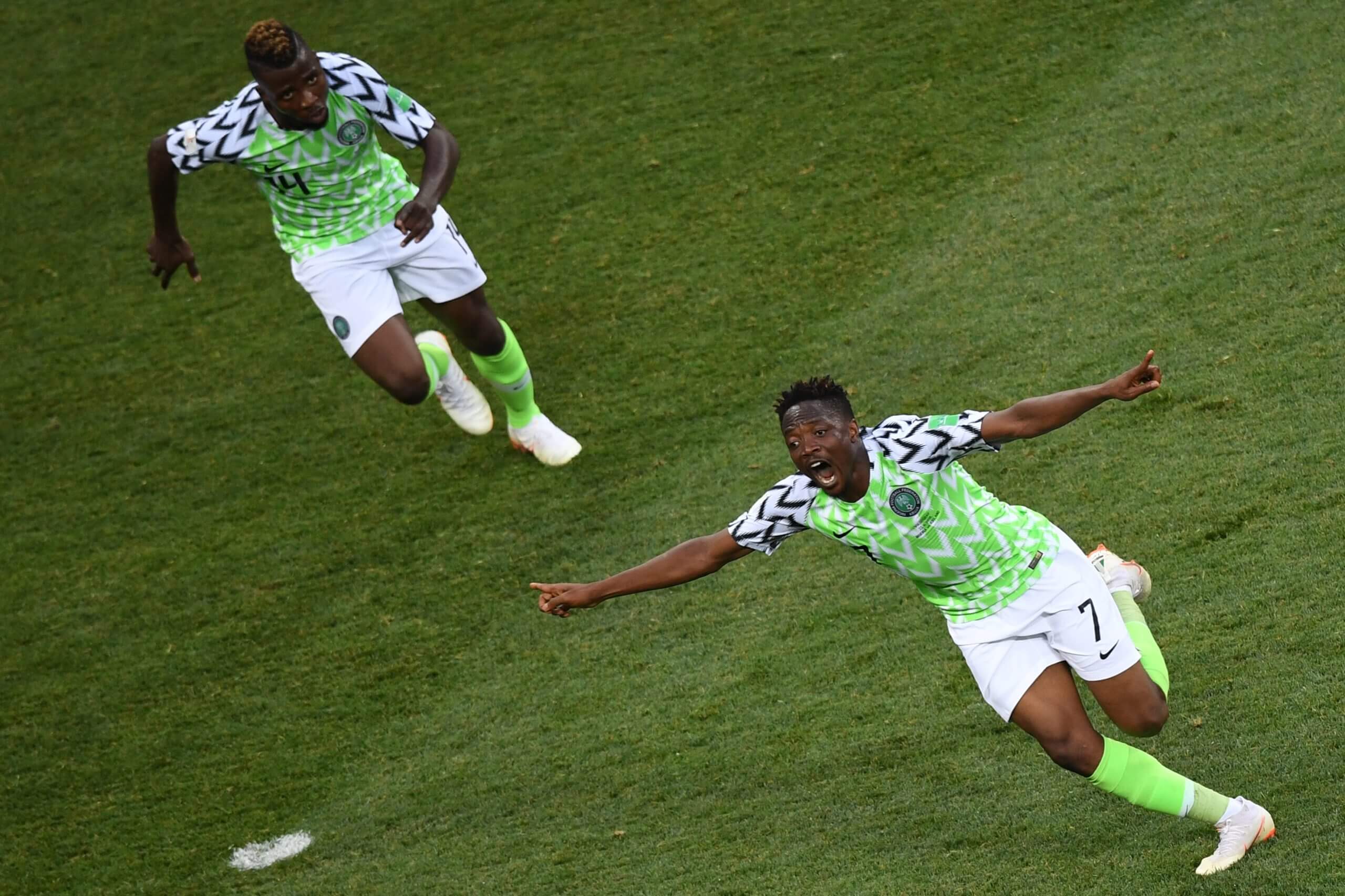
Ahmed Musa, right, celebrates scoring in Nigeria’s 2-0 win over Iceland at the 2018 World Cup (Philippe Desmazes/AFP via Getty Images)
Other countries would not stray far from tradition, but Nike and Nigeria were able to innovate and create a strip that defined the summer of 2018 and beyond.
“A lot of the clubs and federations are pretty old-school,” Hoppins said. “They’re run by… older… gentlemen, so it can be tough to explain why you want to do a bright green-and-white kit with feathers on it. We brought the players in with the president of the federation so they could almost, like, convince him that this was the thing to do. That was a little bit of a tactic on our part.”
Nigeria’s 2018 release came as a new wave of talent fronted the national team, the youngest at the World Cup in Russia, with Alex Iwobi, Kelechi Iheanacho and Wilfred Ndidi all 21 years old at the time.
Sports marketer Desmond ‘Dez’ Ebohon from Southern Nigeria, Edo State, thinks that Nigeria have had hyped kits since their first World Cup in 1994 but described the 2018 edition as “cultural and beautiful”.
As a shirt designed for a national team to wear, it couldn’t simply stand on its own as a striking holy-grail design for kit enthusiasts — it also had to embody the identity of one of West Africa’s biggest sides.
“It feels the kit providers try their best for Nigeria to deliver a crazy kit,” Ebohon tells The Athletic, “one that incorporates culture, the vibes, the colourfulness and joy that Nigerians bring to football, and we appreciate that.”
The chevron-esque patterns on the shirt remind Ebohon of Adire, a type of resist-dyed cloth and a Yoruba word which translates to ‘tie and dye’.
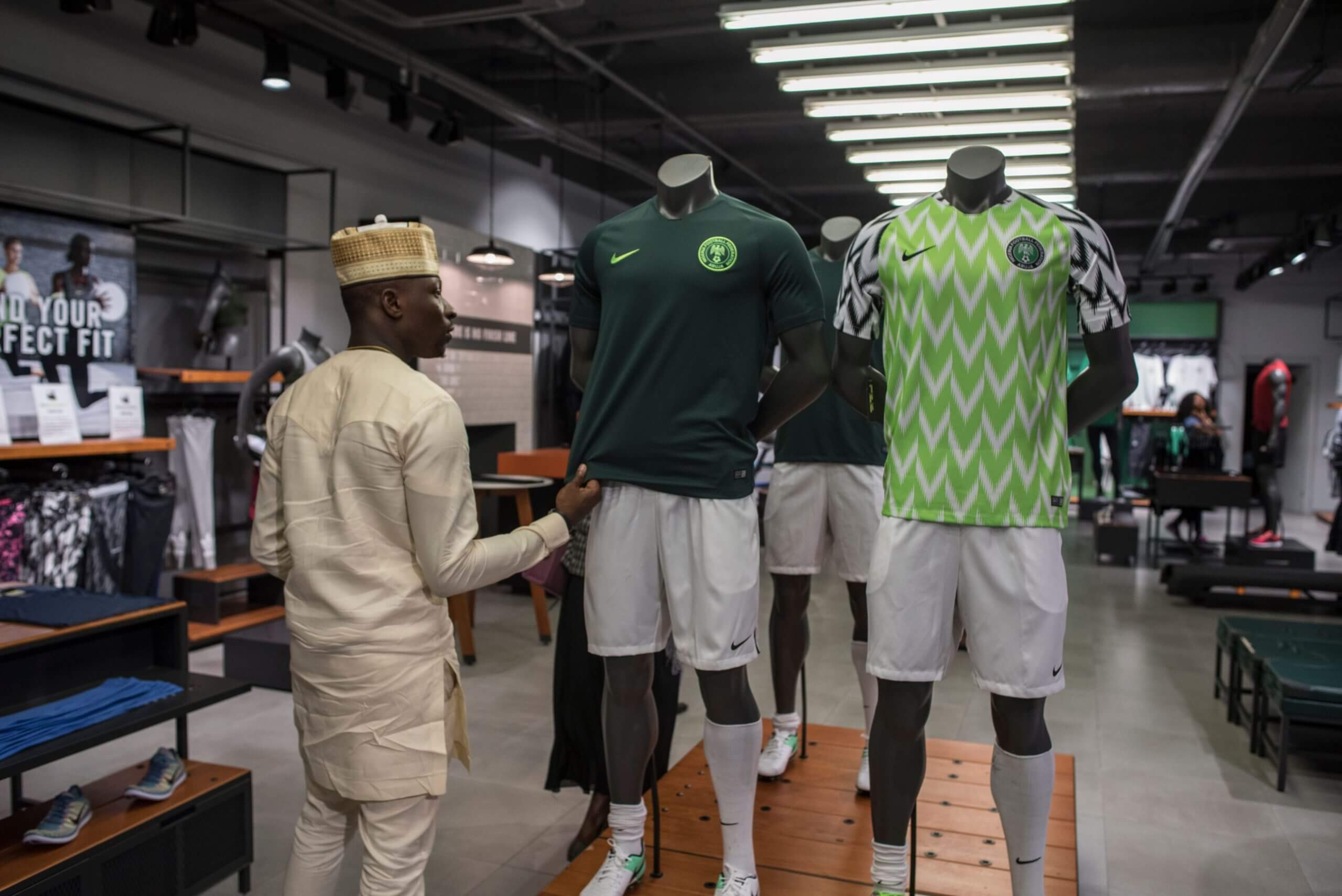
The jerseys pictured on sale in Lagos in June 2018 (Stefan Heunis/AFP via Getty Images)
This kit put an exclamation point on the increased demand for football shirts in the late 2010s that has helped boost the second-hand market in particular, as football fans and casuals alike wore shirts that reflected their personality and identity — and, bottom line, to look cool.
Even still, it is rare for shirts to sell out and be higher than their RRP the following week. Brierton says the most sought-after kits can sell out in the period after Christmas to the end of the season, and then increase in value. For example, Ajax’s 2021-22 ‘Three Little Birds’ third shirt. Through Classic Football Shirts, the Nigeria 2018 home kit typically sells for at least double its RRP (£64.95, $88.35) in excellent condition.
But not every shirt can be a cult classic, nor should every shirt try to be one.
“The way it’s going, maybe it is a bit overdone and every brand, every team trying to have a Nigeria moment is not sustainable. It has to be organic,” Brierton says.
“There’s a limited space for very bright, lime green, bold design. You would think: ‘Oh, that’s a small subsection of people who have got the balls to wear that type of shirt’. I don’t think that type of shirt could win every year, but it did that year, in that moment.”
Frequent football-shirt leaks mean the surprise factor on bold designs can also take the sting out of launches.
Respective fans, though, have their own styles and kits can remind them of different players and memories, so value is in the eye of the beholder and can vary from person to person.
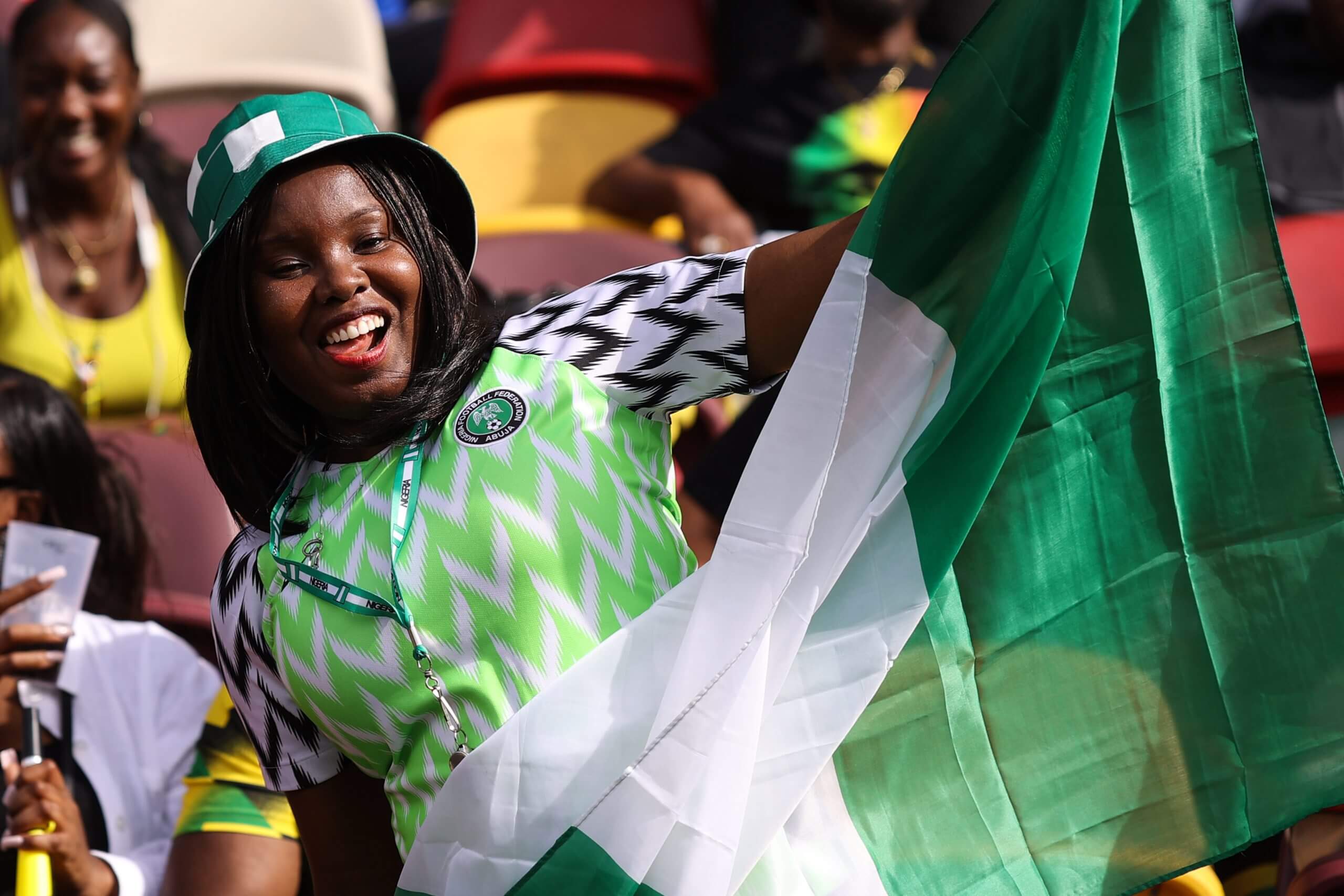
A fan at last month’s Unity Cup at Brentford’s Gtech Community Stadium (Jacques Feeney/Offside/Offside via Getty Images)
At the 2018 World Cup, the Super Eagles fell in the group stage despite having the most desirable kit around.
“The game against Iceland,” says Ebohon as he recalls his best memories of his team in their famous strip. “(Ahmed) Musa scored two goals. It was a great win because Iceland went very far in the 2016 Euros and knocked out England.
“When the World Cup came, people were saying ‘giant-killers’ Iceland, with Argentina and Croatia (were in Nigeria’s group), so it got me scared a bit. When we beat them, I said: ‘They are not giant killers’ — it was just England being bad.
“I would say the Argentina game, Musa also scored but (Lionel) Messi being Messi broke our hearts in the end.”
(Illustration: Demetrius Robinson/The Athletic; Catherine Ivill/Getty Images)
Kitted Out is part of a partnership with VW Tiguan. The Athletic maintains full editorial independence. Partners have no control over or input into the reporting or editing process and do not review stories before publication.