
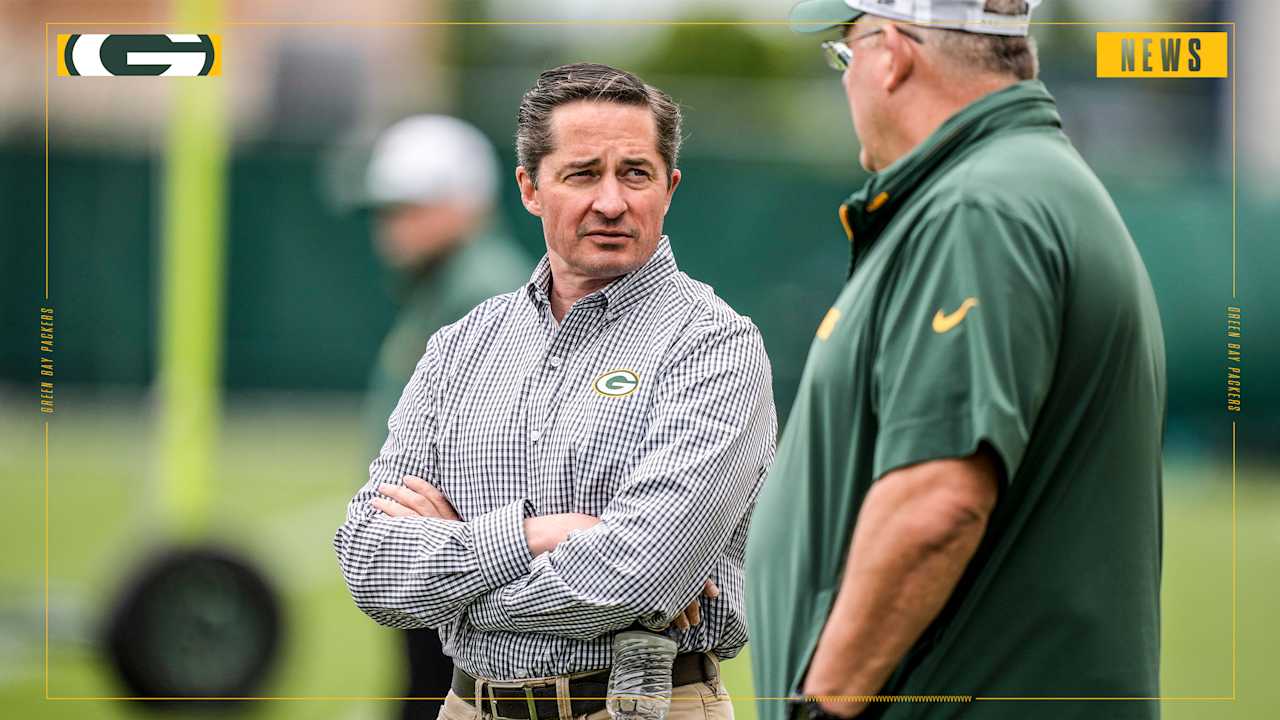
GREEN BAY – Ed Policy knows the New York hustle and bustle all too well.
The incoming Packers president and CEO was stationed for several years in the Big Apple, first as an executive in the Arena Football League and then as a consultant in the NFL office.
Relocation often goes hand in hand with the business of football. Policy saw it with his own father, Carmen, one of the architects of San Francisco’s five Super Bowl titles in the 1980s-90s.
Yet, wherever life took the younger Policy, the Youngstown, Ohio, native always longed for that irreplaceable feeling of home.
Policy found it in Green Bay, the place he settled in 2012 with his wife Christy and two sons, Carmen and Luke, upon his hiring as vice president and general counsel of the Packers.
At the time, some close to Policy questioned the logic of a promising up-and-coming executive trading in big-city life for the NFL’s smallest market, but it wasn’t just the right move in Policy’s mind – it was the necessary one.
“We had two young kids at the time, and we would tell them, ‘This is Shangri-La for us. This is perfect,'” Policy said. “When I moved here, it felt like coming home.”
It proved to be a prudent decision both personally and professionally.
Next month, Policy will succeed Mark Murphy as the 11th president in Packers history following an efficacious 13-year run of unprecedented organizational growth and the development of the Titletown initiative.
Policy, 54, emerged as the top contender for the team’s highest post among hundreds of candidates after an exhaustive search, led by former Packers executive committee lead director Susan Finco and Korn Ferry consulting firm.
It was an admittedly stressful process, but one Policy felt prepared him for what’s to come. Since formally accepting the position almost one year ago, Policy has worked closely with Murphy as he nears the position’s mandatory retirement age of 70.
The transition ramped up after the 2024 season concluded, with Policy handling more internal affairs and representing the Packers at league meetings. Since the NFL Draft, Policy has led all senior leadership meetings while dealing directly with commissioner Roger Goodell on league matters.
“It has been a long transition, but Mark could not have been any more gracious throughout it,” Policy said. “Certainly, he’s been a great mentor of mine over the past 12 years, but over the last year, knowing that this transition was going to take place, we were able to take that mentorship to another level.”
As a kid growing up in Youngstown, Policy had one of the best mentors any football executive could ask for in his father, who joined the 49ers in 1981 as a consultant to Pro Football Hall of Fame owner Eddie DeBartolo.
The elder Policy’s 16 years with the 49ers saw him rise to team president and CEO, a run that coincided with the transition from Bill Walsh to George Seifert as head coach and from Joe Montana to Steve Young at quarterback in 1993.
As much as he relishes the memories of spraying celebratory champagne with his father after Super Bowl victories, the younger Policy relies more on lessons learned. He credits his dad for never hiding the struggles of being a decision-maker.
For example, Policy recalls reading through hate mail his father received after trading Montana, the future first-ballot Hall of Famer who lifted San Francisco’s first four Lombardi Trophies.
It turned into a discussion that’s stuck with Policy to this day.
“I remember talking to him about it and (saying), ‘Gosh they’re writing this stuff about you,'” Policy said. “He would say, ‘Well, thank God they care. We want them to; we work hard to deliver a product they care about. They don’t like this decision right now, (but) I hope in time they come to really like it.'”
Less than two years after trading Montana to Kansas City, the 49ers went on to win Super Bowl XXIX with Young under center. Shortly thereafter, Ed Policy decided he wanted to be the one of Carmen Policy’s five children to follow dad into football.