
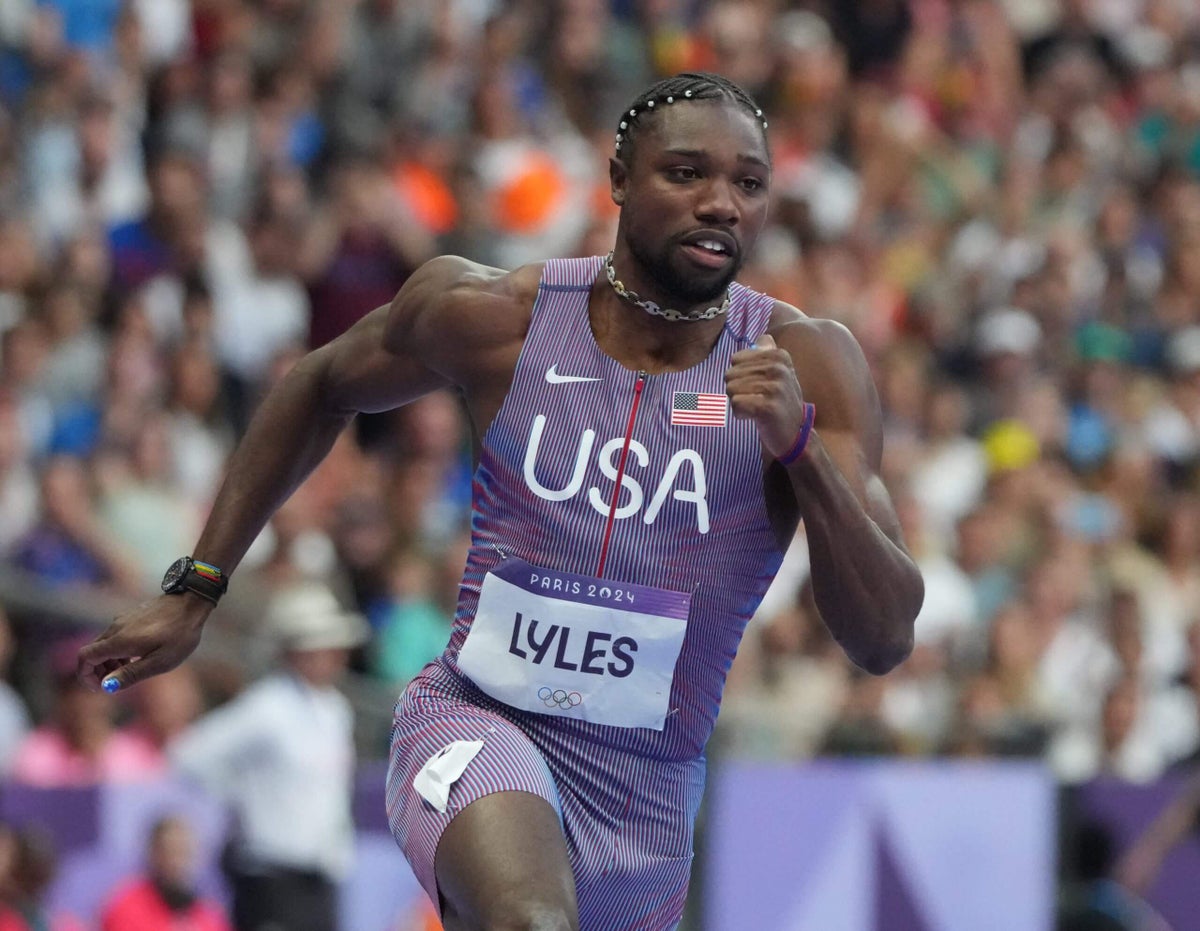
The long-discussed race between Olympic gold medalist Noah Lyles and Miami Dolphins wide receiver will not take place this weekend, Lyles said, citing personal reasons.
“We were very deep into creating the event,” Lyles said at the Stagwell Global Sport Beach event in Cannes, France. “In fact, it was supposed to happen this weekend.
“Unfortunately, there were some things, complications, personal reasons that it just didn’t come to pass, but we were all in. … We were going to shut down New York’s Times Square and everything.”
In February, Lyles and Hill announced their plan to race each other but had yet to pick a date or distance. The announcement came after the two traded a series of jabs for over a year, sparked by Hill’s criticism of Lyles’ 2023 comments about how American sports leagues shouldn’t deem their annual winners as “world champions.”
In August 2024, Hill appeared on Kay Adams’ podcast, “Up and Adams,” and said he would beat Lyles if the two faced off in a 50-yard dash.
Later that month, Lyles responded at the Paris Olympics after winning a gold medal in the 100 meters and said he’d accept Hill’s challenge to a race. But it would have to be the signature race often associated with being the fastest man on the planet — the 100 meters.
“If somebody wants to sponsor the event and we’re racing for millions of dollars and it’s on a track and we’re running 100 meters, then sure, we can race,” Lyles said.
Lyles stirred the pot again at the New Balance Indoor Grand Prix earlier this year, holding a sign that read, “Tyreek could never,” after winning the 60-meter final.
In a previous interview on the “Nightcap” podcast with Shannon Sharpe and Chad Johnson, Lyles lauded former Seattle Seahawks wide receiver DK Metcalf for attempting to qualify for the Olympics.
In May 2021, Metcalf ran the 100-meter dash in 10.36 seconds at the USATF Golden Games and Distance Open in Walnut, Calif. It resulted in a ninth-place finish in his heat, with Metcalf’s time being the third slowest of the 17 entrants. To qualify for the U.S. Olympic Trials, he would have needed a time of 10.05 seconds with a legal tailwind of no more than two meters per second.
(Photo: Kirby Lee / Imagn Images)