


Jonathan Gannon speaks as Cardinals wrap up 2025 minicamp
Arizona Cardinals head coach Jonathan Gannon talks about minicamp at the Cardinals training center in Tempe, on Jun 12, 2025.
Walter Nolen heard the rumors, saw the anonymous quotes, understood what it all meant.
This was the week preceding the most important night of his life, and each day seemingly brought a new negative headline. ESPN reported “maturity concerns.” Sports Illustrated questioned his “sense of entitlement.” The “Go Long” newsletter quoted one scout as doubting his “desire and overall toughness.”
In Southern California, where he went through his pre-draft training, Nolen stewed.
“Seeing that some stuff,” Nolen told The Arizona Republic, “it did make me feel some type of way.”
It wasn’t just the headlines that bothered him. During his visits with some teams, Nolen could sense those doubts, established in decision-makers’ minds before ever meeting him. In Arizona, he felt something different: a willingness to learn.
“I just listened to the coaches,” Nolen said, “and told them my story and everything that I’ve been through myself.”
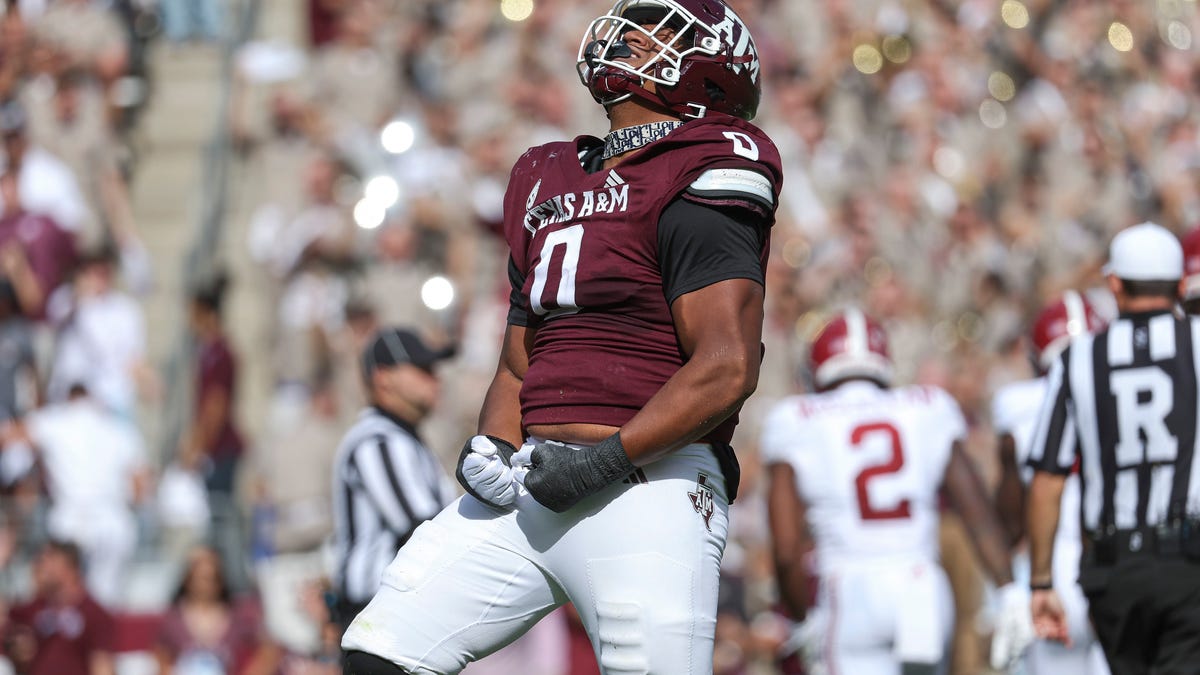
This is that story, formed through more than 20 interviews with coaches, teammates and family members — those who have known Nolen throughout the 21 years that preceded April 24, 2025, when he became the centerpiece of the Arizona Cardinals’ defensive makeover with the 16th overall pick.
Speak to those people and the pre-draft concerns will sort themselves into two buckets.
Some, in the minds of Nolen and those who know him best, are fabrications. That he doesn’t love football? That he doesn’t care?
Back in Powell, Tennessee, where Nolen spent his senior year of high school, his old defensive coordinator’s group chats lit up with confusion. “That is not that kid,” Jeff Lusby said. “… ‘He don’t love football.’ What? Hell no, the kid lives for it.”
Elijah Robinson, his defensive line coach at Texas A&M, assumes those criticisms stemmed from “talking to people who don’t know him. Probably talking to people who observed.”
Randall Joyner, Nolen’s defensive line coach at Mississippi, added: “I wouldn’t want to go to war with anybody else, in terms of the elite competitiveness.”
Other concerns, those close to Nolen say, are reflections of a person he no longer is.
Walter Nolen lands at Texas A&M
When he arrived at Texas A&M, Nolen was immature. “I was just kind of stuck in my ways,” he acknowledges. He would stay up late playing video games, oversleep, miss class, arrive late to meetings, forget his notebook. All of that is true.
“To be honest,” Yolunda Nolen said, “I thought, when Walter left and went to college, he was way more mature than what he (actually) was.”
Yolunda, Walter’s mom, is able to laugh about those mishaps now. But at the time, there was regular conversation between mother and son. “This is your job,” Yolunda would say. “Treat it that way.”
After all, Yolunda and Walter Sr. had spent 18 years showing little Walter what responsibility looked like.
Walter Sr. drives trucks for UPS. When Walter and his two younger brothers were little, their dad would disappear onto the road for days at a time before returning home every weekend to make sure he could coach their football games.
Yolunda is a nurse practitioner, living proof of the sacrifice required to succeed in so many corners of this country.
She’s a self-described “kid from the projects,” born to two teenage parents in South Memphis. She lost her dad to a car wreck when she was two and her mom to cancer when she was 20.
From a young age, she had an innate desire to help people, to prevent other little girls from experiencing what she experienced. So she found nursing and became the first person in her direct lineage to finish college, ensuring little Walter would know comforts she never had.
That’s what she saw her son squandering in his early days at Texas A&M.
“That’s what life is,” Yolunda would tell him. “That’s being an adult. You’ve got to decide if that’s what you want to do.”
It’s a message that carried weight for Walter, because it was from his mom. The mom he nearly lost.
On death’s door during the pandemic
The last thing Yolunda Nolen remembers, she just wanted to take a shower.
COVID-19 hit the family on Halloween day, 2020. Memphis had avoided the worst of the pandemic’s initial impacts, but by the fall, it was transforming into an epicenter. In December, more than 600 COVID patients were admitted to county hospitals each week. A month later, a dozen Memphians were dying every day.
As a nurse, Yolunda saw that wave forming before it crashed ashore. She worked her day job from Monday to Friday, then picked up shifts each weekend at a local hospital. There were no off days, which is part of why she summoned Walter home after just a few weeks at IMG Academy, the football powerhouse where he had been set to spend his junior year. Amid so much uncertainty, she wanted her boy at home.
The decision proved prescient. Even if contracting COVID was likely, Yolunda couldn’t have known what came next. She spent her first week with the virus in bed, until she felt well enough to attempt a shower. She turned the water on, closed the glass door and sat down on the edge of the bathtub to catch her breath.
When she got back up to open the door, the steam hit her face like an unblocked linebacker. She gasped for air and came up empty.
The next few hours were a blur, before days and weeks slowed to a crawl. Both Walters, father and son, carried Yolunda into the passenger seat of the orange Ford F-150 parked in the driveway. They raced her to the emergency room, through this test and that.
Doctors tried to put her on a respiratory support system, then attempted intubation. Neither measure worked. Twice, her heart stopped. That’s when they put her on a ventilator, inducing a coma.
And just like that, the news stopped.
One week with no updates.
Then another.
Then another.
Then another.
At home, Walter Sr. ran out of answers to give his boys.
“The doctors,” he said, “they were never giving a good sign like she was gonna make it.”
In the hospital, Yolunda’s conscience was reduced to a few sporadic memories from the remnants of fever dreams. An episode of Real Housewives on the hospital TV turned into a dream in which she was being attacked. An ice bath to control a life-threatening fever became a vision of being outside in the snow without a jacket.
Then, one day, the doctors called Walter Sr. with a different message. Finally, Yolunda was taking a turn for the better. That trend continued for a few more days until she woke up, “super confused” in her hospital bed.
Years later, she still wears the lingering effects. Her memory isn’t what it once was and she has frequent joint pain. Her body temperature occasionally drops dangerously low and her hands still spasm, back into the clenched position they were in during the coma.
But for the most part, she’s the ebullient personality Walter remembers from childhood. Her stories are long and full of colorful detail, her smile contagious as she talks.
Even when she woke up, none of that was a guarantee. The first time she saw her boys on FaceTime, a nurse had to hold the phone for her. She lacked the strength to move her arms or even to speak.
That didn’t stop her joy — “it was like, ‘Oh, they are real, that is my life,’” she remembers thinking during that first call — but it introduced uncertainty. She had to spend four more weeks in inpatient rehab, separated from her family due to pandemic restrictions.
Back at home, Walter wore two sides. By then, his family nickname had gone from “Little Walt” to “Little Big Walt.” He was the number one recruit in the country, a burgeoning star in constant contact with the nation’s top college programs. He was also terrified, a 17-year-old kid thrust into the role of protecting 14-year-old Warren and 12-year-old Waylan.
“I couldn’t let my little brothers see how scared I was,” Walter said.
They can go to school and do this?
Nolen is sitting on a black rolling chair next to a brick wall at the Cardinals’ Tempe facility when he pushes back on his thin dreadlocks and cracks a half-smile.
“I don’t forget,” Nolen said, fully understanding how ridiculous this sounds.
He’s not talking about a slight from college or even high school or middle school. No, this one goes back to when he was five years old, playing on his first Mighty-Mite football team.
The team was doing tackling drills in practice when Nolen got matched up with the oldest kid of the group, an 8-year-old. This kid smoked him. Sent him to the ground, wind knocked out. Nolen says he was “kinda upset.” His dad offers more color.
“He cried, like all the way home,” Walter Sr. said. “From the time practice ended to the time we got home.”
In the lore of Walter Nolen, this is the starting point. He learned that he could get revenge by hitting back harder, so that’s what he did, tackling as violently as his young body would allow.
Walter Sr. fostered that competitive drive, turning the family’s backyard into a training facility. There were laps and pushups and even an agility ladder.
When little Walter was still in elementary school, his dad added an old tire to the mix, so he could use it as a resistance tool for sprint workouts.
The early path to stardom was linear because no one in Memphis could slow him down. In Pee Wee ball, he towered over his opponents, and played with the ferocity to match. Yolunda saw where his path was going in middle school, when strangers began to approach her on the sidelines to ask if they could train him.
Around that time, colleges started calling, inviting Walter to camps.
“I was like, ‘Oh, they can go to school and do this?’” Yolunda said. “So that kind of put me in gear to help and support.”
His high school coaches quickly saw what the hype was about.
At Olive Branch High, he was called up to varsity midway through his freshman season, breaking a longstanding program rule only after he received his first offer, from Tennessee. He finished with 14 tackles and three sacks in his first game.
At St. Benedict of Auburndale, where he landed after returning from IMG, head coach Marlon Walls realized during fall camp that the only way to test Nolen was by pitting him against three offensive linemen at once. He still won more often than not.
When Walls resigned after a 1-7 season, Nolen transferred to Powell High in the Knoxville area. The Panthers won a state championship that year, but even their offensive line had no answers during practice drills.
“It’s really frustrating,” Fabby Neiwoh, a running back on that team, said. “Cause it’s like, in your head, you know you not ass but it’s like damn, he’s back here so fast and he’s so big.”
In college, that level of dominance proved to be something of a curse. Nolen hadn’t built the habits required to succeed against opponents who could approach his level of athleticism, because those players simply didn’t exist in high school ball.
Back at St. Benedict, Marlon Walls had worried about this. A former SEC defensive lineman, he saw a “killer instinct” on the field that would serve Nolen well at the next level. He also saw a kid who stayed up too late playing video games and didn’t eat right. Normal high school indiscipline, but from a kid who carried abnormal high school expectations.
Words, though, go only so far. It’s difficult for lessons to take hold when a player is still dominating every Friday night.
“Everybody where he’s from back in Tennessee probably worshipped the ground he walked on,” Tony Jerod-Eddie, a Texas A&M assistant, said. “And it wasn’t gonna be that way at the next level.”
Jerod-Eddie recalls one play against LSU late in Nolen’s freshman year. He didn’t play a read-option the way coaches taught, opening a lane for an easy touchdown. Those are the mistakes players make when they’re not dialed in to film study.
“I can’t tell you how many times Elijah Robinson had to tell Walt to bring his notepad his freshman year,” one teammate, Drew Beltran, remembers.
By spring ball the next year, those miscues began to disappear. He was carefully attuned to each film session, notepad in hand. “You weren’t catching him without it,” Beltran said. That season, an opponent ran the exact same play that LSU had scored on a year earlier.
This time, Nolen made the tackle. On the sideline, Jerod-Eddie asked him if he knew what he had just done. “Yep, LSU play,” Nolen responded.
“I’m like, ‘OK, he’s seeing it,’” Jerod-Eddie said. “He’s getting it.”
After his second season in College Station, Nolen transferred once more, again because of a coaching change. He landed at Mississippi, where his maturation kicked into overdrive.
Shortly after he arrived in Oxford, a rare snowstorm shut down campus. Stuck in his apartment, Nolen pulled out a blue notebook from the Ole Miss staff and began writing.
“I had a lot of time to collect my thoughts,” Nolen said, so he put them down on paper. He made note of his goals and the actions necessary to turn them into reality.
Joyner, his Ole Miss defensive line coach, knew those goals were achievable. “If you’re not an All-American and a first-rounder, I failed you,” Joyner would tell his new arrival.
By midseason, Nolen was the player texting Joyner, asking if he had 30 minutes before team meetings to watch extra film.
“He started to understand, this is what it takes,” Joyner said. “It was really cool to see that.”
That’s part of what the Cardinals learned in their pre-draft research on Nolen. The other part is something that has already shown up in the NFL.
The Arizona Cardinals make Walter Nolen No. 1
On the night the Cardinals drafted Nolen, Jonathan Gannon sat in front of reporters and repeated the same sentence three times.
“He’s got a huge heart,” Gannon kept saying.
The next day, Nolen showed the Cardinals what that looks like. When Arizona selected Will Johnson, the cornerback was dismayed to have dropped into the second round. Shortly after the pick, Nolen asked the coaching staff for Johnson’s number, so he could reach out with a message of support.
That’s no surprise to anyone who knows Nolen. This is a player who’s seen plenty of new beginnings. Over the past six years, he’s transferred four times, resulting from three coaching changes and a pandemic.
At each new stop, there would inevitably be a sense of trepidation among his new teammates.
“You see players like that, rated high on the internet, they have this fake persona,” Neiwoh, the Powell running back, said.
Then they would meet Nolen.
“Walt wasn’t about no hype,” Neiwoh said. “He’s a real down-to-Earth dude.”
That same story played out in Memphis, College Station and Oxford. Nolen would arrive in his new surroundings and form genuine connections up and down the roster. He’s the type of player, teammates say, who goes out of his way to help them with the smallest details of their games, no matter how deep they are on the depth chart.
“Walt is such a sweetheart,” said Beltran, who was a walk-on at Texas A&M.
As the Jimbo Fisher era deteriorated around them, that attitude stood out.
“There are definitely some guys who came in the same class he was in and unfortunately weren’t able to fit in with the team,” Beltran said. “… Luckily, Walt was able to show a little bit more humility.”
Among those who know Nolen best, no one can quite explain where this trait comes from.
Maybe it’s product of his faith, with which he strengthened his bond during Yolunda’s COVID battle. Maybe it’s the result of being an older brother and the implicit responsibility that accompanies that role. Maybe it’s something else entirely.
Even Nolen himself isn’t quite sure.
“I feel like you’re just supposed to give everybody a chance,” Nolen says, still searching for the explanation. “Everybody deserves a chance. Everybody deserves a second chance. I don’t know. Just how I’ve always been.”
In Arizona, that chance belongs to Nolen.