
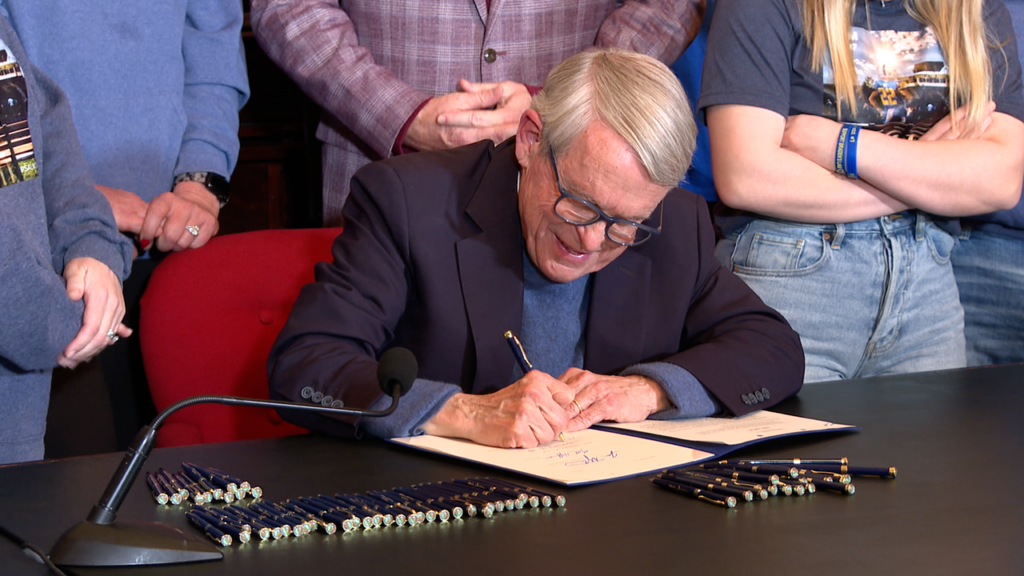
Ohio Gov. Mike DeWine. (Photo by Morgan Trau, WEWS.)
Ohio Gov. Mike DeWine has signed the state’s massive operating budget, which includes funding for a new Cleveland Browns domed stadium and provides tax cuts for the wealthy.
This is a developing story and will be updated. The governor will have a press conference at 10 a.m. Tuesday on his decisions.
At 11:15 p.m. Monday, DeWine announced he approved the about $60-billion Republican spending bill. As of 1:30 a.m., he was only midway through scanning his 67 line-item vetoes, spokesperson Dan Tierney said.
So far, we know several items approved in the budget.
The Browns will be getting $600 million for their new Brook Park stadium.
The budget calls for the state to take legal ownership of $1.7 billion in unclaimed funds, setting a clock on how long people have to file claims and get reunited with their missing money.
That’s a major change for Ohio, which currently holds unclaimed funds in perpetuity. The budget will give people a decade to claim their money before it becomes the state’s property. Lawmakers want to grab $1.7 billion out of Ohio’s $4.8 billion pool of unclaimed funds right away — and then continue taking money on a rolling basis, after a decade of holding it.
The budget also changes a state law designed to make it harder for pro sports teams to leave publicly subsidized facilities, clearing a significant obstacle from the Browns’ road to Brook Park.
The new language says the so-called Modell law, designed to prevent major sports teams from pulling up stakes, would only come into play if a team chose to leave the state.
The changes to the law are likely to end a court battle that’s just getting started and take leverage away from the City of Cleveland, which is fighting to keep the Browns on the lakefront or negotiate a better exit deal if the team leaves.
Income tax
He also approved the GOP’s 2.75% flat income tax, meaning the highest earners in the state, those making more than $100,000 a year, will no longer have to pay 3.5% in income tax, making them equal to the lower tax bracket.
State data reveals that this could result in a loss of more than $1.1 billion in the general revenue fund. This was made up by cutting social services and some tax exemptions.
Medicaid
Tierney confirmed that some aspects of the Medicaid cuts, ones that were set to cut about 800,000 Ohioans off of health care, have been signed into law. Other provisions were vetoed, he said.
WESW’s Michelle Jarboe contributed to this report.
Follow WEWS statehouse reporter Morgan Trau on X and Facebook.
This article was originally published on News5Cleveland.com and is published in the Ohio Capital Journal under a content-sharing agreement. Unlike other OCJ articles, it is not available for free republication by other news outlets as it is owned by WEWS in Cleveland.
SUBSCRIBE: GET THE MORNING HEADLINES DELIVERED TO YOUR INBOX
SUPPORT: YOU MAKE OUR WORK POSSIBLE