
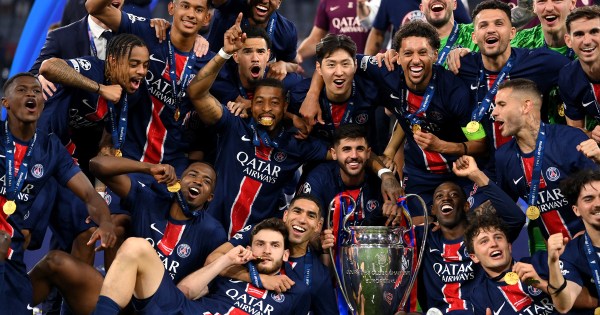
Paris Saint-Germain informed the world that it had the best club in Europe when it won the 2025 UEFA Champions League final in May, but it also let brands and the global sports community know that it had one of the most engaged fan bases on the planet.
With help from its partners at analytics firm CrowdIQ, PSG wants to help teams, including the NBA’s San Antonio Spurs and the NFL’s Tennessee Titans, grab fans’ attention and hold it until the final seconds tick away.
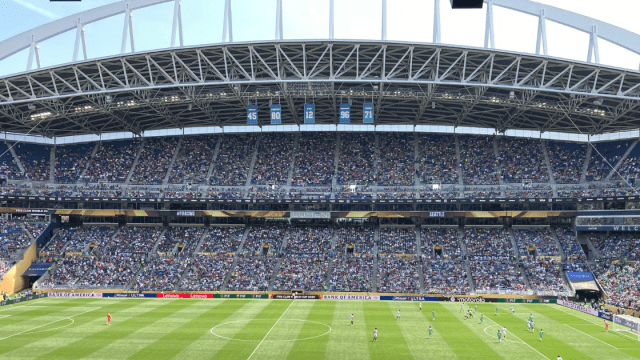
In Seattle, playing Major League Soccer’s Seattle Sounders during the FIFA Club World Cup in June, Paris Saint-Germain contributed a significant portion of the more than 50,600 fans in attendance. Throughout the match, PSG fans exhibited one of the key behaviors that stood out amid CrowdIQ’s season-long attempt to gauge stadium atmosphere and measure it in an “Atmosphere Index”—they didn’t deviate from the action for the little more than 90 minutes of live gameplay.
“I went to a match in January, the Manchester City [Champions League] match, and when the ball is in play, people are just not on their phones: It’s sustained chanting the entire time,” said Katherine Rowe, vp of client strategy and insights for CrowdIQ. “If you look at one of the reports that we would send to PSG every game, it very consistently states that people are paying attention to the field, so we tried to score those moments of when they should be paying attention to things and when PSG wants them looking at the field or screens, or at their phones if they have a QR code.”
After setting up shop in PSG’s home stadium at Parc de Princes at the end of the 2023-24 season, CrowdIQ spent the next season monitoring crowd noise, fan reaction through cameras it installed throughout the stadium, the intensity of those reactions in relation to specific match events (injuries, goal scoring, etc.), and PSG’s own data including gate scans, match presentation, and on-field performance. As the index revealed, PSG fans kept their energy at fairly sustained levels for all 90 minutes of play—which is more even than in other sports—which means that both the team and its sponsors have to look for specific windows to grab fans’ attention.
Fans were most receptive to messages in the 15 minutes before and after the match. That threshold extends a bit for more competitive contests, as Champions League matches led to a 10% increase in overall fan satisfaction and had them arriving at their seats roughly 25 minutes earlier than usual, on average.
With club collaborator and new minority owner Kevin Durant, a longtime supporter, and stars including Jimmy Butler and Cardi B on board with PSG largely because of the in-stadium experience, the team sees maximizing gametime attention as its best means of connecting with fans and brands. By analyzing fans’ matchtime behavior, both PSG and CrowdIQ hope to unlock the potential of improved stadium atmosphere for sports brands around the world.
“What sponsors are partnering with is the product, so if you can make the product better, then by virtue, they get a better experience,” said Jerry Newman, PSG’s chief innovation and digital officer. “Yes, there’s the classic sort of attribution—’How much did I get in terms of value for that?’—but if we can make the product and the reputation of games at Paris Saint-Germain better, then just by a ripple effect, it improves the value of their sponsorship.”
Making the translation
Paris Saint-Germain became a bit more familiar with the San Antonio Spurs earlier this year, when the NBA came to Paris in January for two games between the Spurs (and their Parisian star Victor Wembanyama) and the Indiana Pacers. The teams collaborated on content and events during the Spurs’ stay in the city, and the two CrowdIQ clients began discussing what they were looking for from both their tech partner and from fans.
“We’re very fortunate to have a lot of friends in the U.S., [and] there’s nothing better than sharing learnings over different sports because you just look at things from a different perspective,” Newman said. “When we were spending time with the Spurs, they were looking at CrowdIQ for attention on screen, but my objective was maximizing atmosphere, [and they had] never looked at it from that angle.”
CrowdIQ measured the arena atmosphere for the Spurs this past season using elements of the PSG model, but tailoring it to the NBA. The NFL’s Tennessee Titans were also a CrowdIQ client and wanted to measure the atmosphere in their current home, Nissan Stadium, as they prepare to move into a new facility set to open in 2027.

Ultimately, Newman said PSG plans to work with other Crowd IQ sports partners in the U.S. to share stadium atmosphere data and apply lessons around the globe.
“The next step for us is to start to work with other U.S. sports, applying the same formula that we have for atmosphere, and maybe tweaking it, because they’ll help us import it and understand it,” Newman said. “Then being able to compare what’s a good atmosphere for the [Minnesota] Vikings, what’s a good atmosphere for the Spurs, what’s a good atmosphere for PSG, and learn from each other.”
How to play the long game
Some elements will translate better than others. For example, when PSG Ultras unfurl giant tifo displays in the stands before matches that PSG can coordinate a soundtrack for, there isn’t much of an equivalent in U.S. professional sports outside of soccer. Also, U.S. sports often contain more natural breaks in the action, when their leagues and their partners actually want fans on their phones checking apps, even during tentpole events.
@psg Tifo masterpieces at the Parc des Princes 🖼️ #ucl #championsleague #parcdesprinces ♬ som original – See Football Editions ⚽
However, if teams are playing opponents on par with PSG’s rivals, Marseille and Monaco, and need fans in the stadium earlier or players and coaches have pre-game press conferences or in-game opportunities to hype up the crowd, stadium atmosphere data can help devise a game plan.
From the team’s perspective, there are moments where it can add a pregame DJ, an announcer, music, or even a few more minutes to the pregame or postgame to build on the crowd’s momentum. For brand sponsors, it’s an opportunity to become a more natural part of the game, like having a presence during a tournament walk-in or finding a way into a light show or postgame player celebration.
“It’s not like [you] snap your fingers and you make revenue off of it, but it’s the long tail aspect of it,” CrowdIQ’s Rowe said. “If you actually know how to measure this, you can then find ways to lift revenue off of it and find commercial opportunity by looking more deeply into this kind of part of the in-venue experience.”