
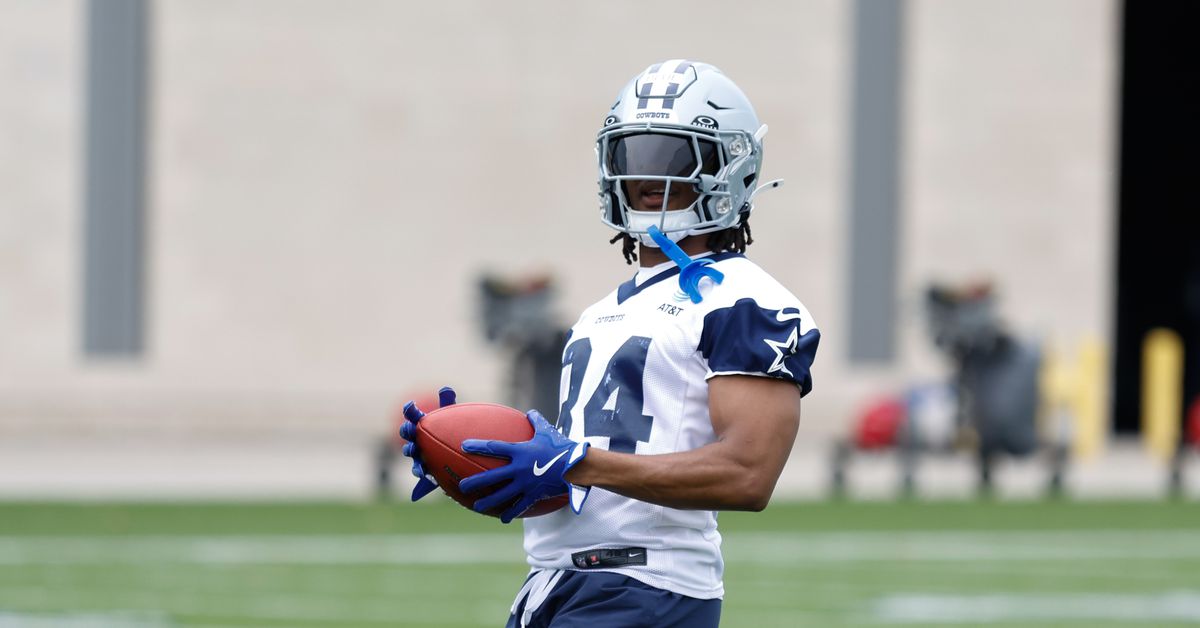
The Dallas Cowboys have used all possible avenues of player acquisition in an effort to improve their roster for first year head coach Brian Schottenheimer this offseason. They’ve made trades, meaningfully participated for the first time in two seasons in the free agent market, and, of course, were part of the draft. The team’s reputation as a strong drafting organization has mostly been upheld by just that in recent seasons though, past reputation and not the reality of the current situation.
The list of things the Cowboys will have to overcome in 2025 to improve on their 7-10 record a year ago is quite long, but squarely at the top is having better injury luck with star players, and better depth across the roster to deal with other injuries that occur.
The combination of the Cowboys not hitting on as many draft picks in recent seasons, and not being nearly as open to trades and free agency as they’ve shown this offseason, has led to the bottleneck effect of Dallas having top-heavy rosters that can’t stand the attrition of a long season. The lack of activity prior to the draft leads to rookies that can get on the field being put in less than ideal situations, being asked to do too much without other supporting players around them, and this cycle continued. The Cowboys will be hoping their major shakeup to the coaching staff at nearly every spot from HC, both coordinators, and position coaches, as well as more in depth overhaul of the roster, can help break this cycle that ultimately doomed the final season of Mike McCarthy’s tenure.
The Cowboys couldn’t even keep their stars healthy, like Dak Prescott or Trevon Diggs, and that helped the team slip to third in the division as well. The Cowboys have kept some things the same though, and their feelings towards the draft being the lifeblood of roster building aren’t going anywhere anytime soon. This April’s class of nine rookies will still be expected to contribute, but monitoring the situations they are put in alongside other veterans and new acquisitions will be vital in putting Coach Schottenheimer’s new emphasis on culture to the ultimate test.
Four of the Cowboys nine picks went to the offensive side of the ball, including their first-round selection with Alabama’s Tyler Booker at 12th overall. Somewhat surprisingly after this, the Cowboys waited until the fifth round to draft offense again, adding one of two running backs in Jaydon Blue out of Texas. They double dipped at offensive line, but came away without any rookie help at wide receiver.
Will the Cowboys offense still be hyper dependent on Dak Prescott and CeeDee Lamb, or have they found enough help to reclaim their spot as one of the league’s top scoring outfits? Are their four new rookies stepping into situations with realistic expectations that are ideal for development, giving some hope the Cowboys can find the missing formula of playing their best football from December onward?
In order to answer this, let’s rank the Cowboys draft picks on offense by how much experience, veteran presence, and proven production/ability is in front of them currently on the depth chart. One other thing to note specifically for this side of the ball when it comes to this list, since the four Cowboys draft picks only covers two positions, current projections and speculations about more specific roles for all four players were taken into consideration when looking at their overall spot on the depth chart.
#1 OL Ajani Cornelius
Perhaps one of the least talked about Cowboys draft picks right now is Oregon offensive lineman Ajani Cornelius, the team’s sixth-round selection at 204th overall. Although he played tackle for the Ducks, a program known for valuing slightly smaller lineman with higher mobility, athleticism, and range to fit their up-tempo offense, Cornelius joins the Cowboys as one of their latest OL projects to switch positions. Given Dallas’ track record of successfully doing so, and the wealth of experience Cornelius comes in with having played in 28 games over two seasons, it is certainly fair to call the situation he’s stepping into favorable.
When we mentioned that the Cowboys dependency on a few key players involved more past draft picks near the end of their contracts compared to recent ones, this problem can also extend into positions where depth is not just a luxury but an absolute need. Offensive line is the prime example of such a position, and the Cowboys have not seen the likes of Nathan Thomas (2024 pick) or Matt Waletzko (2022 pick) provide enough stability, either through play or injury, to be considered reliable backup options at either guard or tackle. The way the Cowboys have addressed this concern with not just Cornelius is impressive though, and the reason Cornelius leads of this list.
The Cowboys newest wave of versatile OL depth includes Asim Richards, who appeared in eight games last season as a second year player, T.J. Bass who went from a potential starter to priority backup when the team drafted Tyler Booker, veteran FA additions Rob Jones and Saahdiq Charles, and Brock Hoffman. Given that this is the group Cornelius will be likely competing with the most, and not the starting tier of Booker, Tyler Smith, and Cooper Beebe along the interior, 2025 may be a true development year for Cornelius.
The Cowboys have valued the development of their OL from top to bottom for a long time now, but have not always had the luxury of doing it right by giving young players time to learn and grow before being thrown into action. With so many premier starters at all five spots over the years, it is easy to see how a little bit of complacency can slip in elsewhere on the depth chart here, but in Cowboys fashion they’ve been caught waiting just a bit too long to address something that becomes a season-long problem. For a team that’s talked so openly about a renewed emphasis on winning the line of scrimmage again, every offensive lineman in the building is going to be held to the highest culture-building standard under this new coaching staff. What this looks like through training camp and the preseason will be very interesting to monitor, as that is the time for all players to get their shot between the lines, including Cornelius who has the traits to push more established players ahead of him for a swing spot.
#2 G Tyler Booker
Sticking with the all-important interior to the Cowboys offensive line, their newest blue chip starter is Tyler Booker out of Alabama. The Cowboys wasted no time going back to the first round to replace 2014 first round pick Zack Martin, who retired this offseason after a Hall of Fame level career all at right guard. The Cowboys may still bring up competition between now and September and give some first team reps to the likes of Bass and Hoffman at right guard, but the overwhelming expectation is that the 12th overall pick Booker will be the week one starter here.
The Cowboys are looking to get more of a push in the run game, get blockers out in space to create explosive plays, and as always keep the front of the pocket clean for Dak Prescott in yet another return from injury season. Not only does Booker excel at all of these things, but he will be surrounded by players with similar skillsets. Evaluating line play in the offseason is always a slow process that requires patience until padded practices begin in Oxnard, but when they do, all eyes will be on how OC Klayton Adams can put this group to work. The upside in a trio of Tyler Booker at right guard, Cooper Beebe at center, and Tyler Smith at left guard is one of the best things this team has going for them at the moment.
Smith has quietly become one of the best left guards in football, has the same pedigree as Booker being a former first-round pick, and is at his best blocking downhill in the run game like Booker as well. This duo alone should help the situation Booker is stepping into, but Dallas bringing in former Kansas State OL coach Conor Riley to work with Beebe again (a K State draft pick) has also created increased expectations for a year two jump from center.
Add in that Booker will line up directly next to Terence Steele at right tackle, a player that leads the Cowboys current OL in career starts by a wide margin, and it’s easy to see why Dallas is so bullish about the immediate returns they can get from going back to drafting OL in the first round. It isn’t every day a NFL team talks about wanting their first-round rookie to step into a leadership and standard keeping role, but the Cowboys have done so with Booker who played under Nick Saban at Alabama. The secret sauce here is that Booker won’t be alone in his efforts to make the Cowboys offensive line dominant again, with the arrow pointing up for many of the other starters around him, hopefully also including second year left tackle Tyler Guyton who had a very up and down rookie campaign.
#3 RB Jaydon Blue
Now going from two offensive linemen to two players at the position that works in tandem with them, the Cowboys pair of rookie running backs they added to an otherwise thin stable of backs prior to the draft. The Cowboys sitting on their hands last offseason hamstringed them the most at running back, so much so that even if Prescott and other core players stayed healthy, the lack of a run game had a real chance to remain a fatal flaw in the team’s efforts to return to the playoffs. The team simply had to do better in retooling at running back this time around, not just because of Schottenheimer’s emphasis on running the ball again, but because of the complete lack of depth at this spot. Prior to the draft, the Cowboys signed Javontae Williams in free agency and traded for Miles Sanders.
They then drafted Texas’ Jaydon Blue in the fifth round, and Clemson’s Phil Mafah in the seventh. For the purpose of the criteria of the list, slotting any running back is very difficult. The Cowboys aren’t simply holding their cards close to the vest when it comes to how they’ll utilize this completely new group of running backs, rather there is a real sense that it will be figured out on the fly based on how they perform through the preseason, and then a bit of a “hot hand” approach at the start of the regular season if necessary. The lack of established options for either Blue or Mafah to compare to makes it even harder to put one ahead of the other, although putting Blue as a fifth-round pick ahead of a seventh-rounder may feel like an easy way out.
There is more to why Blue comes in third here though. Based on what we do know about the skillsets of these running backs, Blue compares more closely to both a hybrid mix of Williams and Sanders. He can show some toughness as well as patience between the tackles like Williams, and is a big play receiving threat like Sanders at his best. Compared to the more bruising style Mafah played at Clemson, the Cowboys have less of a comparison here to take pressure off of him, compared to Blue who may very well still unseat both Williams and Sanders as a featured back at some point this season.
Blue had the benefit – or the hinderance – of consistently playing with other NFL caliber backs for his entire career at Texas. While this may have lowered his draft stock for teams that want a true lead back and not someone that’s just a piece to the puzzle, more and more NFL offenses are embracing this piecemeal approach to the run game. The Cowboys sure appear poised to do so given their current depth chart, and have the bodies ahead of Blue to keep his role within the realm of where his best, explosive plays can still be his biggest asset. This list does not have to include just Williams and Sanders, as KaVontae Turpin and at times even CeeDee Lamb can be called upon as ball carriers to make big plays.
Most Cowboys fans out there would probably feel better about the overall situation Blue is stepping into with a slightly better option established at the top of the running back depth chart right now. If this team is going to back up all of their talk about competition bringing out the best in players though, fans, coaches, and media alike all heading to training camp will not have to look beyond the competition at running back to see how true this is. Keeping an eye on the balance of how Jaydon Blue is being used as both a back and a receiver will be one storyline to watch from this group in Oxnard.
#4 RB Phil Mafah
The last draft pick the Cowboys spent on offense also finds himself last on this list. Phil Mafah projects best as a short-yardage back that can give the Cowboys some of the toughness on interior runs they’ve lacked. Especially with the aggressive and mean streak blocker Tyler Booker now in the fold at right guard, having a running back that can be in lockstep with a fiery offensive line and help set the tone on the ground can be valuable. The problem for Mafah when it comes to this list though, is how unreliable the Cowboys have been in these short yardage situations in recent seasons, paired with the lack of current options to also serve in this role. Surely, the Cowboys didn’t re-sign Ezekiel Elliott to just be a short-yardage back a year ago, but that is essentially what he was. Now, even Elliott is gone, and fullback Hunter Luepke would likely be next in line to see these types of reps.
Luepke has also been working at tight end a bit this offseason, a position that’s drawn a ton of intrigue for the way Dallas has mixed things up around Jake Ferguson. Coming off of a down season, Ferguson will now have to deal with the likes of Luke Schoonmaker, Brevyn Spann-Ford, and Luepke, all three of which the Cowboys seem legitimately interested in getting playing time for. This tight end usage could either lead to more of the short passing game being called on in short-yardage situations, or running the ball out of heavy personnel, something Mafah will have to prove himself in with a fresh start.
The good news for Mafah is again how desolate the depth chart at running back was prior to his arrival. The Cowboys are in no other position other than to play the long game with this current group and see what develops, and worst case scenario for Mafah feels like still being an injury or two away from being thrown into real meaningful action. This has been a recipe for disappointment with other Cowboys draft picks of late, but Mafah is the type of back that consistently takes what the line blocks for him and finishes runs with power, things the Cowboys can work with if they get the type of line play as well as command at QB from Prescott they’re expecting.