

One-day youth football camp brings big fun and bigger plays
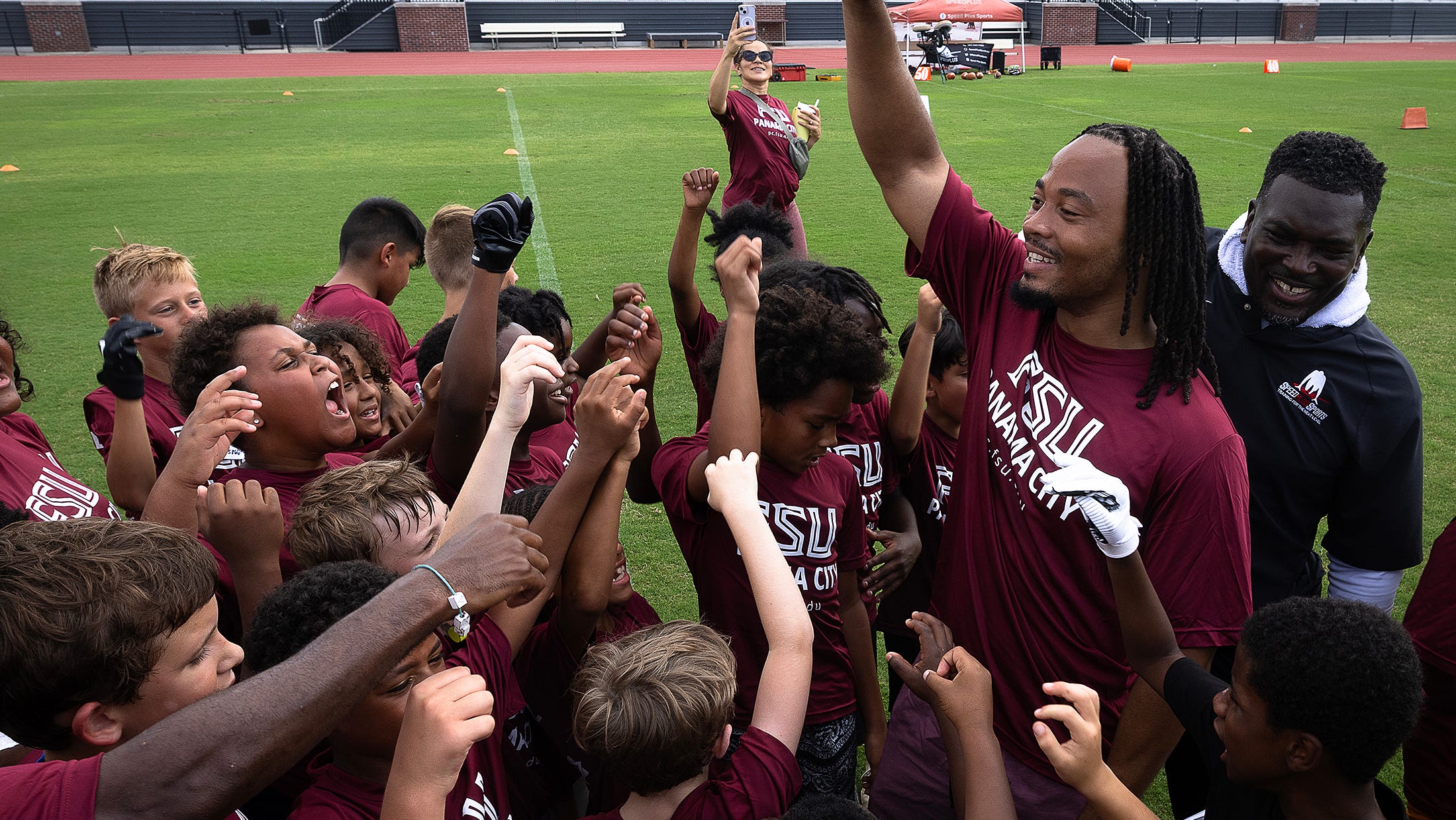
Javien Elliot, a former Rutherford and FSU star, and FSU PC promote football training at Tommy Oliver Stadium in Panama City on June 7.
Florida State is implementing NIL revenue-sharing contracts with its student athletes, drawing criticism from some.Former coaches and players, including Urban Meyer and Mark Ingram, have expressed concerns about the contracts’ potential impact on recruiting and player leverage.
As NIL becomes more and more common in today’s collegiate level sports, schools need to lay out ground rules for their players so they can monitor them and their money. The Florida State athletics program has reportedly laid out rules and regulations for their student athletes to stay focused and get paid.
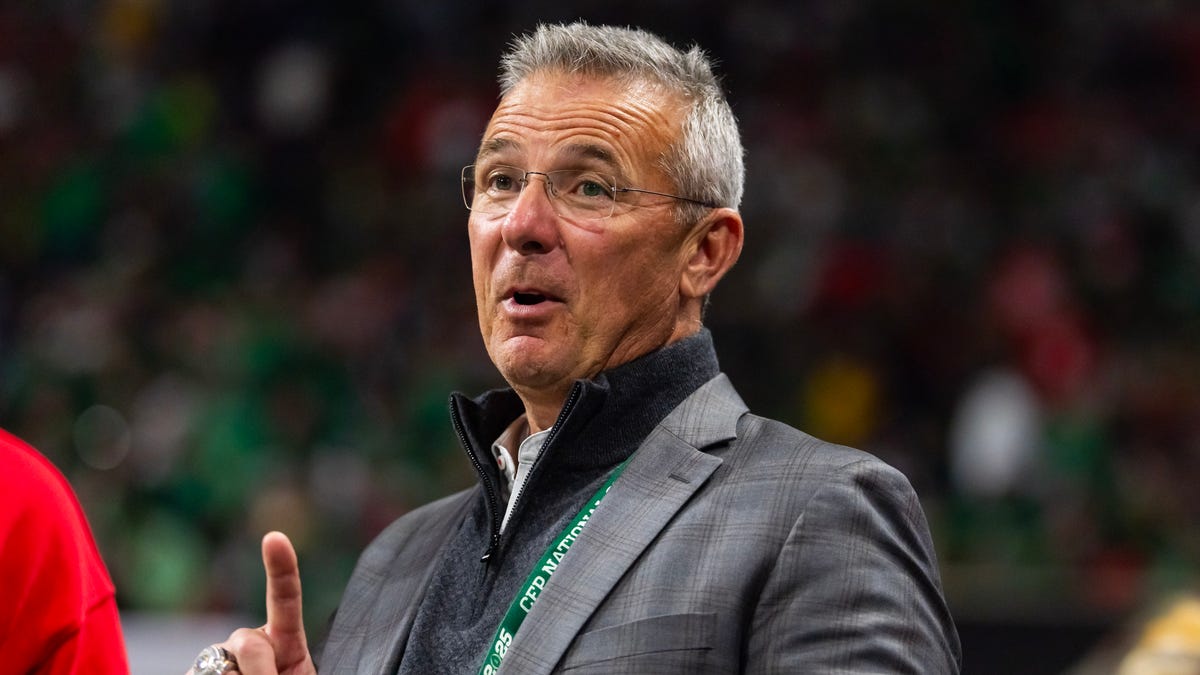
Although the Seminoles’ revenue-sharing contracts are raising a few eyebrows. Former Florida and Ohio State head coach Urban Meyer described how these contracts could impact FSU on his podcast, “The Triple Option.”
“If this goes through, the days of Florida State are numbered,” Meyer said. “It won’t happen; it can’t happen; no chance.”
Meyer believes colleges saw the power student-athletes gained once NIL payments began; players could leave anytime, have unlimited transfers and no limitation on where NIL money comes from. These boosts caused institutions to think of a way to “swing the pendulum” back into their direction, according to Meyer.
FSU’s contract reportedly holds power over the student-athletes, but Meyer says this messes them up in other aspects of their program.
“If this is final, recruiting is over,” Meyer said. “College football is about recruiting.”
Former Alabama running back Mark Ingram, a co-host on “The Triple Option” podcast, shared his thoughts on the situation from a player’s perspective.
“I wouldn’t sign this contract because I’m giving away all my leverage,” Ingram said. “According to this article, Florida State want all the control and not necessarily fairness.”
What is on FSU revenue-sharing contracts?
The revenue-sharing contracts FSU could finalize contain lots of information that could question athletes’ decisions when picking their next school.
According to CBS Sports, the full revenue-sharing contract is filled with rules and regulations for athletes.
The option to extend
“[School] shall have, until the end of Student-Athlete’s NCAA eligibility, dependent, successive options to extend the Term under the same terms and conditions as the existing Term, unless the Parties mutually agree in writing to a change in such terms and conditions, for additional periods of one year by providing written notice of such extension (e-mail is sufficient) to Student- Athlete no later than twenty (20) days prior to the expiration of the then-current Term of the Agreement. Under such an extension option, the Total Compensation payable to Student-Athlete for the one-year extension period shall be a pro rata, annualized portion of the compensation set for the initial term.
This language details that the school is able to extend a contract on command at the end of the year unless discussions are had to prevent that. This language is “uncommon,” according to CBS sources.
Injury and breach of contract
“In addition to a breach of any specific provision of this Agreement, the following circumstances create a breach of contract by Student-Athlete:
1. Illness or Injury Impacting Value of NIL Rights
Student-Athlete experiences any illness or injury which is serious enough to affect the value of the rights granted to [school] under this Agreement; provided, however, that nothing herein shall affect or limit [school]’s obligations to provide Student-Athletes with medical coverage of injuries sustained as a result of participation in [school] Athletics as required by Section 16.4 of the NCAA Division I Bylaws, where applicable.”
Ingram spoke about his dislike with this portion of the agreement.
“You can cancel my pay if I get hurt and I can’t appeal it,” Ingram said. “I am not agreeing to that.”
Team Rules
Florida State has multiple pages of team rules within their rev-sharing contract. They range from a maximum $100 on the first offense for things like tardiness to team events ($50 for academic activities) to a maximum $2,500 reduction in compensation if a player loses any team gear or technology.
There are also substance abuse fines, such as steroids and marijuana, that scale quickly. The first offense is a maximum of $1,000 reduction from total compensation. The second offense is a maximum 10% of the compensation. A third offense is 50% and a possible dismissal at the head coach’s discretion.
Florida State statement on revenue-sharing contract
Florida State’s spokesperson offered a statement about the questions and concerns regarding the provisions of the revenue-sharing contract:
“As we enter into a new age of collegiate athletics, Florida State has put together an agreement that provides deliverables and expectations for all parties. Each individual situation will be unique and the hypotheticals are impossible to predict. However, we are committed to continuing to provide an elite experience for our student-athletes in all aspects of their collegiate career. Florida State is looking forward to the mutually beneficial partnerships with our student-athletes in this new era.”
Urban Meyer coaching career
Meyer coached many levels of competitive football throughout his career. Going from high school to NFL head coach is a path not many can achieve and Meyer did that.
At the age of 21, he was the defensive back coach for St. Xavier in Ohio.
His collegiate career began with being a graduate assistant for Ohio State for two years before making his way as a wide receiver coach at Colorado State (1990-95) and Notre Dame (1996-2000). Meyer would then become a head coach for the first time in 2001 with Bowling Green, then led Utah beginning in 2003.
He gained notoriety once he went to Gainesville and coached the Florida Gators in 2005. Meyer would win two national championships in his six years with the program. He coached Heisman Trophy winner Tim Tebow in 2007.
Meyer was then hired by Ohio State in 2012 and won a national championship with the Buckeyes in the 2014 season. Meyer’s accomplishments earned him a head coaching job in the NFL with the Jacksonville Jaguars.
His career with the Jaguars ended before the 2021 season was over after Meyer went 2-11.