
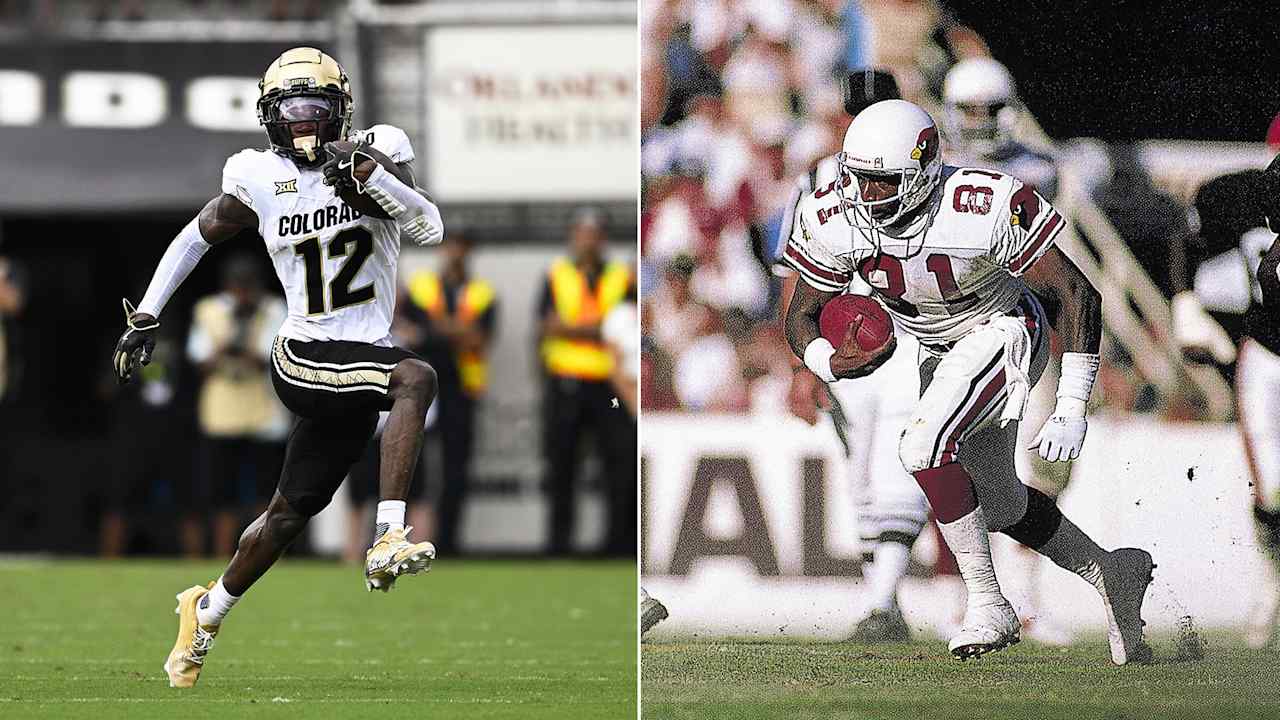
Is it possible to play both sides of the ball? Of course. Green knows from his own personal experience that it can be done.
The more important question is for how long it can be sustainable for Hunter.
“Most players are going to have about 60 plays on offense or defense, but when he goes in he’s playing 100 and some plays a game,” Green said. “He’s playing basically two games every time and you’re playing one, so eventually, it’s going to wear you down.”
“Jet Stream” Green discovered firsthand how taxing double duty is for the body. It was also challenging from an in-game adjustments perspective.
“When you’re in a game and everybody’s gathering together and they’re talking about making some adjustments, if you’re playing defense at the time, you don’t hear this,” Green said. “It could be, ‘OK, we’re going to change this call and how we do this.’ But you don’t get that when you’re on (the field). It’s a very difficult time.”
Before Cardinals coach Jim Hanifan asked the defensive back to play some wide receiver, Green would listen in to the receivers coaching instructions to help himself guard the position. Soon enough, those tips would help him as he transitioned to solely playing wide receiver full-time in 1982, followed by back-to-back seasons with All-Pro honors.
Hunter has been vocal about his desire to play both positions. Green is interested in watching Hunter’s next steps.
If the soon-to-be first-rounder wants a blueprint for how to play both sides in the NFL, just turn on the 14-year NFL veteran’s tape.
“I think about my advantage and how did I jump out to do it so quickly,” Green said. “The fact I knew what they do on defense made it so much easier for me to go to receiver because it’s about adjustments.”