
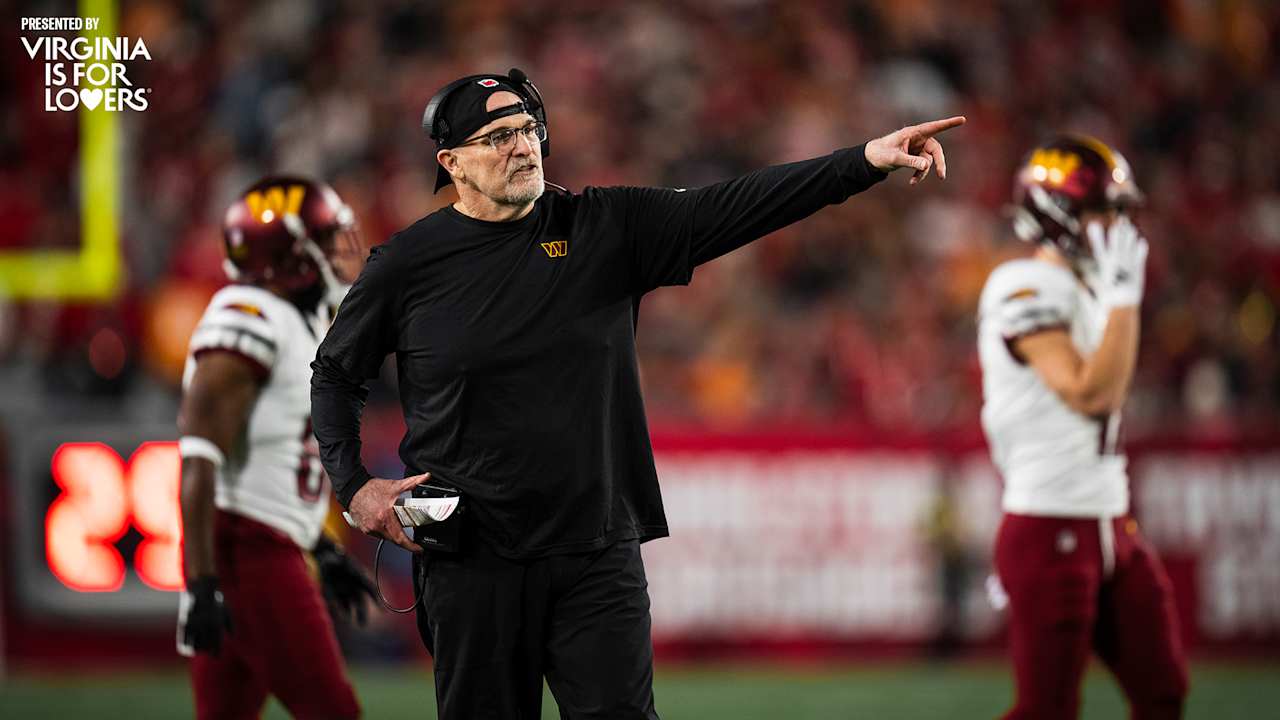
Quinn’s formula for deciding when to keep the offense on the field involves knowing what the offense can do, what the team needs in that moment and what the opposing defense is trying to do to the offense. The five attempts they had against the Buccaneers, while probably anxiety-inducing for Washington fans, can be easily justified because of who the Commanders were facing — in this case, a third-ranked offense that put up more points than almost any other in the NFL — and the rewards of being successful on those downs.
Take their last fourth-down conversion, which resulted in a five-yard touchdown by Terry McLaurin, as an example. The Commanders could have kicked a field goal, which would have cut the 17-13 deficit down to a point, and relied on their defense to make a stop. However, Mayfield and receiver Mike Evans’ connection had been perfect all night, and there was a chance the Buccaneers could have run down the clock, kicked a field goal of their own and forced the Commanders to score a touchdown to win.
So, rather than take that chance, they chose a safer gamble: trust Jayden Daniels to make a play with his arm or legs. That choice tends to work out for the Commanders; Daniels completed all eight of his passes on fourth down for 77 yards and rushed for 85 along with scoring two touchdowns.
“It’s something that is part of our game,” Quinn said. “A lot has to do with No. 5 (Jayden Daniels). And sometimes he can make a play that takes place that was not the huddle call by using his legs and doing that.”