
The NFL Players Association will appeal an arbitrator’s decision from January finding that NFL owners didn’t collude in violation of the collective bargaining agreement, but the appeal will need to overcome fact-finding that suggests there was no collusion.
Meanwhile, the NFL has gone on offense. The league is now demanding repayment of about $12 million in attorneys’ fees and costs, saying the NFLPA brought the collusion action without a reasonable basis.
The pursuit of an appeal comes amid controversy over the secrecy of the arbitration decision, the lack of communication about it to NFL players and related questions about the leadership of NFLPA executive director Lloyd Howell. News of the decision was first published by the Pablo Torre Finds Out podcast. Meanwhile, ESPN and Mike Florio of NBC’s Pro Football Talk have detailed other concerns about Howell, including those stemming from his relationship with a private-equity firm seeking to purchase equity in NFL teams.
The NFLPA and NFL declined to comment to Sportico.
There’s a lot going on connected to the arbitration decision, in which NFL systems arbitrator Christopher F. Droney found “there is little question that the NFL Management Council, with the blessing of the Commissioner, encouraged the 32 NFL Clubs to reduce guarantees in veterans’ contracts at the March 2022 annual owners’ meeting.”
The league showed data to owners that “guaranteed salaries and signing bonuses commitments had been trending substantially upwards.” Owners were also warned that a new “market standard” would be “difficult to walk back” and predicted players might receive a “higher percentage” of revenue than they were entitled to by the CBA.
The league urging owners to offer fewer contractual guarantees has sparked criticisms, especially given that players are exposed to significant health risks on every play and have an average career length of about three years. The revelation is also viewed as emblematic of an asymmetrical labor-management relationship. For decades, the NFL has made gains through collective bargaining while the NFLPA has often been portrayed as weaker than players’ unions in the other major sports.
That said, league officials presenting spending data and other economic information to owners and team leaders isn’t unusual. In fact, it’s an expected duty of sports league management councils. League officials are supposed to inform owners and team leaders about a wide range of data points and contextualize them. Most sports leagues are joint ventures of independently owned teams that compete on and off the field and rely on the league to regulate their competition. One standard method of regulation is for the league to ensure transparency in how teams spend money; it would be unusual if the NFL didn’t inform owners about guaranteed-money trends.
League officials urging owners to spend less also isn’t, by itself, collusion. It might be inappropriate, unfair or even brazen, but the legal definition of collusion requires more.
To that end, article 17 of the CBA defines collusion for purposes of the NFL and NFLPA. Collusion refers to two or more teams, or the league and at least one team, conspiring to deprive players of collectively bargained rights.
It is thus crucial that multiple parties—not just the league or one team—agree to act in a prohibited way. Also, a clear preponderance of the evidence, which is a higher burden of proof than the preponderance of the evidence burden (i.e., more likely than not or “probably”) in civil litigation, is required.
Collusion is harmful to players, because they sell their services to teams and expect that teams, as prospective employers, will compete against other teams for those services by offering more money. If teams agree to not bid for players—as Major League Baseball owners agreed to do in the 1980s with other teams’ free agents—salaries will be lower.
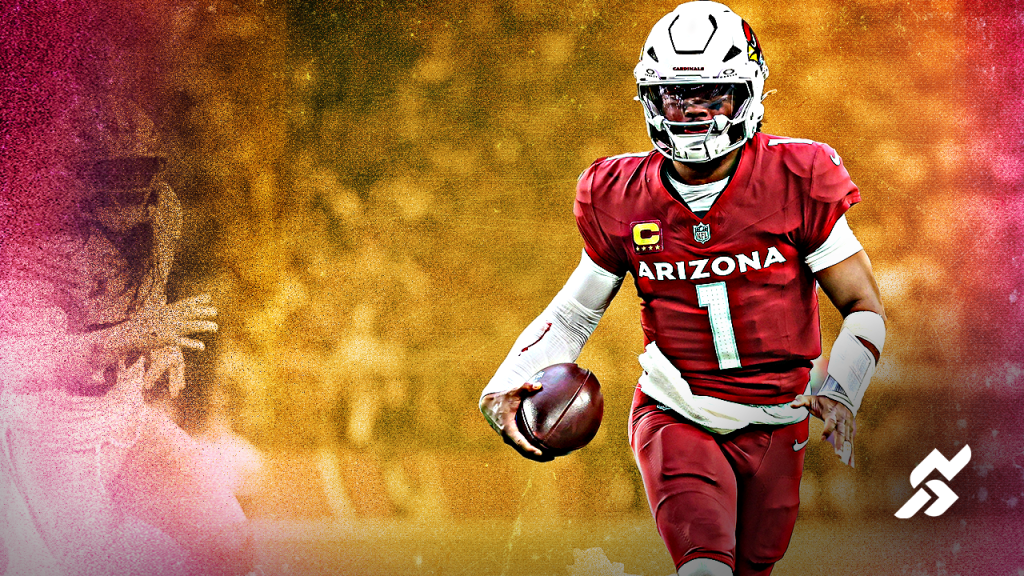
The NFLPA believes collusion occurred in the wake of the Cleveland Browns signing QB Deshaun Watson to a record $230 million, five-year guaranteed contract in 2022. When fellow starting QBs Kyler Murray, Lamar Jackson and Russell Wilson were up for contracts afterwards, none signed guaranteed deals.
Droney, a retired judge for the U.S. Court of Appeals Second Circuit and former U.S. attorney, found the NFLPA’s evidence insufficient. It failed to convincingly establish NFL teams actually heeded the NFL’s recommendation, and thus there was no collusion, which requires more than one wrongdoer.
Droney wrote that the key part of the league’s presentation lasted only 20 minutes, and some owners weren’t in attendance. Some owners who were present weren’t paying close attention, and some testified that they couldn’t recall what was discussed.
“The evidence,” Droney wrote, does not show “that each Club was aware that the others were being invited to participate in collusion.” He added that “attendance at the owners’ session does not mean that the Clubs gave adherence to the scheme,” since attendance doesn’t prove a team took action in response to the meeting.
Droney also wasn’t persuaded by empirical data offered by the NFLPA. He noted that NFLPA experts provided evidence suggesting a “reduction in some guaranteed compensation in 2023.”
However, that evidence doesn’t establish teams “joined in a collusive agreement and carried it out.”
In fact, by one measure, 14 of the 32 teams increased guaranteed spending in 2023. In addition, “guarantees actually increased in certain respects” after the owners’ meeting, including the number of veteran players who received guarantees and the percentage of contracts that were guaranteed. Another data point showed that the number of rookie contracts with guarantees “increased by 34% in the 12 months before and after the owners’ meeting.” Droney reasoned that a collusion plot probably wouldn’t yield these and similar statistics.
Droney also took stock of testimony by several owners, especially New York Giants co-owner John Mara and New England Patriots owner Robert Kraft. They ridiculed the idea of owners asking other owners to hurt their teams’ chances by offering players inferior contracts and potentially losing stars to other teams.
Mara, for example, testified that Dallas Cowboys owner Jerry Jones would “laugh” at him if he asked Jones to not guarantee Dak Prescott’s contract, while Kraft said, “you want your competitors to do dumb things with the salary cap.”
The NFL not only won the arbitration but contends the NFLPA brought the collusion action without a reasonable basis and demands the NFLPA foot its pricey bill. Invoking Section 15 of Article 17, the NFL wants Droney to order payment of reasonable attorneys’ fees and costs—about $12 million. Central to that argument is Droney finding Kraft did not—as former NFLPA executive director DeMaurice Smith testified—tell Smith in the summer of 2022 that Goodell asked him (Kraft) to discuss guaranteed contracts at an owners’ meeting and encourage owners not to agree to large, fully guaranteed deals.
The alleged Smith-Kraft conversation was stressed by the NFLPA in commencing the arbitration in 2022. In their own testimonies, both Kraft and commissioner Roger Goodell denied Smith’s assertion. In 2023, when Smith texted Kraft to “say hello,” Kraft responded: “Always felt we had a special relationship. Disappointed to hear false claim attributed to you about me relating to guaranteed contracts.”
Droney found Kraft’s and Goodell’s accounts more believable.
“In light of all the circumstances and weighing the testimony at the evidentiary hearing,” Droney wrote, “I find that Mr. Goodell did not ask Mr. Kraft to talk about guaranteed contracts with other owners in August 2022 or at any time.”
In response, expect the NFLPA to argue that even excluding Smith’s account of Kraft and Goodell, the league presenting data to owners in a way that Droney found to constitute urging teams to offer fewer guarantees means it had a reasonable basis.
As to the NFLPA’s appeal, the union has a fiduciary duty to enforce the CBA and its commitment to protecting players’ interests. The appeal will be heard by a three-person panel. At least one of the three must be a former judge. Arbitrators typically are attorneys, with law professors and retired judges often among those retained.
The NFL and NFLPA are expected to agree on the three members, but if they can’t, the CBA specifies a process where they ask the International Institute for Conflict Prevention & Resolution (CPR) to submit the names of 15 attorneys, none of whom can have represented a sports league, team, athlete, agent, labor organization or related governing body within the last five years. The CBA then specifies a process by which the NFL and NFLPA identify three names.
An appeals panel is ordinarily required to accept the arbitrators’ findings of fact unless the panel finds they are “clearly erroneous”—a very deferential standard. Similarly, the panel must accept his recommendations unless they’re based on “clearly erroneous findings of fact, incorrect application of the law, or abuse of discretion.”
But Article 15 notes an important and relevant exception: “As to any finding concerning Article 17 [the anti-collusion article] … review shall be de novo.” De novo review means a review anew or from the beginning, a standard that gives the NFLPA a better chance. At the same time, as a retired federal circuit judge and former U.S. attorney, Droney will likely receive implicit deference from the panel based on his stature in the legal community.
The NFL and NFLPA are also expected to agree on a schedule for the arbitration, including dates by which they must submit briefs. If they fail to come to an agreement, the CBA sets out a process for dates. The appeal will also involve an oral argument during which attorneys for the NFL and NFLPA field questions from the panel.
There will be no further appeal after the panel renders a decision. The CBA states that the decision of the panel “shall constitute, full, final, and complete disposition of the dispute.”
That wouldn’t mean the legal process is over. The loser could petition a federal court to vacate the arbitration award. However, the odds of success would be low. Federal law generally obligates judges to sustain most arbitration awards. There are only narrow and exceptional circumstances when a judge will vacate an arbitration award, such as when an arbitrator refused to consider relevant evidence or follow basic legal principles. Given that the arbitrator was Droney and that the panel will probably feature similarly accomplished attorneys, a court might be especially hesitant to conclude they erred.