
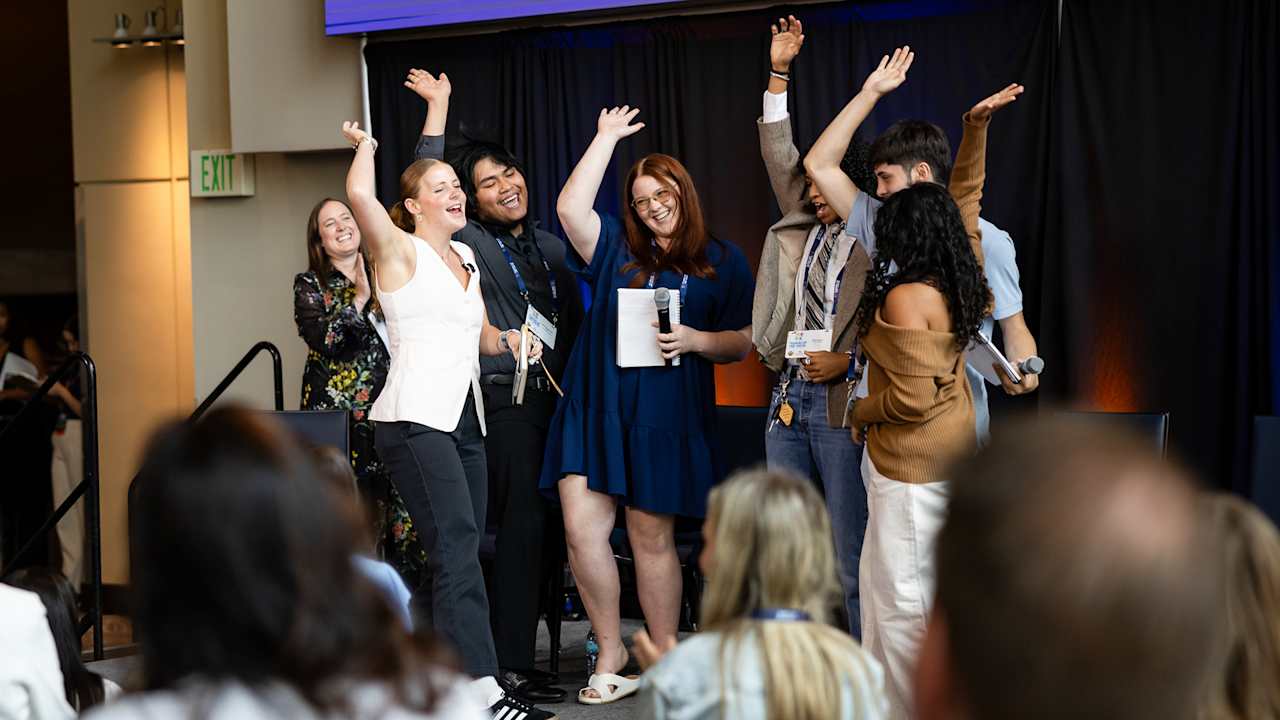
Over the course of the seven hours that followed, guests heard from a variety of panels and speakers that included young leaders, parents and caregivers, online safety advocates and school administrators to appreciate a wide span of experiences across generations and backgrounds. At times, the conversations were deeply moving as panelists shared emotional moments of empowerment or hardship from their lives.
The program also featured a panel of six young community leaders to ensure that youth voices were heard on Thursday.
“One of the best practices that we’re going to hear about today and that I continue to hear about is if you want young people to pay attention, a young person talking is much better than an adult,” Weiser said. “A lot of the programs we have are peer-led, where young people are sharing their own experiences, are supporting other young people as peer counselors. This is part of the overall strategy we need. We need to make sure we’re paying attention and taking action.”
To close the youth panel, each presenter shared one piece of advice to attendees:
“Talk to your teachers and your adult peers who seem the least interested and the most unreceptive and guide them towards believing in youth.” – Mila
“Youth partnerships are a two-way street that require shared power.” – Jose
“Seek true understanding and understand that mental illness is an illness.” – Rayann
“Be patient with [youth] growth.” – Ashlee
“Be there. Allow [youth] space to grow and learn.” – Emanuel
“Recognize potential [in youth] and speak to potential.”- Lily
That principle is one that’s key for the Denver Broncos Foundation, too, as Executive Director Allie Engelken said.
“We’ve heard from youth, especially through the Broncos Foundation and some of our community partners,” Engelken said. “We’ve heard that they don’t feel like they have someone to talk to, they don’t have a trusting adult in their life. And so we look for ways to connect them into programs that give them a voice in the best way that they need that voice. So, that could be a digital community, it could be an in-person community, in a school setting, after school. It’s really meeting them where they’re at that is so important to having long-lasting impact.”
As the foundation representing an NFL team, it also has a unique opportunity to address the issue of mental health for youth.
“The Denver Broncos have shown extraordinary civic leadership here,” Weiser said. “When you think about the challenges facing young people, youth mental health is at the top of the list. If young people are hurting, disconnected, they’re not building relationships, they’re not going to live with happy and successful lives. Young people look up to the Broncos, and you’re providing leadership, saying, ‘We care about you, we’re supporting you, you’re making a real difference.'”
As the young panelists showed, though, being heard cannot be the only outcome. It must also spark action.
“I think tooday shows that there is a need and a longing for in-person connection and collaboration between adults that are serving youth and how we can all work better together and how we can come together and really make an impact in the community as youth are facing a crisis around mental health,” Engelken said. “… Today allows us to better serve [youth] from an adult perspective, knowing that they are the change and they are the future, and we’re looking forward to seeing what we can help them accomplish.”