
President Trump on Thursday signed an Executive Order that seeks to ban so-called “pay-for-play” payments to college athletes, which critics argue are de facto salaries, arguing college sports in the U.S. is “under unprecedented threat.”
Why It Matters
In 2021 the Supreme Court unanimously ruled that the National Collegiate Athletic Association (NCAA) can’t impose limits on the education-related benefits available to college athletes who play in Division I basketball and football.
Shortly afterward the NCAA introduced a new interim policy allowing college athletes to benefit financially from their name, image or likeness (NIL) such as through merchandising and brand endorsements. Direct salaries remain banned and the exact rules vary between states.
Critics argued the new system has resulted in some players receiving de facto salaries via NIL payments, to the benefit of the wealthiest university teams, while supporters argue the move was needed to avoid exploitation.
What To Know
Trump’s executive order instructs the Secretary of Education, together with the Attorney General, Health and Human Services Secretary, and Federal Trade Commission (FTC) chair, to formulate a plan within 30 days to achieve a number of objectives including the elimination of “pay-for-play inducements” in college sports.
The president specified that Attorney General Pam Bondi and FTC chair Lina Khan should use “litigation, guidelines, policies, or other actions, as appropriate” to achieve this objective. Within 60 days of the Executive Order being issued the Attorney General and FTC chair are also instructed to “review, and as necessary revise” their proposals including regarding federal legal action.
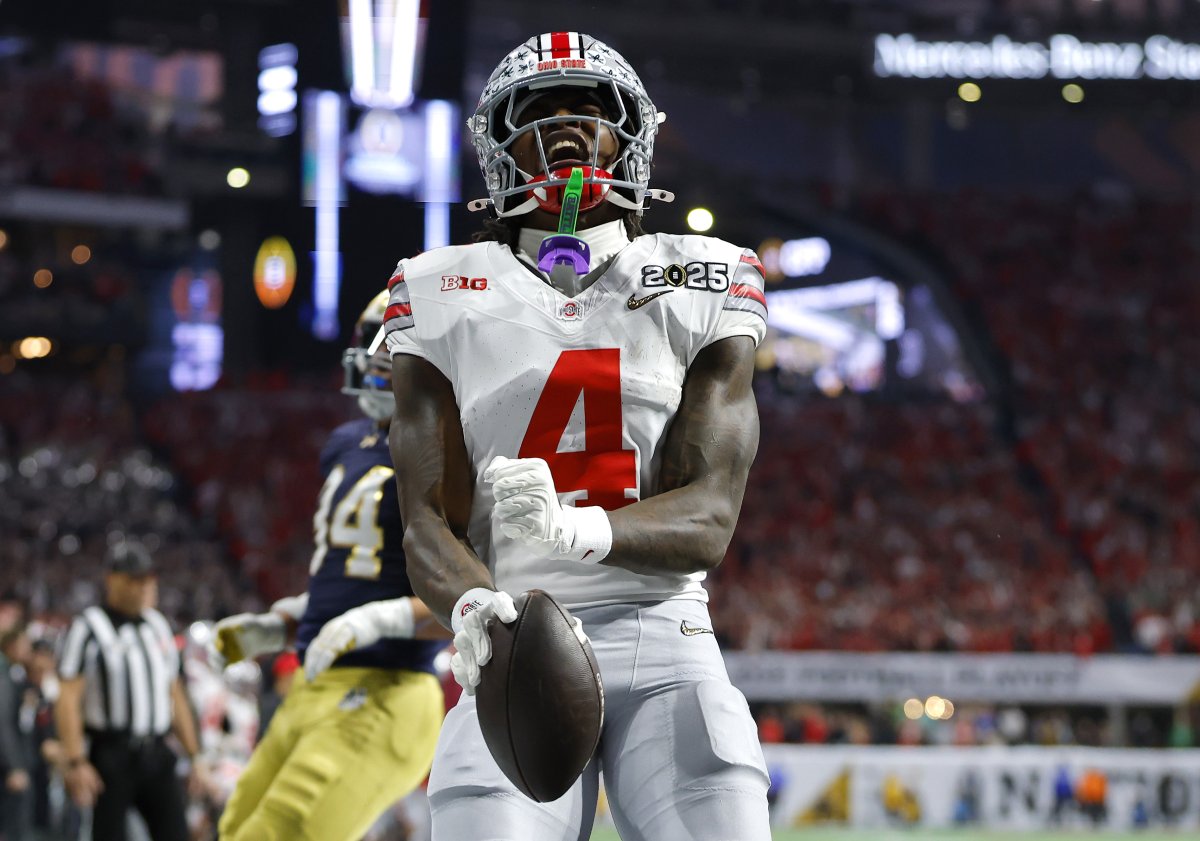
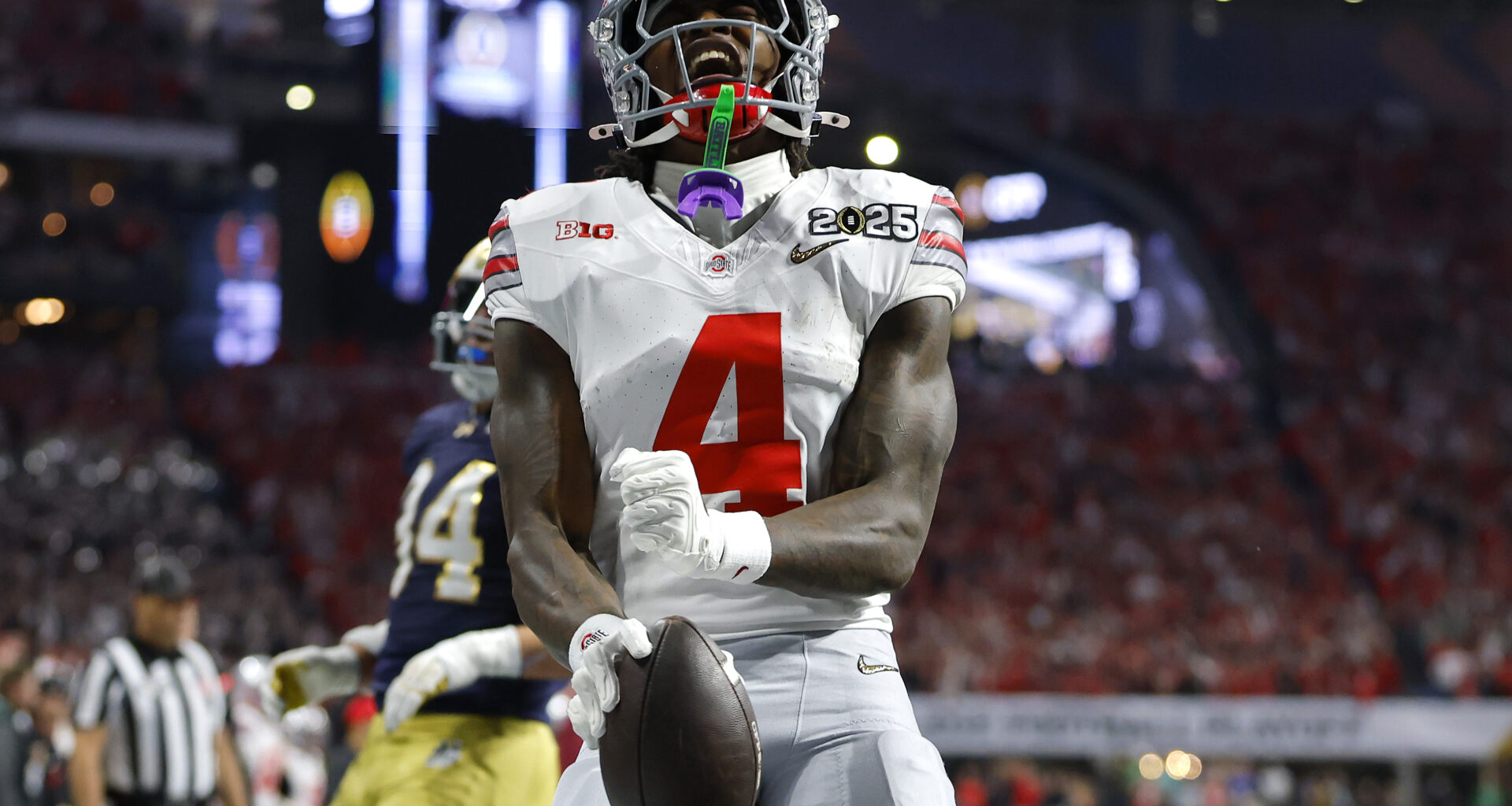
Jeremiah Smith #4 of the Ohio State Buckeyes celebrates after scoring a touchdown against the Notre Dame Fighting Irish during the second quarter in the 2025 CFP National Championship at the Mercedes-Benz Stadium on January…
Jeremiah Smith #4 of the Ohio State Buckeyes celebrates after scoring a touchdown against the Notre Dame Fighting Irish during the second quarter in the 2025 CFP National Championship at the Mercedes-Benz Stadium on January 20, 2025 in Atlanta, Georgia.
More
Todd Kirkland/GETTY
Trump’s order also states it is “the policy of the executive branch that opportunities for scholarships and collegiate athletic competition in women’s and nonrevenue sports must be preserved and, where possible, expanded” from the 2025-6 athletic season onward.
Collegiate athletic departments which had revenue greater than $125,000,000 during the 2024-5 season are instructed to “provide more scholarship opportunities in nonrevenue sports” next season. Those with a revenue of at least $50,000,000 must “provide at least as many scholarship opportunities in nonrevenue sports as provided during the 2024-2025 athletic season.”
In February 2025 Trump signed an executive order banning transgender athletes from competing in female college sports, and stripping federal funding from any universities that failed to comply.
What People Are Saying
In his Executive Order Trump said: “The future of college sports is under unprecedented threat. Waves of recent litigation against collegiate athletics governing rules have eliminated limits on athlete compensation, pay-for-play recruiting inducements, and transfers between universities, unleashing a sea change that threatens the viability of college sports.
“While changes providing some increased benefits and flexibility to student-athletes were overdue and should be maintained, the inability to maintain reasonable rules and guardrails is a mortal threat to most college sports.”
Trump’s move was welcomed by NCAA President Charlie Baker who said: “The NCAA is making positive changes for student-athletes and confronting many challenges facing college sports by mandating health and wellness benefits and guaranteeing scholarships, but there are some threats to college sports that federal legislation can effectively address and the Association is advocating with student-athletes and their schools for a bipartisan solution with Congress and the Administration.
“The Association appreciates the Trump Administration’s focus on the life-changing opportunities college sports provides millions of young people and we look forward to working with student-athletes, a bipartisan coalition in Congress and the Trump Administration to enhance college sports for years to come.”
What Happens Next
It remains to be seen exactly what measures the various federal agencies will suggest to achieve Trump’s policy objectives in college sports over the next 30 days. Payment for college athletes is likely to remain controversial considering the enormous viewing and attendance figures enjoyed by college football and basketball in particular.