
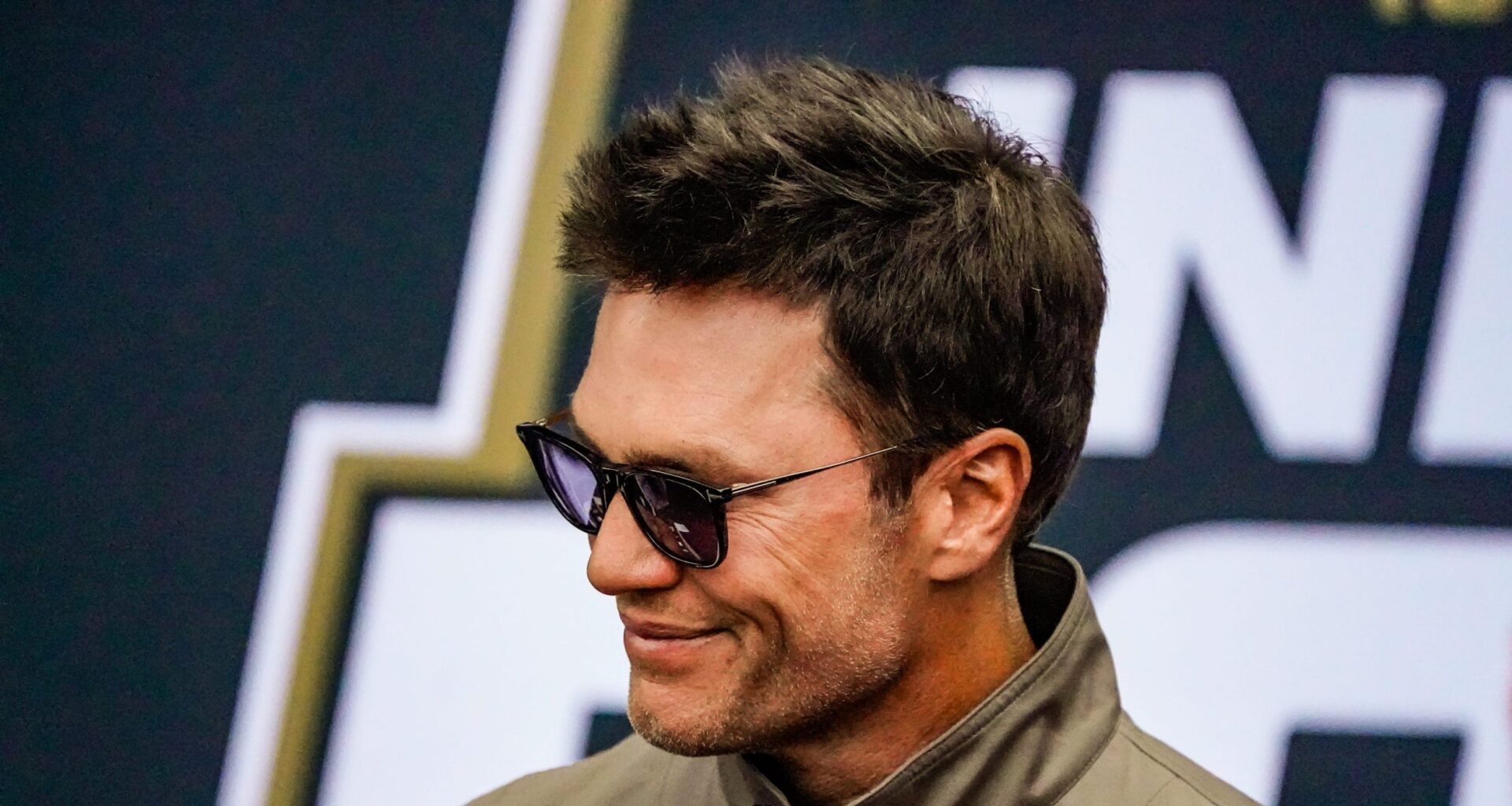
We’ve beaten into the desert sand the idea that Tom Brady’s dual role — as a minority owner of the Las Vegas Raiders and lead NFL analyst for Fox — poses a conflict of interest.
It’s not a new take. At Awful Announcing, we’ve had plenty to say about Brady stepping into the broadcast booth while still having one foot inside an NFL front office. And while Fox may be billing him as the next Troy Aikman, Brady has made it clear he’s not trying to follow that blueprint.
At least, not entirely.
Raiders head coach Pete Carroll characterized Brady’s role with Las Vegas as “strong,” even if Brady continues to downplay it. He’s insisted he has no interest in publicly criticizing players on air. That may align with his personal values, but it also contradicts what viewers expect from a high-paid analyst. The job, after all, is to evaluate, especially when things go wrong.
For now, Brady’s trying to thread the needle. He’s not setting out to be a traditional analyst, and he certainly doesn’t sound like one. He jokes about his own limitations — like how far he can go in commenting on officiating —and while the NFL relaxed some of those restrictions during the Super Bowl, ESPN’s Adam Schefter reported they were overstated to begin with.
What isn’t overstated, though, is the uneasy precedent this sets. The NFL continues to blur the line between team interests and league-wide transparency, especially when it shrugs off Brady’s surprise offseason meet-up with Matthew Stafford, who, let’s not forget, was still under contract with the Los Angeles Rams. That kind of encounter, even if innocent, would’ve drawn raised eyebrows if it involved almost anyone else.
And that’s the point: Brady isn’t just anyone. His presence carries weight, both in a locker room and on national television. So when he straddles two influential positions — team owner and lead analyst — it creates a dynamic no other broadcaster has ever had to navigate. That tension hasn’t gone unnoticed, especially among former players who understand what’s at stake.
As former NFL safety and ESPN analyst Ryan Clark said last week during the “Huddle in the Hamptons” panel, the issue isn’t just about access or optics; it’s about whether the rules of the industry apply to everyone equally. If Brady can’t make this dual role work, Clark argues, nobody can.
“If the greatest of all time can’t find a way to do both things … then nobody gets that opportunity,” Clark said via Front Office Sports. “If Tom Brady doesn’t get an opportunity to sit with [players] before the game and he can’t know what’s going through his mind, does that make Greg Olsen a better choice to listen to? I think that’s part of it. But if you’re the Las Vegas Raiders, absolutely, you want a man who’s been there, done that, experienced everything, and also seen every single level of being a player.
“There isn’t a level of football that man does not understand. And to be able to give that knowledge to a team, and then also the viewers who are watching the game, in my opinion, Tom Brady is entitled to that because he earned that.”
It’s a noticeable change in tone from Clark, who just last year opined that Brady’s ownership stake “raises serious questions” about his ability to remain objective as a broadcaster.
Brady has the résumé, the rings, and the respect. But what he doesn’t have — at least not yet — is clarity of role. Is he there to inform viewers or insulate players? Is he calling it like it is or preserving relationships behind the scenes?
It’s possible Brady believes he can do both, and maybe he can. If anyone could, it’s him. But the longer he tries to walk this tightrope without publicly defining how he balances both roles, the more the NFL and Fox open themselves up to questions about access, fairness, and journalistic integrity.
Because if Brady’s voice is being filtered through ownership interest, then what fans are getting isn’t analysis. It’s marketing.
And that’s a far different game.