
“NFL RedZone” is my favorite TV show and has been since I first turned it on in 2011. Host Scott Hanson once gave my kid an on-air shoutout before the popular weekly “Touchdown Montage.” It’s among the most brilliantly executed TV shows in history, sports or otherwise, and I am among its many devoted fans who subscribe every fall.
ESPN acquiring the rights to the “RedZone” brand is a fun, exciting component of its larger blockbuster deal with the NFL, and I hope the network tries to be creative with it. Many people are discussing the idea of applying the show beyond the NFL and creating a “RedZone” for college football (or, let’s call it, “CFB RedZone”).
NFL commissioner Roger Goodell accelerated the discussion, appearing on ESPN’s “SportsCenter” on Wednesday by saying the network purchased the “RedZone” name and can use it for other sports, including college football.
There are specific reasons why “NFL RedZone” works so well. It is unique as a product and is challenging to replicate. However, it is unlikely to be matched across other sports, even ones with as much popular appeal as college football.
1. Why people watch “RedZone” (aka my fantasy team)
The most obvious reason to watch “NFL RedZone” — beyond marveling at Hanson’s rhetorical dexterity — is because you play fantasy football, and it’s a fun way to monitor all of the various touchdowns and big plays for your fantasy team (and maybe that week’s opponent). College football doesn’t have traction as a fantasy product; the games themselves are frequently and consistently exciting, but any given player scoring any given touchdown matters less to fans who have no vested interest in that player’s performance.
There is also the essential “RedZone” promise — “Every Touchdown From Every Game.” It is the heart of the original, successful pitch to NFL executives, and it is one of the most effective catch-phrases in sports media. “CFB RedZone” could make no such promise; there are too many touchdowns to monitor and show to fans. A typical “NFL RedZone” on Sundays might have 60, 70 or even 80 touchdowns. That’s a standard Saturday in the Big 12 alone, not to mention every other conference that is playing. Speaking of monitoring…
2. Rights
The NFL controls its deals with every network, which allows “RedZone” to exist. Fox and CBS executives begrudgingly live with the show because every subscriber means one less fan watching the Fox or CBS broadcasts. ESPN controls its deals with the games it has the rights to, which means a great Big Ten game on CBS, a massive Notre Dame game on NBC or the Week 1 Game of the Year on Fox’s Big Noon Saturday potentially won’t be part of the “whiparound” coverage, defeating the purpose.
Could ESPN theoretically offer an incentive for Fox, CBS and NBC to allow its “CFB RedZone” to duck into their games? Sure. ESPN could give the networks cash, or maybe it could be rolled up into an ESPN upsell offer on the ESPN app to access NBC’s Peacock or CBS’s Paramount or Fox’s Fox One streaming networks, but that seems like an imbalanced trade for Fox, CBS and NBC that they are unlikely to accept.
Also, even though ESPN’s “College GameDay” occasionally travels to a school site where the game itself is on another network, it would be odd for ESPN to promote a great game on another network, which could lead to fans turning off ESPN’s “RedZone” and tuning in directly to an awesome ending on Fox, NBC or CBS. It would be equally odd for an ESPN-games-only version of “CFB RedZone” to not have the rights or access to take you to an exciting game on another network. (ESPN tried this previously with a product called “Goal Line,” and it fizzled for many reasons, including that one.)
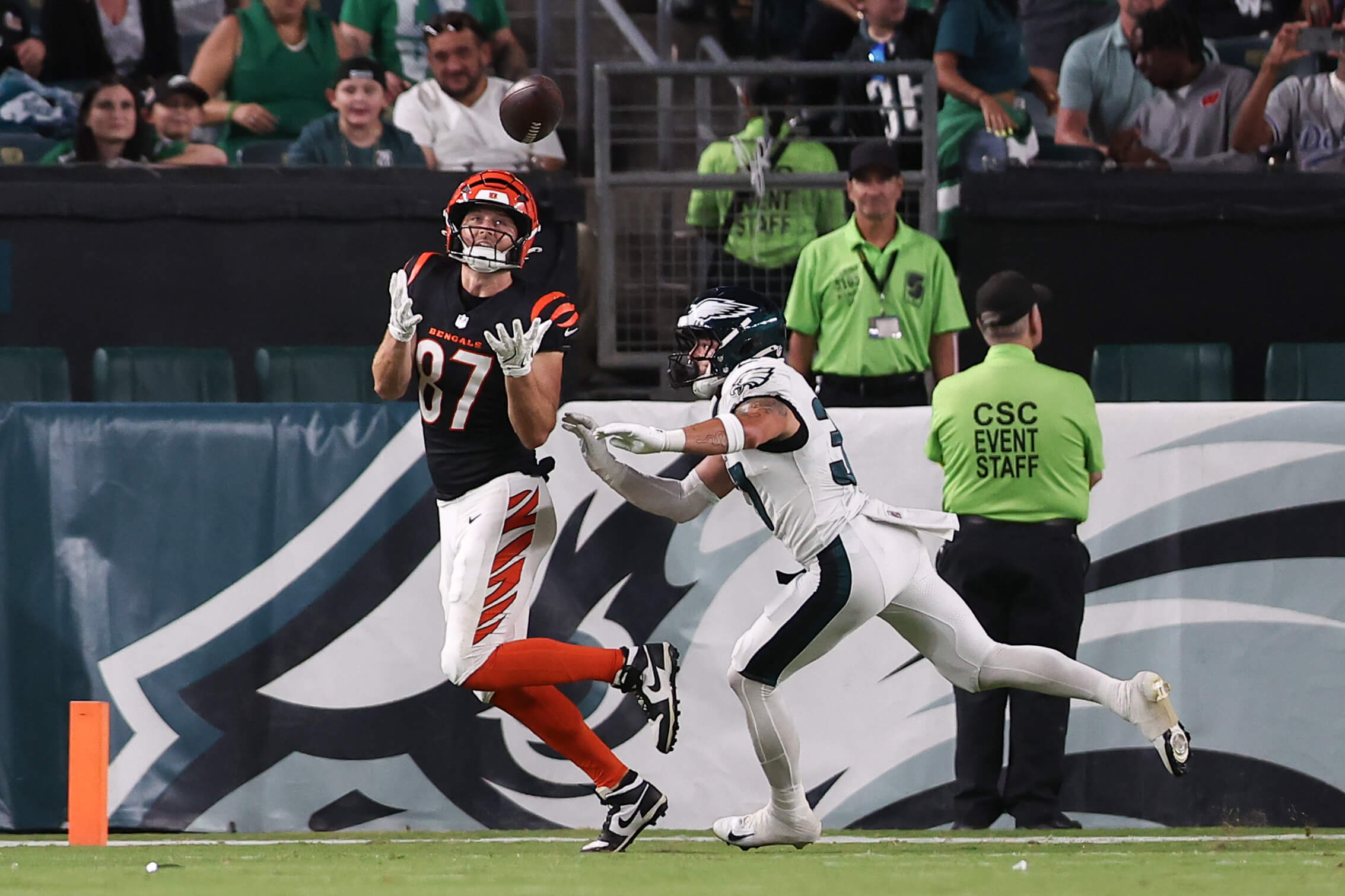
One of the draws of “NFL RedZone” is that it shows every touchdown from every game. (Bill Streicher / Imagn Images)3. Access
One of the big draws of “NFL RedZone” is the “every game” part of the “every touchdown from every game” promise. Unless you have a product like “NFL Sunday Ticket,” you can only watch the NFL games selected for your home region — typically, your local team and one other game in the other window. One of the key benefits of “RedZone” is access to other games being played.
With college football, there is no regionalized walling-off — if it’s airing on TV, fans can find any game they want. (There are some exceptions, like games exclusively airing on a streamer like Peacock or smaller-school broadcasts airing on ESPN+, which are unlikely to rise to the level of “CFB RedZone” coverage anyway.)
4. Volume
The NFL’s early afternoon Sunday window (1 p.m. ET) has between seven to 10 games. The late afternoon window (4:30 p.m. ET) has four to six. This allows for a manageable flow between games. The “NFL RedZone” Octobox is an amazing visual, but it gets overwhelming after a few seconds, which is why producers take it off the screen.
The average college football Saturday windows (noon, 3:30 p.m. and 7 p.m. ET) feature many more games, making it more complicated to program. As amazing as the frantic, frenetic “Witching Hour” is on “NFL RedZone,” in the end, it’s only a handful of games you’re being bounced around. With college football, the quantity of games to navigate would quickly overwhelm the quality of the production.
5. College football weirdness
There is a certain cadence to the way NFL teams score. Oh, sure, there are frequently explosive plays or dramatic, instant reversals of fortune. But it’s called “RedZone” because the backbone of the channel is tuning in when teams get inside the 20-yard line. In contrast, college football over-indexes on the volume of crazy plays. The Sun Belt Conference alone feels like one big scoring play after another.
“CFB RedZone” would be less about going live to a game because something exciting might be about to happen and more about showing the highlights of a crazy moment, which is not too far off from the role played by TikTok, X or your group chat.
I don’t mean to be a naysayer. I’m open to reasons why this can work. NBC’s “Gold Zone” channel was successful during the 2024 Paris Olympics because it checked many of these boxes, including the presence of Hanson. However, “NFL RedZone” is an obsession for fans for a reason, and those elements are why it will be challenging to replicate across other sports.
(Photo: Sam Hodde / Getty Images)