
It’s as obvious as the Seahawks’ colors.
The Seattle team in blue, green and gray isn’t going anywhere it seeks to go — back to the top of the NFC West, into home playoff games, to the Super Bowl — if it isn’t better on the offensive and defensive lines.
That is, better San Francisco and the Los Angeles Rams. The division rivals have dominated Seattle on the line of scrimmage in recent years, including the last two seasons the Seahawks have missed the playoffs.
General manager John Schneider didn’t dispute that Wednesday, the day after he and second-year coach Mike Macdonald set the team’s initial 53-man roster for this regular season — including its remade offensive and defensive lines.
“I’m excited for both sides of the ball. They are doing a nice job so far,” Schneider said.
“It’s huge. And that’ll be continuing throughout the whole year.”
It’s begins Sept. 7 in the opening game against those 49ers. San Francisco’s offensive and defensive lines have manhandled, just steamrolled Seattle for most of the last several seasons. The Niners’ six-game winning streak over the Seahawks, including a playoff games, dating to 2022 ended last November when San Francisco was in a swarm of injuries headed to a last-place finish in the West.
Improving the lines to surpass San Francisco’s and L.A.’s is why Schneider and Macdonald junked their old, ineffective offensive system under failed, 2024 coordinator Ryan Grubb, and Shane Waldron for three seasons before him. The Seahawks hired offensive coordinator Klint Kubiak and line coach John Benton from New Orleans to install the Mike Shanahan outside-zone blocking scheme and running game from the 1990s Super Bowl-champion Denver Broncos.
Needing to compete and beat the Niners and Rams on the line of scrimmage is why the Seahawks made Grey Zabel, a guard, Seattle’s highest-drafted interior offensive lineman since Hall of Famer Steve Hutchinson in 2001, 18th overall this spring. They’ve handed him the starting left-guard job from day one. And he’s impressed. Zabel is replacing Laken Tomlinson, the left guard who was old and ineffective in his lone Seahawks season last year.
Beating the 49ers and Rams is why they Seahawks have made Jalen Sundell their new starting center. An undrafted rookie backup last season, Sundell beat out Olu Oluwatimi for the job this month in training camp. Sundell and Zabel mean two North Dakota State Bison will start side by side on the Seahawks’ O-line.
The Seahawks also chose physical Anthony Bradford over 2024 third-round pick Christian Haynes and others as the new right guard.
Being more physical on the line and on offense is why Schneider and Macdonald traded pass-first quarterback Geno Smith, a record-setting thrower, in March and days later signed Sam Darnold to throw off the running game. Darnold, at 27 younger and cheaper than Smith, is at his best throwing off play-action passes and bootleg rollouts following fake handoffs.
Darnold keeps calling his approach and this new Seahawks offense “running the ball first and foremost.”
On the defensive front, Seattle still has work to do to add to thin spots at tackle and linebacker. The Seahawks did some of that work Wednesday signing back nose tackles Quinton Bohanna and Brandon Pili to the practice squad a day after they released them. They also reportedly have an agreement to sign to the active roster free-agent linebacker Chazz Surratt, whom the 49ers released Tuesday.
Schneider was asked where the Seahawks’ roster has improved most since 2024.
“It has to be the offensive line,” the GM said.
“But it has to be more the unit and the cohesiveness of the group than guys individually.”
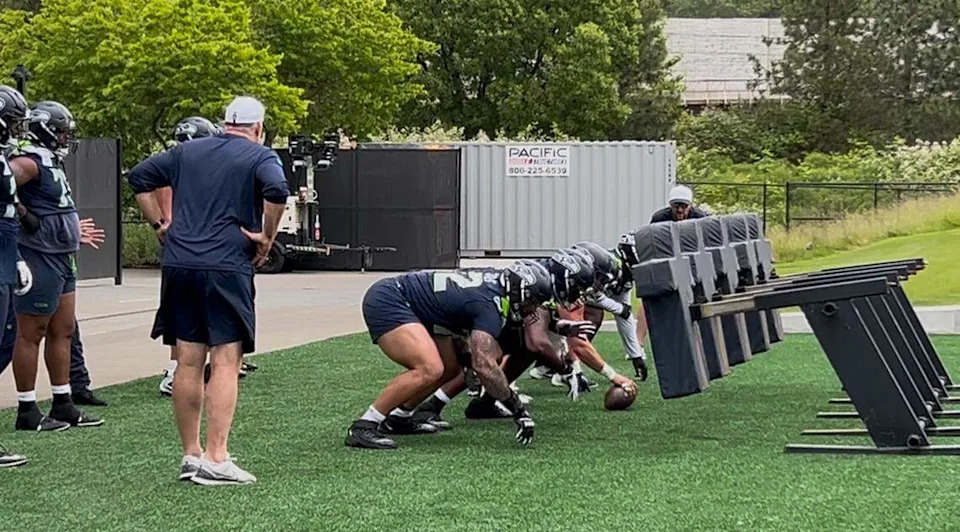
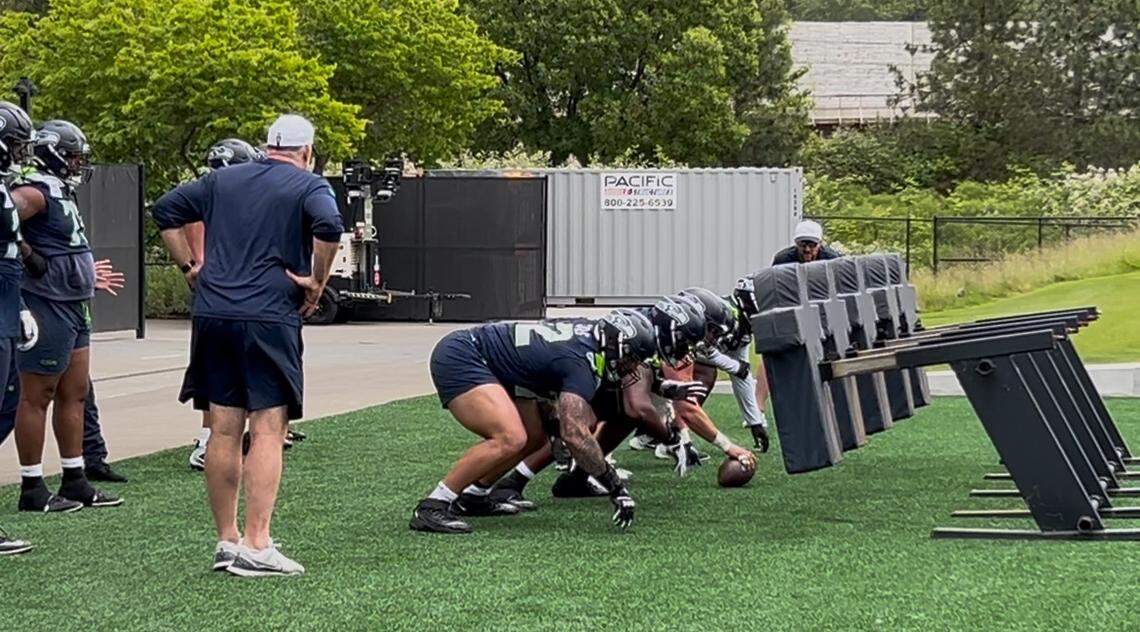
New Seahawks line coach John Benton (left in white cap), a veteran of 19 NFL seasons coaching, works right tackle Abe Lucas (72, center foreground) and the starting offensive line through a sled drill during organized team activities (OTAs) offseason practices June 4, 2025, at the Virginia Mason Athletic Center in Renton.
The mishmash system Grubb and offensive line coach Scott Huff in their first NFL year up from the University of Washington in 2024 left the Seahawks blockers practitioners of many schemes, masters of none. They trapped, pulled, drove man on man, gap blocked, blocked inside zone closer to the guard-center and outside zone more on the tackle. And none of it consistently well.
“I’ll put it like this: We’re trying to be elite at very few things, but those few things are what the offense is going to be based around. And that’s the run game,” fourth-year right tackle Abe Lucas said.
“We’re going to be elite at the run game. That’s the philosophy with it.”
They have to be better than they were last year. Seattle was 29th in the NFL in rushing. Defenses ignored the possibility of run in short-yardage and red-zone situations when Grubb had Smith throw instead, and Smith too often failed. The Rams, not the Seahawks, won the West.
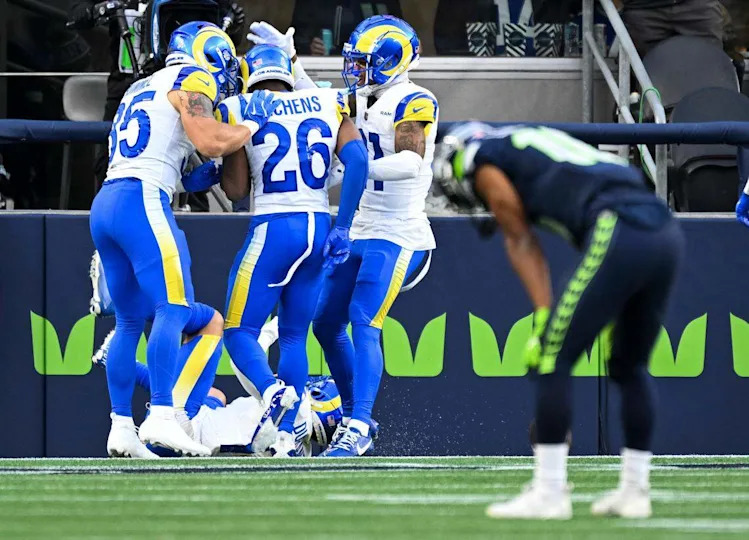
Los Angeles Rams cornerback Darious Williams (24) and teammates celebrate an interception of Seahawks quarterback Geno Smith that Williams returned 103 yards for a touchdown during the fourth quarter of the game at Lumen Field Sunday, Nov. 3, 2024 in Seattle.
This season it’s a clear mandate. It has been since February, through Macdonald hiring Kubiak, Benton and new run-game coordinator Rick Dennison. Benton and Dennison have a combined 47 NFL seasons of experience coaching outside zone. Kubiak coached it and called its plays as the Vikings and Saints offensive coordinator, and two seasons ago as the passing game coordinator for coach Kyle Shanahan’s 49ers.
It’s that clarity, and simplicity, in a proven blocking system that Schneider said is his Seahawks’ biggest improvement for 2025. The starting offensive line blocked for a whopping average of 8.7 yards per carry playing 1 1/2 quarters of two preseason games this month. They plowed Seattle to 119 yards rushing — in the first quarter — against a defense of defending AFC-champion Kansas City that was starting seven regulars at Lumen Field Aug. 15.
Charles Cross at left tackle, Zabel at left guard, Sundell at center, Bradford at right guard and Lucas at right tackle are the keys to Darnold’s success, the success of this overhaul on offense — of the Seahawks’ entire season.
“There’s buy-in there, right?” Schneider said.
“There’s a legitimate scheme that they’re running off the ball, gaining confidence. And they’re confident in what they do.
“Again, it comes back to the developers, and the teachers,” the GM said of Kubiak, Benton and Dennison. “There’s an attitude that they can have in this scheme where they can come off the ball and feel confident about themselves. They spend a lot of time together. I think you’ve seen a lot of growth within the group. There’s camaraderie that’s starting to come together, too.
“That’s the whole team, not just the offensive line. That group is the kind of group you’d like to see spending a lot of time together because they have to work as one.
“We like it.”
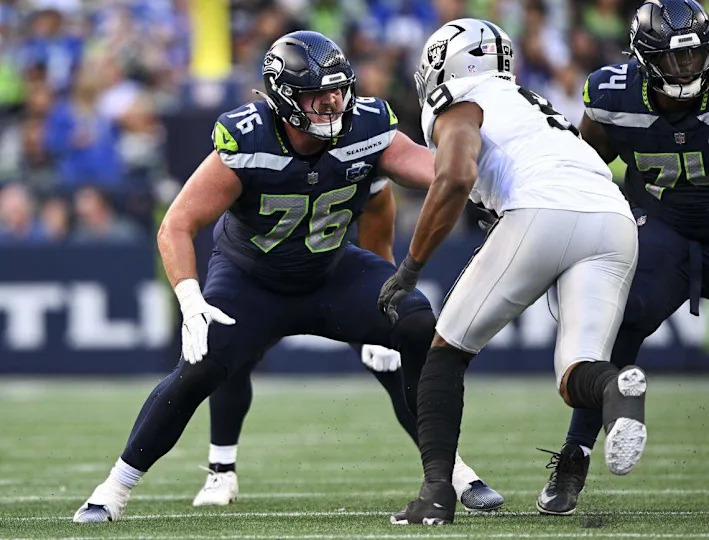
Seattle Seahawks guard Grey Zabel (76) blocks Las Vegas Raiders defensive end Tyree Wilson (9) during the first quarter of the game at Lumen Field, on Thursday, Aug. 7, 2025, in Seattle, Wash.
MVS signing, explained
In the wake of trading DK Metcalf to Pittsburgh in March for a second-round pick and releasing Tyler Lockett to save $17 million against the 2025 salary cap, Schneider signed former Super Bowl MVP Cooper Kupp from the Rams plus Valdes-Scantling.
Seattle’s one-year deal for the 30-year-old Valdes-Scantling, Aaron Rodgers’ former deep threat in Green Bay, included $3 million guaranteed. Seattle became his fourth team in three years.
Then the Schneider drafted Tory Horton. The fifth-round pick from Colorado State became a star of training camp. He zoomed past Valdes-Scantling by early August to join the first-team offense with Darnold, Kupp and returning 100-catch receiver Jaxon Smith-Njigba.
Horton is also in consideration to be the primary punt returner in the opener. He practiced that Wednesday as he continued to return from missing two weeks with an injured ankle.
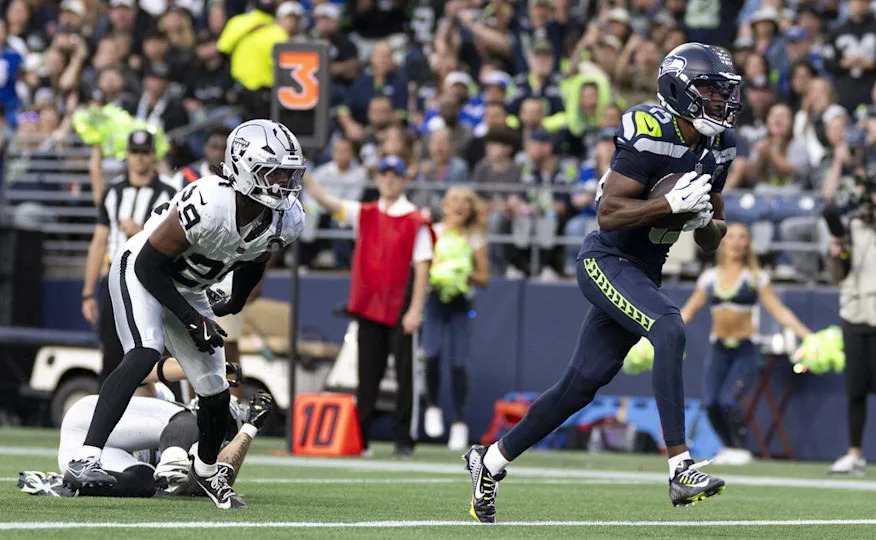
Seattle Seahawks wide receiver Tory Horton (15) scores a touchdown during the second quarter of the game against the Las Vegas Raiders at Lumen Field, on Thursday, Aug. 7, 2025, in Seattle, Wash.
Valdes-Scantling doesn’t play special teams. Horton plus Jake Bobo, Dareke Young and Cody White, the fourth, fifth and sixth wide receivers Seattle kept on initial 53-man roster for the regular season, all do.
Plus, Valdes-Scantling has made his NFL career catching passes as a deep-ball threat. Bobo and Young are making their younger careers as blockers in the run game from outside at wide receiver.
Kubiak doesn’t need deep-ball passing threats as much as he needs run blocking, from everyone everywhere, in this Seahawks offense he’s intending to literally run this season.
So the obvious became official Tuesday when Schneider and Macdonald cut Valdes-Scantling. He reportedly agreed to a free-agent contract with the 49ers on Wednesday.
The Seahawks have paid Valdes-Scantling $3 million guaranteed to practice with them this summer, then play for their biggest rivals and week-one opponent.
On Wednesday, Schneider defended the contract he gave Marquez Valdes-Scantling this spring.
“There’s a cool physicality with Bobo, Dareke, and Cody. It’s really important in this scheme that you have to be able to block,” Schneider said. “So, we like the group.
“MVS came in and did a nice job and competed. Those guys were just ahead of him. That’s the way it goes, and unfortunately, you have to get down to it at a certain time.
“It was a very good signing for us at the time. We added Tory in the draft, and he was a guy that could take the top off, which was MVS’s specialty. He was very similar Tory in that regard.”
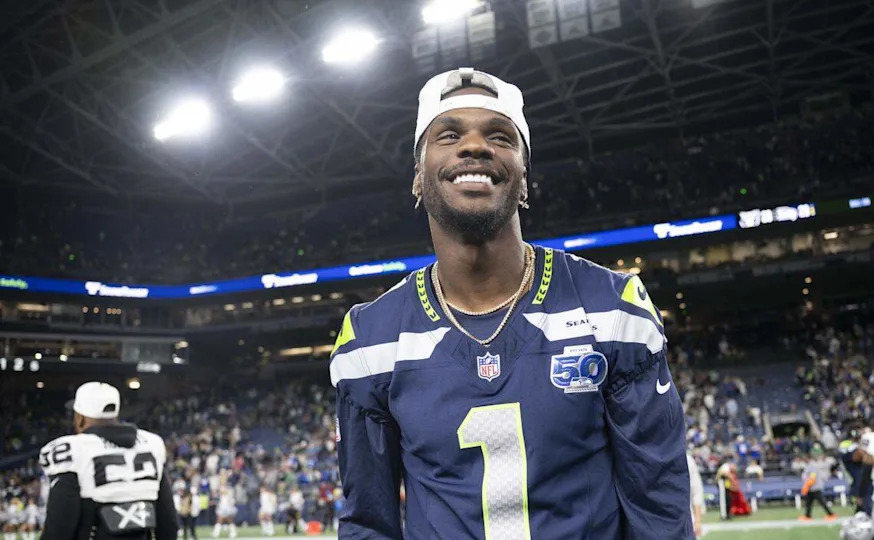
Seattle Seahawks wide receiver Marquez Valdes-Scantling (1) looks on after the Seattle Seahawks and Las Vegas Raiders 23-23 game at Lumen Field, on Thursday, Aug. 7, 2025, in Seattle, Wash.