
The Problems:
Re-signing the Stars:
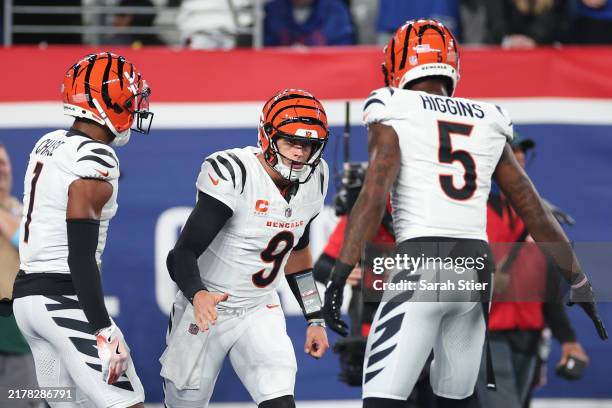
The 2024 Cincinnati Bengals had four players who performed head and shoulders above the rest of their teammates; quarterback Joe Burrow, wide receivers Ja’marr Chase and Tee Higgins and defensive end Trey Hendrickson. Unfortunately for the Bengals front office, not only were the efforts of these four unable to drag their teammates into the postseason, but all except Burrow were due for contract extensions in the 2025 offseason. As a result, Cincinnati’s historically ‘cheap’ ownership was faced with a dilemma, shell out to pay top of the market money to keep all of their stars in south-west Ohio, or face an already frustrated fan base needing to justify why one or more of the only consistent performers on the roster would not be returning.
Improving the Roster on a Budget:
Aside from these four star players, the rest of the Bengals roster, especially the defence which dearly hindered Cincinnati’s chance of making the postseason in 2024, needed significant bolstering in the offseason if the 2025 Bengals were to have a more successful campaign. Seasoned veterans of the Bengals defence like Mike Hilton and Germaine Pratt, who had been productive starters during the team’s success at the start of the decade, had deeply regressed throughout the year and needed replacing. On the flip side, the young players on the defensive front like Myles Murphy, drafted to replace some of the old guard, were developing slower than anticipated and in need of new competition to jumpstart their progression. This meant that the Bengals front office was forced to juggle extending their stars whilst retaining enough cap space to improve these key areas of the roster, something which any organisation, let alone the poorest in the NFL, would struggle with.
Signing the Rookies:

The contract negotiations between rookies entering the NFL and the team to whom they have been drafted are usually nothing more than a formality. Players and their agents have negotiating power over the timing and structure of their signing bonus and the portion of their salary which is guaranteed, but these things are usually ironed out fairly quickly so that these young players can participate in pre-season training as quickly as possible. For this year’s Bengals however this was not the case, with both first-round selection Shemar Stewart and second-round pick Demetrius Knight Jr. involved in extended camp hold-outs over contract disputes. The cause? Bengals owner Mike Brown chose to implement a new clause for 2025 dictating that if these athletes were to fall foul of the law during their time with the team the Bengals no longer had to pay the remainder of their guaranteed money. Unsurprisingly, this decision was hugely unpopular, with the player’s representation taking issue with their clients being used to set a new precedent which had never been inflicted on the Bengals’ previous selections. As a result, something so usually routine as signing rookies was placed as another complication on the long list afflicting Cincinnati’s front office throughout the 2025 offseason.
The Solutions:
Keeping the Offensive Trio Together:
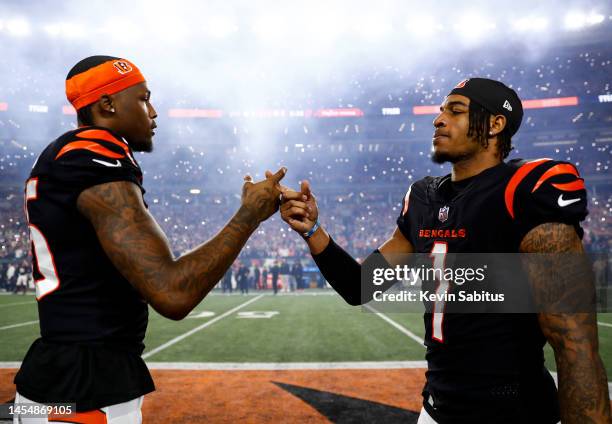
The only true ‘no-brainer’ decision for the Bengals GM Duke Tobin to make this offseason was re-signing star receiver Ja’marr Chase. The 4th year wide receiver was coming off a career year in 2024 in which he won the highly coveted ‘triple crown’ of receiving accolades, leading the NFL in receiving yards, touchdowns and receptions. Chase’s contract, a record setting four-year $40.25 million per-year extension, was unsurprisingly agreed early on March 16th. However, what was surprising was the news which accompanied this announcement; not only had the Bengals re-signed Chase but Tee Higgins, Ja’marr’s partner in crime since the two arrived in Cincinnati, received his own extension on the very same day. This decision came to the surprise of most across the NFL world, as many felt the Bengals would prioritise re-signing their sole defensive star, Trey Hendrickson, before their second wide receiver. However, the Bengals chose to emphasise keeping their dynamic passing offence together long term, meaning that the team would continue to have no trouble scoring points but risk the prospect of another season being unable to halt their opposition.
A Budget Conscious but Active Free Agency:
Understanding that Hendrickson, Higgins and Chase all had to be paid meant the Bengals entered free agency with one hand tied behind their back. The roster required significant improvement, but with the lingering issue of the Hendrickson negotiations forcing the Bengals to reserve some cap space, the front office took the approach of acquiring cheap role players from successful teams in the hopes that they could transfer good habits over to Cincinnati. Hopes were placed on TJ Slayton, former nose tackle of the Green Bay Packers, and Oren Burks, who had a key role as a rotational linebacker in the Philadelphia Eagles’ super bowl charge, both of whom were acquired on cheap contracts with the benefit of experience from being part of winning organisations and great defensive units respectively. The Bengals also bolstered their offensive line with a rotational guard Lucas Patrick, whose disappointing performance in training camp led Cincinnati to return to the open market in late August to acquire Dalton Risner, a career starter across the interior line in Minnesota. None of these additions are flashy and they have largely gone under the radar due to the noise created by the contract disputes elsewhere in the locker room, but these additions could prove crucial in allowing both Cincinnati’s defence and offensive line to climb from the pit of the NFL.
Ending the Contract ‘Hold-Ins’:
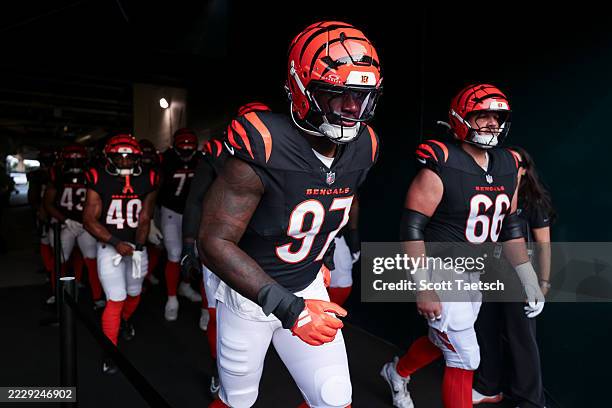
It was no secret going into the draft that the Bengals overwhelming needs were on the defensive side of the ball. As such, Cincinnati spent three of it’s first four draft picks addressing areas of concern across the board, drafting the raw but athletically gifted Shemar Stewart on the defensive line, to pair with the linebacker duo of Demetrius Knight Jr. and Barrett Carter. All of these picks were desired by new defensive coordinator Al Golden to come in and contribute to the starting roster right away, so getting them plenty of reps during offseason training camp should have been priority number one. However, given the complications to the negotiations caused by the desired new clause, the goal shifted to simply guaranteeing that all the rookies were signed and ready for preseason, something which the front office was able to achieve. Shemar Stewart agreed to this controversial clause in exchange for a more lucrative wage structure, signing his deal on July 25th just six days after Knight Jr. signed his own.
However, the contract dispute which dominated the narrative surrounding the Bengals offseason was Trey Hendrickson’s and this was not such an easy solve. Having splashed out on long term extensions for Chase and Higgins, Cincinnati’s front office was reluctant to sign Hendrickson to a long-term extension, citing his age and concerns over his consistency in the run-game as reasons for justification in not extending then 30 year-old sack specialist beyond the 2026 season. Hendrickson’s camp always wanted long term security beyond what the Bengals were willing to provide, thus these negotiations stretched well into August and the preseason, with the defensive star requesting a trade away from south-west Ohio. Finally, on August 25th just a week before the regular season opener against Cleveland, the Bengals and Hendrickson reached a compromise, granting the player a $14 million dollar raise for the 2025 season and no extension, making him a free agent for the 2026 cycle. This agreement ensures Cincinnati’s top priority – getting Trey Hendrickson on the field to help develop their new young defensive talents for this season. It wasn’t at all pretty, but in the end the Bengals did what they needed to do in this negotiation and didn’t panic into giving an extension they were never comfortable with.
So, is this an offseason saved?
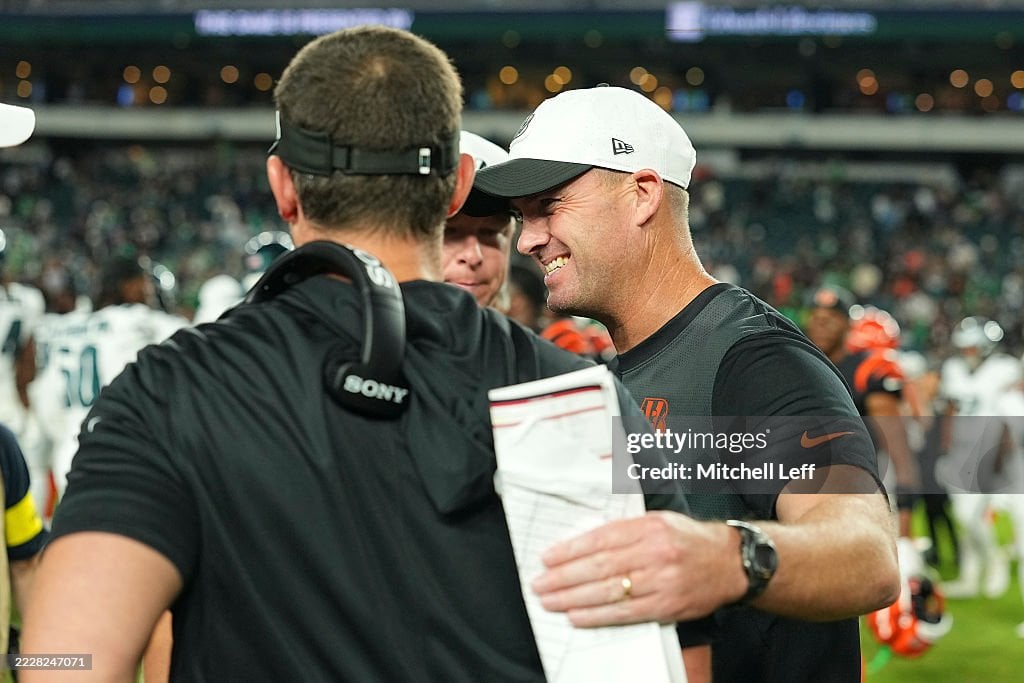
It cannot be debated that a lot of decisions made by the Bengals front office this season made their life significantly harder than it needed to be. The insertion of a new clause into the rookie contracts seems like an unnecessary technicality to cause such a long stalemate in negotiation, especially for a player as raw as Stewart who would have benefitted greatly from the reps he missed in May and June. However, what is also true is that Cincinnati was dealt an incredibly tough hand this offseason with so many of their stars up for contract renewal at the same time. Therefore, having successful resigned all of their targets and strengthened their positions of weakness all without damaging their finances long term, the Bengals have, finally, saved their offseason.