
Todd McShay watched the same game everyone else did Saturday afternoon.
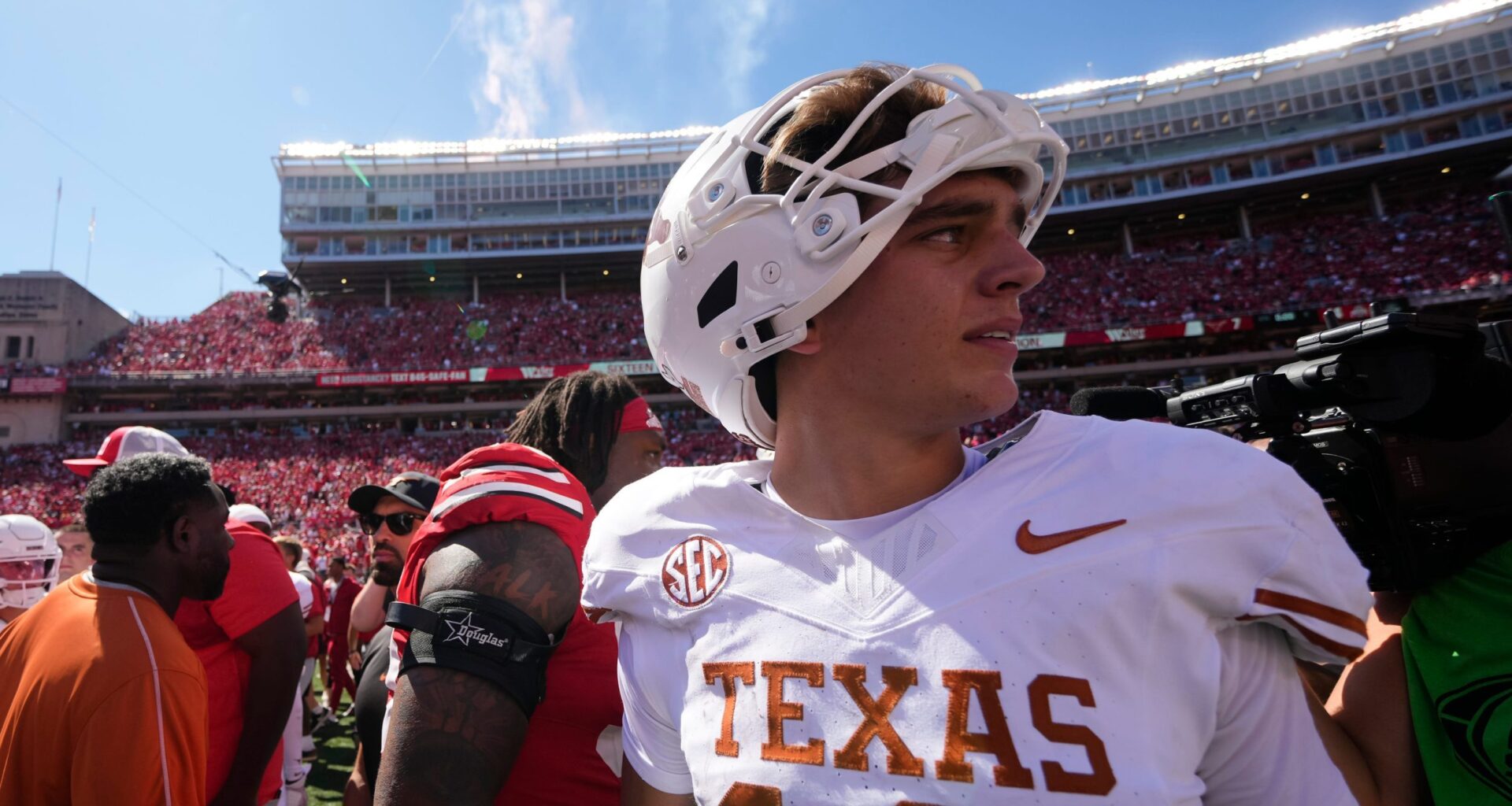
The former ESPN NFL Draft analyst saw Arch Manning complete just 17 of 30 passes for 170 yards in Texas’s 14-7 loss to Ohio State. He watched the much-hyped quarterback struggle with his accuracy, miss routine throws, and look overwhelmed in his biggest test yet.
McShay isn’t defending Manning’s performance. He’s calling it what it was. But he’s also calling out the sports media vultures who immediately circled Manning’s struggles with their “I told you so” victory laps.
“F*ck it. I don’t care. I saw Jordan Rodgers come out and do it,” McShay said on his eponymous show for The Ringer. “He played quarterback. His brother (Aaron) is one of the all-time quarterbacks. Whether they have a relationship, I don’t know, but to come out today and say, ‘I told you so,’ Why? Does that make you feel good?”
For weeks, ESPN’s Jordan Rodgers has been positioning himself as Manning’s primary skeptic, declaring before the Ohio State game that “the hype doesn’t match the tape” and predicting the sophomore would struggle against elite competition.
But Rodgers is also part of the same sports media machine that spent all summer building Manning into a Heisman favorite and college football’s main character, acting as if he was a sure-fire superstar before he’d even made his third college start. And when Manning struggled against elite competition — exactly what should have been expected from a 19-year-old quarterback in his first major road test — the same analysts suddenly realized he might need time to develop.
But rather than own their role in the hype cycle, some media members immediately pivoted to victory laps.
.@JRodgers11 had to pull out the cowboy hat and cigar after Arch Manning’s play last weekend 😂 pic.twitter.com/iypBfZrJyL
— Get Up (@GetUpESPN) September 3, 2025
“So, to come out and do the ‘I told you’ thing makes you just as horrible, maybe more horrible,” McShay said.
The irony wasn’t lost on anyone paying attention. Manning had more commercials than completions in the first half — a joke that wrote itself — but the same media ecosystem that put him in Warby Parker ads before he’d proven anything meaningful was now rushing to declare they saw his struggles coming all along.
McShay actually dissected what happened instead of just piling on. Ohio State’s defense systematically took away Manning’s mobility, which had been the cornerstone of Texas’s offensive game plan. The Longhorns played conservatively, and a 19-year-old quarterback looked exactly like what he was, which is a talented but inexperienced player facing elite competition on the road for the first time.
“I watched the same tape… The mobility’s a great asset, but guess what? The mobility was taken away today, in part, because the Ohio State defense is awesome again,” McShay said. “And every report I got from camp down in Austin was, ‘He’s running, man. The QB run game is a big part of…’ Where was it today?”
But that kind of nuanced analysis doesn’t generate the same engagement as hot takes about overrated quarterbacks. The “I knew he was overrated” crowd had their moment, and they weren’t going to waste it on actual football analysis.
McShay wasn’t interested in protecting Manning from legitimate criticism, and he made that abundantly clear.
“Arch Manning sucked today. He was not good,” McShay said. “A Manning with that talent level, with those resources at this point in his career, can’t miss some of the throws he missed today.”
But the point was never about defending Manning’s poor performance. It was about calling out the dishonest media cycle that created unrealistic expectations and then immediately pivoted to claiming prescience when those expectations weren’t met.