
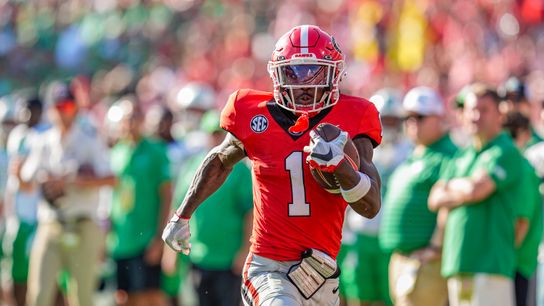
Zachariah Branch Scouting Report
Zachariah Branch is a versatile, dynamic, and explosive receiver who can make game-changing plays at any moment.
Draft Grade: Round 1 – Pro Bowl Caliber
Strengths:
Elusive: Branch is one of the most elusive players in college football and is a difficult tackle for any defender in space, as he can make multiple defenders miss on one play.
Versatile: Branch can truly align anywhere on the field offensively and be effective with an opportunity to create an explosive play. Branch should always be accounted for defensively.
Speed: Branch’s speed and athleticism make him a dangerous offensive weapon. Branch appears to have the speed to separate consistently from defenders.
Playmaker: Branch is a dynamic playmaker who can create explosive plays. He has game-changing speed, plus elusiveness and quickness. Branch also has high value as a special teams returner and could be dangerous returning kicks and punts.
Concerns:
Size: Branch is an undersized receiver, which may force NFL teams to view him as a slot-only option for their offense.
Catch Radius: Due to Branch’s limited size and length, he has a limited overall catch radius. This limits the quarterback’s ability to get the football to him with defenders in tight coverage.
Zachariah Branch Summary/Projection:
Zachariah Branch is a junior wide receiver draft prospect who started his career at USC before transferring to the University of Georgia for the 2025 season. Branch, throughout his collegiate career, has made a name for himself as an electric and dynamic playmaker at the wide receiver position. Branch is a versatile offensive weapon that can win from multiple positions and alignments on the field.
Projecting Branch to the NFL and his plus traits, it starts with his versatility as a player. Branch can align anywhere—from the outside receiver position to the slot, to, on occasion, aligning in the backfield at the running back position. This versatility allows ultimate creativity for offensive coordinators and the opportunity to capitalize on mismatches for Branch, specifically, or his teammates. Because of this position/alignment versatility, Branch can be used on gadget plays, screens, or in motion to set up creative plays.
Analyzing Branch as a route runner, his success is based on his elite quickness and ability to accelerate and decelerate. From the snap, Branch wins with quickness in his release and can simply make defenders miss when pressing him at the line of scrimmage. Branch, into his route, can tempo his routes out but prefers to use speed to put defenders in constant stress and fear of being beaten over the top. With this speed, Branch can force defenders to flip their hips and bail to protect over the top, and then Branch can snap off routes quickly. Branch has an elite ability to accelerate and decelerate in and out of breaks. Branch has proven he can run the entire route tree effectively and create separation from defenders for quarterbacks to throw the ball. Branch also understands how to attack defenders’ leverage, consistently giving himself two-way options and creating space for him to get to the spots he needs to get to. Although Branch is undersized for a prototype outside receiver, his speed helps him overcome the size deficiency and operates as a trait that allows him to win on the outside.
The most electric part of Branch’s game is when he has the ball in his hands. With the ball in his hands, Branch is one of the most dangerous players in college football. Branch has elite start-stop ability combined with elusiveness to make defenders miss and is a tough tackle. Branch also has a well-put-together frame that allows him to break through arm tackles and continue to pick up yards. Branch’s high-end athleticism will make coordinators contemplate consistently giving him double-digit touches a game.
Branch’s main area of concern is his size and how it may limit him. Branch is shorter than the threshold for most outside receivers, which may get teams to believe he is a slot-only/gadget receiver. His limited size also affects his overall catch radius. Quarterbacks who like to throw the 50/50 ball downfield to receivers may hesitate because he doesn’t have the ideal size to go up and get the ball over other defenders.