
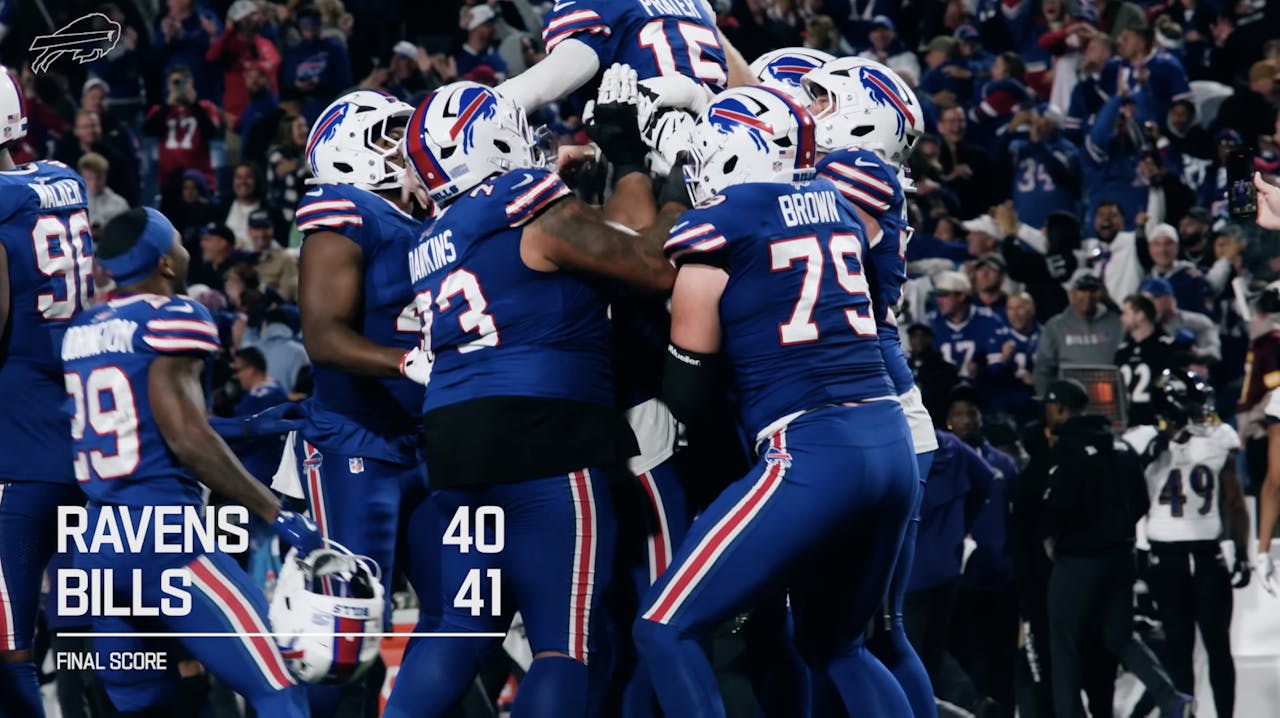
After the NFL team’s stunning late rally over the weekend, we look back to when brands, including Apple and Lego, turned looming defeats into improbable victories.
September 7, 2025. It was Sunday Night Football, the stage where comebacks become legend. Four minutes on the clock, a 15-point gap and the Baltimore Ravens already smelling victory. Then, the Buffalo Bills stormed back to tie the game before 41-year-old Matt Prater, newly signed just days before, sealed the comeback with a walk-off field goal to complete one of the NFL’s most stunning victories.
Brands face their own versions of that moment. They stumble, lose relevance or edge toward bankruptcy, then rally with one bold move that flips everything.
Apple was weeks from collapse before it surged back. Lego was drowning in losses before rediscovering the brick. Domino’s admitted its pizza was terrible and turned that honesty into a reset. These are the last-minute comebacks of business: unlikely and unforgettable.
Want to go deeper? Ask The Drum
The comebacks
These are not slow, drawn-out recoveries pulled off by brands following a systematic plan. They are Buffalo Bills-style comebacks: messy, desperate, defying expectation. And they prove something marketers can overlook: brand equity can be rebuilt if you get brutally honest and deliver when it matters most.
Apple (1997): With just 90 days of cash left, Apple brought back Steve Jobs, cut its bloated product line, and launched the Think Different campaign. In two years, Apple’s market cap rose from about $1.6bn to $15.6bn, an increase of more than 800%.
Lego (early 2000s): Diversification nearly killed Lego, with annual losses of around $300m. New leadership cut distractions, focused on core bricks and leaned into storytelling with The Lego Movie. By 2015, Lego became the world’s most profitable toy company, posting profits of $1.3bn on revenue of $5.2bn.
Domino’s Pizza (2009): Consumers mocked its pizza as cardboard with sauce. Domino’s admitted the problem in its ‘Pizza Turnaround’ campaign, rebuilt recipes and invested in delivery tech. Same-store sales rose 14% in 2010 and by 2020 Domino’s had become the largest pizza chain in the world with revenue over $4bn.
Marvel (2008): Facing bankruptcy and debt, Marvel risked everything on Iron Man. The film grossed $585m worldwide and launched the Marvel Cinematic Universe. Today, the series has earned more than $29bn at the global box office, making it the most successful film franchise ever.
Abercrombie & Fitch (2020s): After years of lawsuits and declining relevance, Abercrombie shifted under CEO Fran Horowitz. Inclusive sizing, new fits and sharp social campaigns led to a comeback. In 2023, net sales rose 16% to $4.3bn and the stock surged more than 400% across two years.
Gap (2024): Long dismissed as a mall relic, Gap posted a 1% lift in comparable-store sales in early 2024. Under CEO Richard Dickson and creative director Zac Posen, the brand refocused on denim and cut underperforming stores. Investors responded, sending the stock up 20% in the months following the reset.
WeightWatchers (2025): WeightWatchers filed for bankruptcy but quickly pivoted from calorie-counting to women’s health, focusing on menopause treatments and GLP-1 drugs. A bold Queen Latifah campaign repositioned the company. Early results showed renewed subscriptions and projects revenue of $900m for 2025.
American Eagle (2025): A fall denim campaign starring Sydney Sweeney and Travis Kelce generated more than 40bn impressions for American Eagle. Stock jumped 34% in one day, earnings rose 15% to $0.45 a share, and the company added 700,000 new customers in a single quarter.
Adidas (2024): Cutting ties with Yeezy cost Adidas up to $1.3bn in sales and $534m in operating profit, including a $600m hit in one quarter. CEO Bjørn Gulden fast-tracked operations, revived classics like the Samba and refocused on athletes. In 2024, Adidas raised profit guidance three times, projected about 10% revenue growth and forecasted €1.2bn in profit. The stock more than doubled.
Juicy Couture & True Religion (2020s): Both written off as Y2K punchlines, the brands leaned into nostalgia with velour tracksuits, rhinestones and collabs with Supreme and Forever 21. Juicy Couture’s China relaunch in 2023 drove double-digit sales growth and True Religion posted revenue of $450m in 2024, its highest since 2009.
Why these comebacks worked
If these comebacks sound dramatic, it’s because the same few moves tend to fuel them. Strip away the headlines and you see the patterns that separate recovery from collapse.
Radical honesty: Domino’s admitted its pizza was bad. WeightWatchers admitted that dieting was obsolete. Owning the flaw rebuilt trust.
Back to basics: Apple, Lego and Adidas stripped away distractions and focused on their core products.
Cultural timing: Marvel launched Iron Man just as superhero movies exploded. American Eagle tapped celebrities at their cultural peak. Juicy and True Religion capitalized on Y2K nostalgia.
Inclusive pivots: Abercrombie and WeightWatchers broadened their appeal by rejecting exclusivity and opening to new audiences.
Decisive execution: Apple cut products overnight, Adidas moved fast on heritage models and Domino’s rewrote recipes. They acted decisively rather than waiting.
What marketers can take into the fourth quarter
Comebacks do not happen because of clever taglines or minor rebrands. They happen when brands face failure, own it and move quickly. It is the business equivalent of Josh Allen fearlessly stepping into the pocket and firing downfield when everything is on the line.
Marketers should ask:
Are we addressing the real problem or just applying a cosmetic fix?
What core asset of our brand are we overlooking?
Can we move fast enough to matter?
The Bills showed that four minutes were enough to turn around a game that seemed lost. Brands rarely get that kind of time and, when the clock is running out, hesitation will not save you, but raw action will.
Suggested newsletters for you
Catch up on the most important stories of the day, curated by our editorial team.
Stay up to date with a curated digest of the most important marketing stories and expert insights from our global team.
Learn how to pitch to our editors and get published on The Drum.