
Chet B. from Daytona Beach, Fla.
“What’s your thought on play calls/formations at crucial moments in Week 1? Specifically, 4th & 1 in the pistol formation? 4th & 1 and you’re starting 3-5 yds behind the LOS. Terrible formation for a positive result against Tampa’s front in my opinion.
“Then you have a jet sweep in the red zone to Bijan when you know everyone has their eyes set on our playmaker. Play calling very questionable during high stakes, we can put blame on Koo, but we had multiple opportunities to not be in that situation.”
Thanks for the question, Chet. There were a lot about this topic, so you’re not alone in wanting answers.
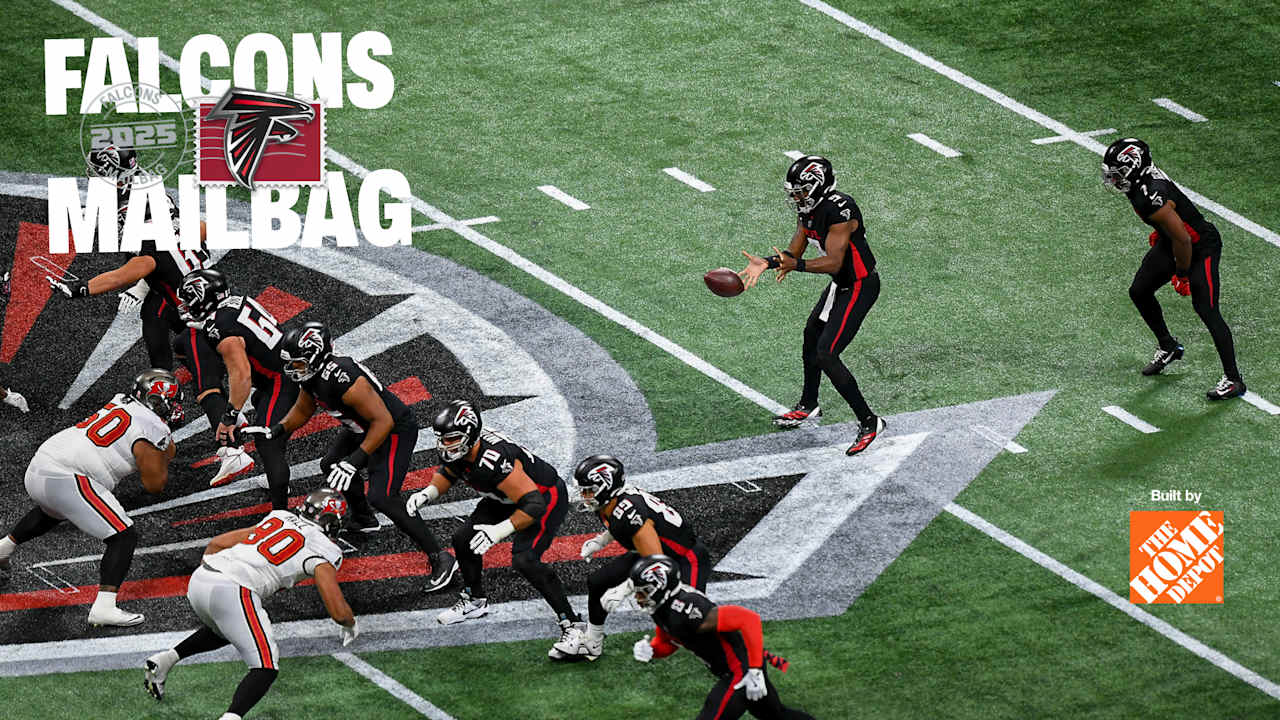
I’ve watched the first play you asked about at least a dozen times by this point, and it was not a pretty one. First off, I respect the call to go for it at Tampa Bay’s 47 yards line early in the second quarter with the defense playing very well. The play doesn’t work, though, because your two best offensive linemen — Chris Lindstrom and Jake Matthews — did not win their blocks. They both lost them pretty decisively, in fact, and it led to the play getting blown up.
As for why they decided to go with pistol, it was a question posed to offensive coordinator Zac Robinson on Wednesday.
“The Pistol does keep you pretty balanced from a run-pass standpoint,” he said. “Obviously, in the offset gun, there are tendencies to throw the football and so being able to stay completely balanced with what we’re doing is what we’re trying to do from a run, play-action, keeper, screen, all those things that come with it. Again, it’s part of our offense. We’ll pick our spots when we need to go under. But our guys feel comfortable with it. Our quarterback feels very comfortable in it knowing that’s the way he operated, mostly, in Washington.”
Whether you believe in what Robinson shared is entirely up to you, but there is a method behind a formation fans are calling madness. Namely, it allows for the most variety in what you can call. Robinson explained another benefit that cuts against the popular belief that backs are disadvantaged by starting so far behind the line of scrimmage.
“It does get the ball in our runners’ hands a tick quicker there,” he said. “Obviously, the faster that we can get number seven — and obviously, Tyler [Allgeier] — the ball in their hands so that they can see the proper cuts and those things with the stretch of the wide zone and being able to cut some of those things back when we need to, is definitely part of it.”
Now, another common criticism is that the Falcons’ usage of pistol is predictable, which seemingly goes against the benefit of having play-calling optionality.
According to Next Gen Stats, the Falcons ran 30 plays out of pistol, including 17 runs and 13 pass attempts. Those 17 runs averaged just 2.2 yards, so the frustration is understandable. But there was good variation in the runs they called, including stretch zone, inside zone and duo. It’s also worth mentioning that Tampa Bay’s defense is pretty darn good and ranked fourth in rushing yards allowed last season. It’s completely fair to say the offense needs to do better than 2.2 yards, but context is also important in this game.
Atlanta’s best offensive play — the 50-yard touchdown catch by Bijan Robinson — also came out of the pistol, and there were a couple other big plays left on the table. One was a Robinson drop on a nice design that got him out into the flat with space in front of him again in the third quarter. The other was an 11-yard run by Robinson that was negated due to a Drake London hold.
That’s where the execution and the scheme have to come together. This is a long answer about a complicated topic, but I think it’s an important one. More teams around the league are exploring pistol, so they must have identified how it can have a positive impact. But it requires a combination of execution and play design. After Week 1, I think it’s fair to say both need to improve.
That was a long answer, Chet, and I hope it makes sense. My aim is not to persuade you that pistol is right or wrong but rather to help you understand why the Falcons ran it as much as they did on Sunday, the ideal benefits of doing so and where things went wrong.