
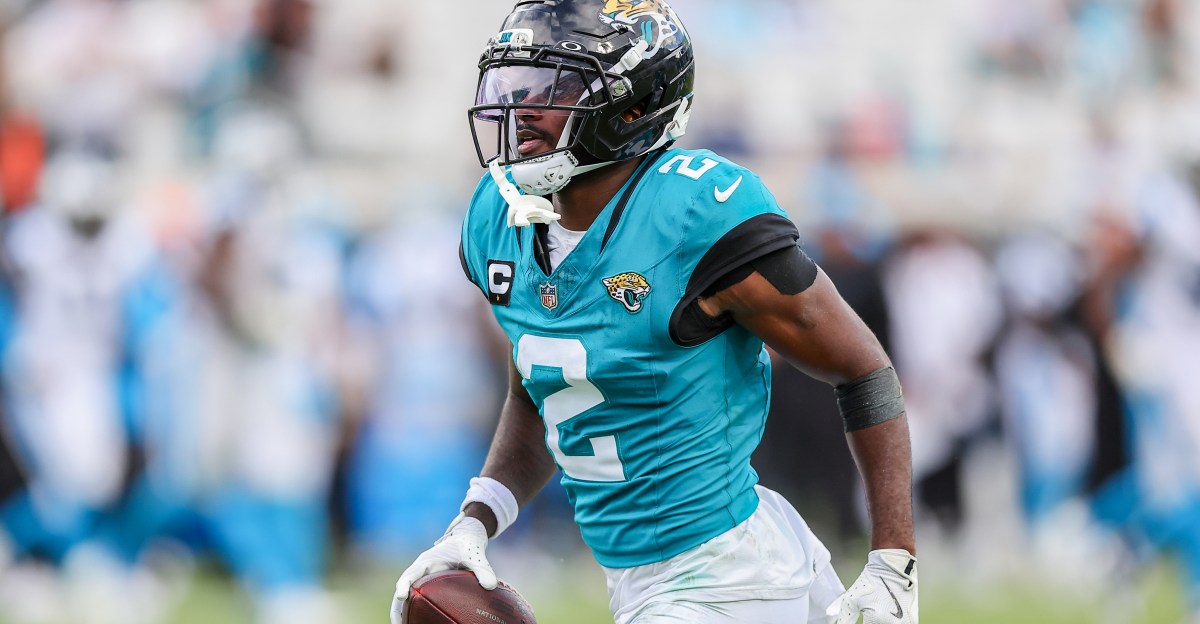
After dropping a heartbreaker in Cincinnati in week two, the Jacksonville Jaguars defense drew a teal line in the sand in week three, taking victory by the horns via three redzone turnovers from the Houston Texans. After providing the live takeaways and lingering questions from this week’s’ game, we take a closer review of the matchup after evaluating the televised gameplay. As a note, this review is based on the non-all-22 film, while being published before the PFF grades are released (in an effort to remain truly uninfluenced and unbiased on what we see). Additionally, this style of review knowingly places some limitations on evaluating secondary play without confirming the full coverage looks. With that said, let’s get into some takeaways from the Jaguars’ 17-10 victory over the now 0-3 Houston Texans.
*Any opinions noted are those of Travis and not of the entire BCC staff or leadership. Of course, anyone can disagree when evaluating film. Any noted EPA, Success Rate, or other data was retrieved from rbsdm.com. Additional data provided by NFL Pro and NextGenStats.
EPA = expected points added (statistical metric used in football analytics to measure how well a team performs relative to expectation on an individual play, based on factors like field position, down and distance, and time remaining to quantify how many points a team is expected to score on a drive)SR = success rate (percent of plays with positive EPA)1st% = percent of plays that earned first downsCPOE = completion percentage over expectedADoT = average depth of targetADoT and CMP% may not match official statistics due to excluding spikes & throwaways
1.Quarterback Play Evaluation
-0.12 EPA per play falls within the 26th percentile of all QBs between 2010 and 2020 with minimum 5 plays per gameA total EPA of -5.4 falls in the 23rd percentile on 45-plays8.4 average depth of target (ADOT) is in the 52nd percentile52.6 Completion percentage (CMP%)-17% completion percentage over expected (CPOE) is in the 4th percentile38% Success Rate27% First Down Percentage56.5 Passer Rating
rbsdm.com
In week three, Lawrence had the NFL’s eighth-fastest time to throw (TTT) of 2.57 seconds, just slower than CJ Stroud’s fifth-fastest 2.53 seconds on Sunday. Trevor’s 56.5 passer rating is 27th of the 30 quarterbacks to play prior to Monday Night Football, ahead of only Joe Flacco, Michael Penix Jr, and Russell Wilson.

NextGenStats
Lawrence completed just 2 of 11 passes over 10 air yards for 62 yards and an interception in Week 3, per NFL Pro.
His lone downfield highlight was the key 46-yard catch and run to Brian Thomas Jr. in the fourth quarter that set up the game-winning touchdown. Lawrence was more efficient on shorter throws, completing 18 of 27 passes under 10 air yards for 160 yards, while going 0-for-4 on attempts of 20+ air yards.
Lawrence’s day started off strong with a deep out to Brenton Strange in the first quarter and a timely and accurate curl route to Brian Thomas Jr. Lawrence was decisive and quick in the short game, moving the offense down the field towards their initial touchdown. After that series, and the Brian Thomas Jr sideline drop, Lawrence followed the play, bouncing back with a dagger to Dyami Brown on an out route. However, the struggles in the deep areas of the field began to pop up at this point with Lawrence missing an open Dyami Brown on a post route, just underthrowing a Parker Washington back shoulder sideline throw, and overthrowing Washington on another deep attempt that likely would have scored. With the potential explosives left on the field and the third-down fourth quarter interception that was forced into double coverage, while up 7 points, on their side of the 50-yard line was a pretty problematic decision that can’t be made.
Lawrence wasn’t helped much in this one from his primary targets, but he also struggled often with off-target throws. More will be expected of the Jacksonville QB1 as the season progresses, as it’s hard to win in the NFL without the ability to throw pass 10-yards.
RB Bhayshul Tuten: -0.15 EPA per play on 6 plays (-0.72 receiving EPA per play on 1 target)RB Travis Etienne: -0.20 EPA per play on 18 plays (-0.63 receiving EPA per play on 2 targets)RB LeQuint Allen: -0.51 receiving EPA per play on 1 target (0 rushing attempts)
NextGenStats
Entering the game, just three of Travis Etienne’s 30-rushes came against stacked boxes, per Next Gen Stats. However, Houston changed that math significantly on Sunday, showing one safety looks often on early downs against Jacksonville and limiting the early down run game. 25% (4) of Etienne’s 16 rushing attempts came against 8 or more defenders in the box. Etienne ended the day with just one explosive rush of 10 or more yards, tied with Lawrence. That rush was the play where Houston allowed him to score, in an attempt to get the ball back with under two-minutes to play. Without the gifted final rush, Etienne’s average reflects 3.07 yards per rush. Houston stacked the box with 8 or more defenders against Jacksonville on 29.2% of snaps (6th highest for the week).
Coach Coen, in his post-game availability spoke on Houston’s tendency to play five down linemen on early downs on Sunday. With Houston playing five down linemen and adding another defender into the box(a total of 8), Jacksonville struggled to open lanes early on, and it didn’t seem to be one individual player struggling. On many rushes, the extra defender was the player making the tackle on the running back, who was unable to make the safety or linebacker miss in the hole. On other snaps, the line either missed picking up a defender in their combination blocks or the defender simply beat the guy blocking him. While this was primarily an issue for the interior offensive line early on, with each IOL blowing a block on the first two series, Walker Little also missed on an early block resulting in a one-yard gain in a difficult reach block scenario.
Jacksonville’s success on the ground began when the offense line ramped up when the team stopped putting themselves in negative down and distances via early penalties in the second half. Travis Etienne and Bhayshul Tuten also began to break more tackles in the backfield, turning one-yard gains into four-five yards too. Speaking of Tuten, the ball of momentum simply never stops behind the line of scrimmage. I counted four rushes (out of six) where he gained yards on plays that should have been a loss or a rush for no gain.
WR Tim Patrick: 0.88 EPA per play on 1 targetWR Dyami Brown: 0.69 EPA per play on 4 targetsWR Travis Hunter: 0.66 EPA per play on 2 targetsWR Brian Thomas Jr: 0.05 EPA per play on 7 targetsWR Parker Washington: -0.73 EPA per play on 11 targetsTE Johnny Mundt: 0.36 EPA per play on 1 targetTE Brenton Strange: 0.30 EPA per play on 7 targetsTE Hunter Long: -0.18 EPA per play, on 3 targets
NextGenStats
Parker Washington, with his dominant play versus Cincinnati, seemed to earn more opportunities, per the coaching staff. However, his team-leading 11-targets on 31 routes against Houston led to just four receptions and a -24.7% catch rate over expected, per NFLPro (82nd of 88 qualified receivers in week 3). Washington started off strong early with a tight window catch while taking a hit from the Texans safety in the second quarter. However, many of his earlier incompletions were uncatchable with three passes overthrown or underthrown, one intercepted in double coverage, and one tipped at the line of scrimmage. Washington did, however, have two fourth quarter drops, one a clean drop, and another a throw slightly behind him on a late throw from Lawrence.
Meanwhile, teammate Brian Thomas Jr was 86th of 88 receivers at -30.6% catch rate over expected on 34 routes, with two catches on 6 targets. Thomas opened the game with a 9-yard curl then dropped an early sideline attempt over Derek Stingley. His third target was stripped away by Jalen Pitre and his fourth target a clean third down drop – his second of the game. With the staff removing Thomas from the game on multiple third-down attempts later in the game, it was nice to see Thomas bounce back with the 46-yard catch and run to set up the game winning score.
We are now three games in and my core statement for this Jacksonville Jaguars office is this: Brenton Strange is simply always open. He had a 71% success rate on Sunday, with 43% (3) of his seven targets converting for first downs, and 9.1% completion rate over expected for week three (13th of qualified NFL tight ends) on his 29 routes. Even on routes where he wasn’t targeted, Strange was often running wide open (IE: the first Travis Hunter incompletion that was neatly intercepted by Bullock, the Will Anderson sack, etc). When Lawrence goes to Strange, good things seem to happen. While spending much of the day chipping the dominant duo of edges for Houston, Strange still had a productive day. In another offense, Strange could potentially be a top receiving option, like Sam LaPorta in Detroit. However, with so many mouths to feed in Jacksonville, that may be more of a week-to-week conversation for Strange.
Travis Hunter played more defensive snaps (41) than offensive snaps (35) for the first time in his career in Week 3 against the Texans. On offense, Hunter had just two targets with the first one nearly being intercepted, as there was little separation on the route forcing a contested catch scenario. However, on Hunter’s second target, he showed off his yards after catch ability to pick up the first down on the 21-yard gain.

If you know nothing about EPA, success rate, or first down rate – know this, purple is bad, and green is good here. The darker the purple, the worse the performance for the Houston offense on Sunday, indicative of dominant play by the Jacksonville defense. Jacksonville was 3rd in the NFL with 10 points given up, 9th at 271 total yards surrendered, 7th at 4.7 yards per play, and 11th with 14 QB pressures for the week.
DE Josh-Hines Allen: 5 QB pressures, 16.7% pressure rate on 30 pass rushes, and 0.5 sacksDE Travon Walker: 4 QB pressures, 14.8% pressure rate on 27 pass rushes, and 1.0 sacksLB Devin Lloyd: 3 QB pressures, 37.5% pressure rate on 8 pass rushesDT Arik Armstead: 1 QB pressure, 3.6% pressure rate on 28 pass rushes, and 0.5 sacksDB Jourdan Lewis: 1 QB pressure, 100% pressure rate on 1 pass rushLB Foye Oluokun: 1 QB pressure, 20% pressure rate on 5 pass rushesS Andrew Wingard: 1 QB pressure, 33.3% pressure rate on 3 pass rushes
Defensive end Josh Hines-Allen led Jacksonville forced an early holding penalty on Houston OT Aieontae Ersery (negated by an Eric Murray unnecessary roughness penalty). He also ended his day with five QB pressures (11th of qualified defenders, prior to Monday Night Football), a shared sack with Arik Armstead, and a caused interception from a tipped ball. DE Travon Walker was 20th in the NFL with 4 QB pressures also, per NFL Pro. Both Allen and Hines-Allen were listed with six pressures per PFF, notably.
Linebacker Devin Lloyd rushed the quarterback eight times against Houston collecting 3 QB pressures and a 37.5 pressure rate (17th). In the passing game he gave up two receptions on three targets for a total of four yards (70.1 passing rating allowed), while also recovering the Tyson Campbell-forced Nico Collins fumble.
The Jacksonville front seven allowed Houston an average of 4.6 yard per carry, including 22-scrambing yards from CJ Stroud. The Houston running backs alone averaged 4.3 yards per carry on Sunday, with a long of eight yards. On the tape, it didn’t seem to be a truly dominant game on the ground for the Jaguars interior defensive line in the run game. Houston often had much success on first down rushes throughout the matchup, until penalties set them up in longer down and distances. However, I didn’t see one player consistently beat up front for the Jacksonville interior. On one play, Dawuane Smoot gets moved out of his gap, on another it’s Arik Armstead missing a diving tackle attempt in the backfield, on another it’s Austin Johnson getting moved out of his gap while doubled. And despite being one of the team’s primary run stuffers, I thought Davon Hamilton had a really good game, splitting doubles and not getting moved off the point of attack, though mostly absent from the stat sheet.
Jacksonville ended Sunday with zero run stuffs (0%) on Houston’s 19 rush attempts. However, they only stacked the box on 5.3% of snaps (26th/30 for the week prior to MNF).

NextGenStats
Houston WR Nico Collins paced the Texans with 104-yards receiving, buoyed by his 50-yard touchdown catch over CB Tyson Campbell. However, outside of this play and a 17-yard catch and run versus Travis Hunter, Collins’ day was mostly made up of chain-moving stop routes, crossers, and screens bringing in 7 consecutive catches between the middle of the second quarter and his late fourth quarter fumble. Despite Tyson Campbell giving up the tying touchdown catch to Collins; I thought he had a solid day otherwise. He bounced back to force a fumble on a Collins stop route after rallying from his coverage responsibility, secured a deep pass breakup in coverage on Collins, and was reasonably sticky on the day.
Cornerback Jourdan Lewis had his prototypical dominant giving up just one reception for four yards on six targets, with three passes defended, no touchdowns surrendered, an interception, and a QB pressure on his one pass rush (a zero-passing rating). He nearly brought in a late one-handed interception in coverage on Christian Kirk also.
Travis Hunter was targeted five times in coverage, giving up 5 catches for 54-yards per NFL Pro (111.7 passer rating), however a review of the film shows a third-and-five check down to Dalton Schultz while in zone coverage. Hunter came up to make the tackle. Nico Collins caught a 6-yard stop on the next pass attempt. Collins then catches a 17-yard slant, with Hunter in press alignment with a single high safety look, and on his final pass attempt in his vicinity he allowed a 13-yard catch and run to Christian Kirk, missing the tackle which allowed an additional 8-yards of YAC. This isn’t to say that Hunter struggled in coverage on Sunday, but zero passes defensed on five targets, with a missed tackle are what they are. The arrow is pointing up for the rookie, and to be clear, he did have great coverage on multiple routes throughout the game that didn’t show up on the stats sheet, like his coverage on Stroud’s second quarter, third down incompletion to Dalton Schultz, where Hunter perfectly covered Collins in the redzone.
Safety Andrew Wingard surrendered two catches on four targets for 19-yards (a 63.5 passing rating) to add to his six tackles (four solo). Five of his tackles came when rallying up from deeper coverage. A reasonably solid day for the saftey group as a whole, with Antonio Johnson also stepping in for a temporarily hobbled Eric Murray late. Notably, Johnson played well, while on the field for 17 of Stroud’s 38 passing attempts. He wasn’t directly targeted in the passing game, secured a game-sealing interception, racked up four tackles (1 solo), with three of them from Houston receivers after the catch.
Cam Little went 1 for 2 with a long of 39 -yards and went 2/2 on his extra points. Punter Logan Cooke ended the day with 6 punts, a 48.8 average, two kicks inside of the 20-yard line, with a long of 60-yards.
Parker Washington had two punt returns for an 8.5 average and a long of 13-yards. Meanwhile, LeQuint Allen Jr averaged 24.0 yards per kick return with a long of 26-yards. Throughout the first three weeks of the season, Heath Farwell’s unit has struggled
Jacksonville ended the day with 9 accepted penalties (11 overall) for 70-yards, with one questionable illegal shift call.
2 offensive holding penalties (Walker Little, Patrick Mekari)2 false start penalties (Brenton Strange, Johnny Mundt)Illegal shift (Dyami Brown)Illegal block in the back (Ventrell Miller)3 unnecessary roughness penalties – one (2 Eric Murray, 1 Dennis Gardeck)2 defensive holding penalties (Tyson Campbell, Dennis Gardeck)
The two false start and the illegal shift penalties (IE: the offensive pre-snap penalties) are the only ones that I truly place importance on, as these are theoretically some of the more controllable penalties. As we discussed in the post-game article, the illegal shift penalty seemed to be extremely nitpicky by the refs at best, and a bad call at worst. The unnecessary roughness penalties were going to happen against Houston, with the built-in history between the teams, Eric Murray facing his former team, and a lot of extra talking on the field.
The Jacksonville defense, after a rough few series against Cincinnati, played lights out on Sunday, bending without breaking and often getting the ball back from the Texans when it mattered most. In what was always known to likely be a close game, the defense was opportunistic and timely with their three redzone takeaways. They came away with two sacks inside of Houston’s 30-yard line and kept CJ Stroud uncomfortable for much of the game, while bending without breaking.

Offensively, there’s much to still be figured out between the Brian Thomas Jr situation, how much may Travis Hunter be used offensively as the year goes on (and the deep passing game struggles continue), and how will they counter more teams continuing to stack the box moving forward. Jacksonville retained the win, but those questions will all require quick answers with San Fransico coming up. This was the same team who, in 2023 made the “Trevor Lawrence only throws to his first read” narrative a thing by sitting on all routes under 10-yards, stacking the box, and forcing the team to beat them early in the passing game. I expect them to follow suit in week 4 and also expect Coen and Udinski to have better answers for the 49ers than Doug Pederson’s offense did. Time will tell!
That’s it from me for week 3! What were your takeaways from the game, Duval? Let us know in the comments!