
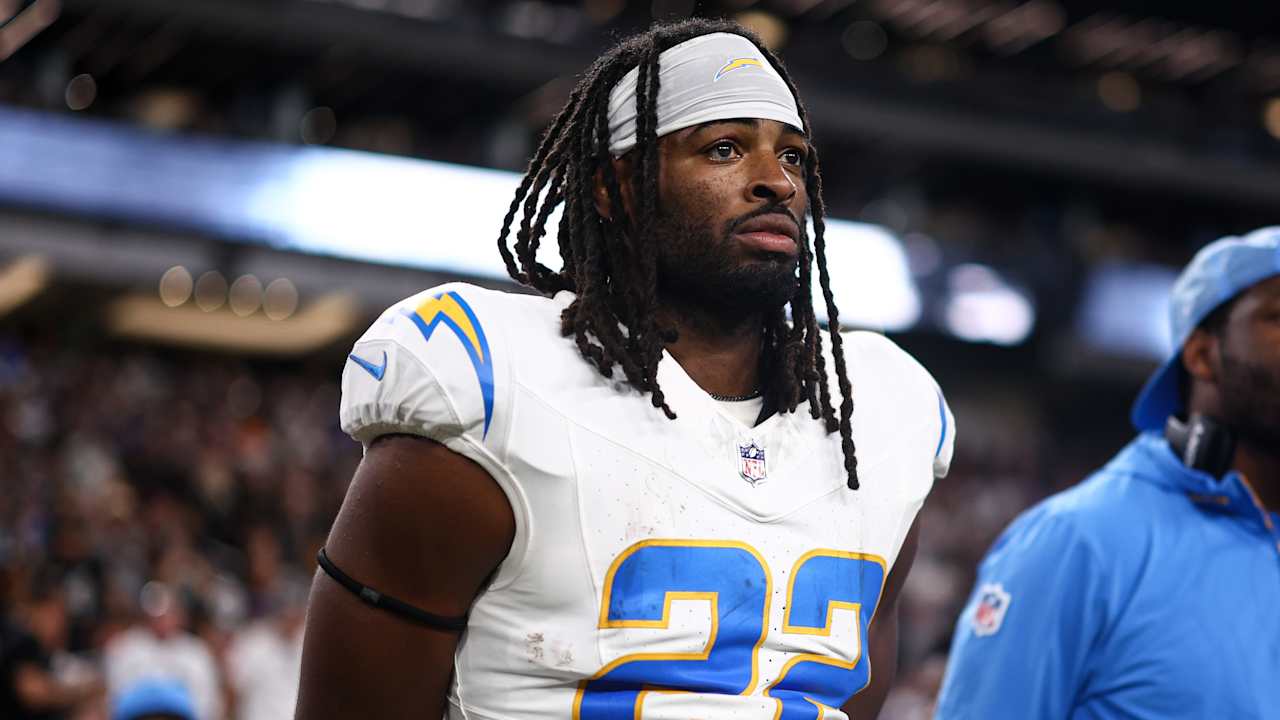
Harris’ injury ends his first year with the Chargers after just three games played and a long road traveled to recover enough from an eye injury from July fireworks accident to be able to return to football. He’ll spend the majority of the next year working his way back to the game and free agency.
What does this mean for Chargers’ offense?
Harris’ arrival was intended to give the Chargers a rugged back to pair with rookie Omarion Hampton, a partnership that showed promise in the last two weeks before their time together was cut short. With Harris out for the rest of 2025, that leaves Los Angeles with only Hampton and Michigan product Hassan Haskins on the active roster.
Kimani Vidal is on the Chargers’ practice squad and is a likely candidate for promotion once Harris is placed on injured reserve. Vidal received 43 carries for 155 yards as a rookie last season and saw plenty of action in the preseason as Harbaugh’s staff attempted to determine who would make their final 53-man roster.
Fortunately for the Chargers, they’ve shown they’re not nearly as dependent on the running game as they were a year ago, opting to pass on 61.5 percent of their plays through three weeks, per Next Gen Stats. Justin Herbert‘s early season success is undoubtedly tied to their tendency to throw, which has helped them sprint to a 3-0 start.