



Walter Nolen’s introductory news conference after picked by Cardinals
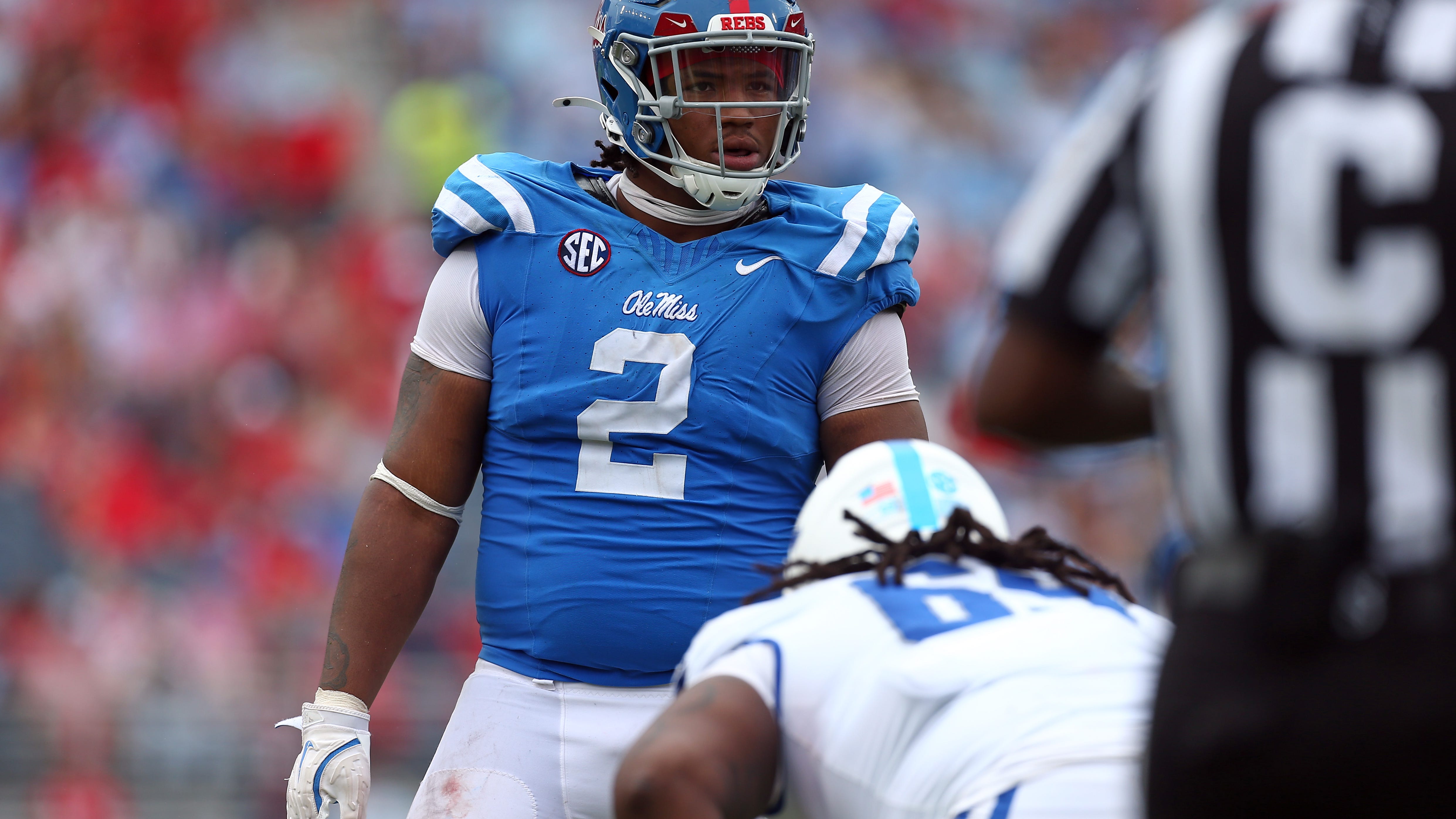
Introductory news conference for Ole Miss defensive lineman Walter Nolen after being selected by the Arizona Cardinals No. 16 overall in the NFL draft.
The most important portion of the NFL offseason is complete.
In March, the Cardinals bolstered their roster with $178 million worth of free agent contracts. This week, they added to those moves with seven draft picks — one selection in each round.
There are still potential additions to be made. A few notable veterans remain unsigned. But those two windows reflected the most significant opportunity for the Cardinals to overhaul the roster. They did exactly that, adding as many as six potential new starters on defense.
So, how did they perform in the draft? The book won’t be written for years, but here is an immediate grade for each pick, as well as their overall haul.
First round, No. 16: Walter Nolen, DT, Ole Miss
Grade: A-
Draft picks can’t be judged immediately. That’s especially true of Nolen, a hyper-talented prospect who faced pre-draft concerns surrounding his passion for football.
The Cardinals, at least publicly, dismissed those questions.
“Turn on the tape,” head coach Jonathan Gannon said. “… This guy plays really hard. That was all I really needed to see.”
If Nolen can prove the organization right, he has enormous potential. Despite some inconsistencies on his tape, he finished last season with 6.5 sacks and was Pro Football Focus’ second-highest graded interior run defender. That fits with the Cardinals’ offseason focus on finding players who can cause havoc at the line of scrimmage.
As for the off-field concerns, Nolen finds himself in an ideal locker room, with veterans Calais Campbell and Dalvin Tomlinson able to serve as mentors. There’s undoubtedly an element of risk, but Nolen can become a franchise-defining force on the interior.
Second round, No. 47: Will Johnson, CB, Michigan
Grade: A+
The Cardinals’ willingness to embrace risk paid off again in the second round. Based on talent alone, Johnson was the steal of the draft.
He was widely seen as a top-10 talent in this class, with the statistical production to prove it. In his college career, he had more pick-sixes than touchdowns allowed. He instantly becomes the Cardinals’ most talented cornerback, filling a need atop that depth chart.
“He can read routes, he can jump routes, and then he can catch the ball, make plays with it,” assistant general manager Dave Sears said. “… That’s a guy that can go toe to toe, play man coverage against big-time players.”
Johnson’s fall occurred because of concerns over the long-term health of his knee. It was a slide reminiscent of 2016, when linebackers Myles Jack and Jaylon Smith both lasted into the second round due to injury doubts. Neither player had a lengthy career, but both were legitimate stars while on their rookie contracts. In the second round, that would be a successful outcome for the Cardinals with Johnson.
Third round, No. 78: Jordan Burch, Edge, Oregon
Grade: B+
The Cardinals took Burch over enticing options at more glaring needs, like wide receiver and guard. That, in itself, carries risk.
But most draft observers saw Burch as a potential second-round pick, highlighting the value in Arizona’s selection. He possesses rare athletic traits for his size, having run a 4.67-second 40-yard dash at 279 pounds.
Analyzing the Arizona Cardinals’ 2025 1st round pick, Walter Nolen
The Republic’s Theo Mackie and Greg Moore discuss the Arizona Cardinals’ 2025 first-round draft pick, Walter Nolen.
There are risks to his profile. He didn’t emerge as a difference maker until his fifth season, and he never generated pressure consistently enough. But he made good on his athleticism this past season, finishing with 8.5 sacks in 10 games.
He’s a player with the ceiling to emerge from a crowded room as the Cardinals’ second-best edge rusher, behind Josh Sweat. That potential makes it easy to understand why the Cardinals passed on bigger needs.
“The next time I hear somebody say we’ve got too many edge rushers will be the first time,” general manager Monti Ossenfort said. “That’s a good problem to have.”
Fourth round, No. 78: Cody Simon, LB, Ohio State
Grade: B
There’s a lot to like about Simon’s profile. He’s a high-intelligence player who called Ohio State’s defense. He excels as a run stopper and is a weapon when blitzing. On 87 pass rush snaps last year, he had seven sacks and 20 pressures.
It’s also a positional fit. The Cardinals’ starting middle linebacker is Akeem Davis-Gaither, a five-year veteran with 11 career starts. Simon could push Davis-Gaither for his job, or at least force a platoon situation.
The question instead is the opposite of the Cardinals’ other picks: Was this selection a good value talent-wise? Most analysts saw Simon as a late fourth or early fifth-rounder because of concerns about his coverage ability — arguably the most important trait for a modern linebacker.
Fifth round, No. 174: Denzel Burke, CB, Ohio State
Grade: C+
This was the strangest of the Cardinals’ seven selections.
They have at least five cornerbacks higher on the depth chart than Burke. Typically, ignoring need to that extent means a team is getting a significant value. But Burke lacks standout traits. He has average speed at a position where speed is crucial, and he was never a star at Ohio State.
That doesn’t mean the value was bad — most analysts had Burke pegged slightly above 174 overall — but he’ll have to outpace projections to become anything more than a little-used reserve at a deep position.
Sixth round, No. 211: Hayden Conner, G, Texas
Grade: A
Expectations should be muted for any sixth-round pick, but Conner checks a lot of boxes.
Positionally, he fills a major need for depth on the interior of the offensive line. He’s mostly played guard but can slide over to center when necessary.
He also makes sense with the Cardinals’ scheme. He’s a strong pass protector and a massive physical presence at 6-foot-6, 322 pounds. The concerns center around his mobility — which caused issues in the running game at Texas — but that’s mitigated by the Cardinals scheme. They use zone running plays at the lowest rate in the NFL, meaning linemen don’t need to be as mobile in their offense.
“He’s a big, strong guy,” Ossenfort said. “He can get movement. … I think he’s a good fit for what we try to do.”
Conner was generally viewed as a likely sixth-round pick but in the Cardinals’ scheme, it’s easy to envision him outpacing those projections and earning an important role.
Seventh round, No. 225: Kitan Crawford, S, Nevada
Grade: A-
It’s hard to put a grade on a seventh-round pick. This selection is a success if Crawford makes the roster, and we won’t know that until August.
But he has many of the attributes that enable late-round picks to carve out a role. He’s extremely athletic, he’s versatile, and he’s a standout on special teams. Ossenfort said three rival special teams coaches texted him after the selection, frustrated that Crawford was off the board.
“Kitan really stood out to us for his ability on fourth down,” Ossenfort said. “His ability to cover kicks and be a disruptive presence.”
Overall draft grade: A
In the first two rounds, the Cardinals found value at premium positions, both of which were needs for their roster. That alone makes their draft a success.
Their final five picks were less remarkable but still featured a handful of intriguing values. They didn’t fill every hole — guard and wide receiver both remain concerns — but aggressively chasing needs can be a recipe for failure.
And despite those minor concerns, it’s hard to argue that the Cardinals have not constructed a playoff-caliber roster. That is the goal in 2025, and these past three days should help make it a reality.