
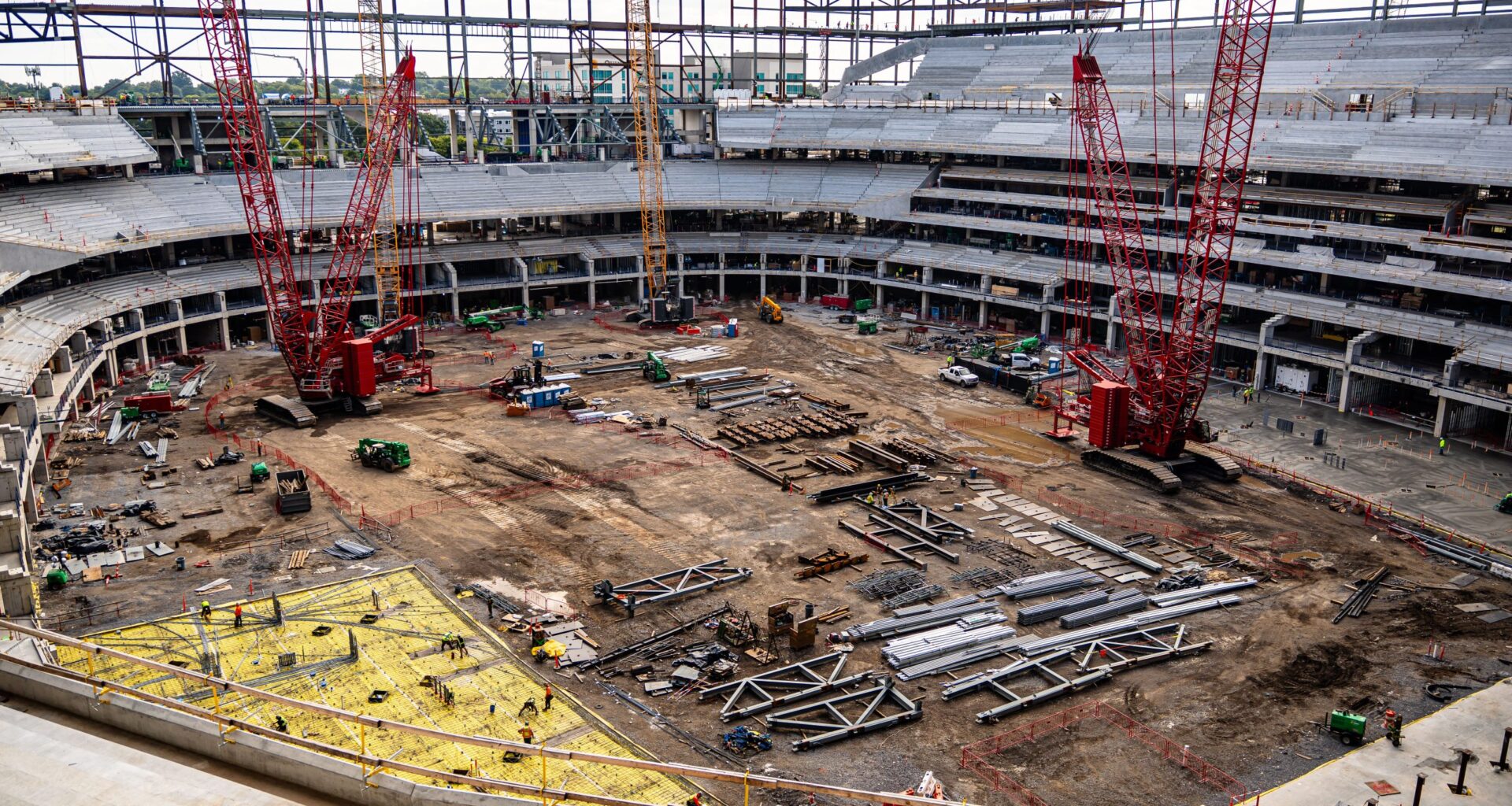
It is halftime in the construction of the new Nissan Stadium. Not that anyone is taking a break, though.
Work on the enclosed venue that will become the Tennessee Titans’ next home field began 18 months ago and remains on pace for completion in February 2027, 18 months from now.
“You know, bells and whistles aren’t in yet — the flooring and the millwork and the furniture — but I think you just can feel everything in this stadium, you know, coming alive,” Titans CEO Burke Nihill said Tuesday. “And it’s not renderings anymore. It’s real.”
There is no official finish date, but Nihill said the target “has not shifted between a two or three-day window the entire time.” At this point, roughly 1,400 workers are on site daily, and some notable progress milestones are fast approaching.
The project is expected to top out in November, at which time installation of the Ethylene Tetrafluoroethylene (ETFE) roof will commence. To date, roughly half of the structural steel to support the roof has been positioned, primarily on the west side. Then a series of cables will be attached on which the roof will rest..
The building will be “waterproof” — i.e. the roof installation will be completed — and some of the more detailed aspects of construction can commence next September or October.
“It’s like a duck swimming above the water [while] just furiously underneath managing the schedule and getting materials here and lining up,” Nihill said.
Slideshow
According to Mike Gallagher, a project executive with the Tennessee Builders Alliance, masonry work (e.g. walls and elevator shafts) is effectively finished, and precast concrete items are nearly two-thirds of the way to completion. Installation of the glass curtain wall units that, in conjunction with the translucent roof, will allow a lot of sunlight to brighten the venue began this month, and close to 200 are already in place.
The original cost of the project was $2.1 billion, which included $760 million from Metro and another $500 million from the state. The Titans are responsible for the rest, including all cost overruns, which are now a virtual certainty due to President Donald Trump’s trade policies and tariffs.
Capacity will be approximately 60,000, which includes 130 suites (124 of them already have been sold), an all-inclusive club, and an array of other seating options that overall, according to Nihill, will allow fans to be 38 percent closer to the field, on average. There will be 44 escalators (11 times more than the current Nissan Stadium), double the number of bathrooms, expanded concourse space and 77,000 square feet of LED video boards within the seating area.
To date, roughly 70 percent of the ticketing inventory has been sold, and all remaining permanent seat licenses (PSLs) are available to the general public.
“When you actually walk to the edge and kind of breathe in the air, you feel something very different,” Nihill said. “You can see the size and scale of the LEDs that are about to be installed. You can get a sense for the concourses and the space that is just totally differentiated from the current stadium and — really — most other stadiums. … “It’s been really gratifying to see this come online and be able to walk the spaces and feel that.”
Related