
Editor’s note: This story is part of Peak, The Athletic’s desk covering leadership, personal development and performance through the lens of sports. Follow Peak here.
Every day, Dan Lanning and Kenny Dillingham would head into one or the other’s office and play “board wars.”
Dillingham would go to the whiteboard at the front of the room, grab a dry-erase pen and draw an offensive play on the whiteboard. Lanning would counter with his defensive call, and the two would go back and forth. An unbalanced offensive line? A defensive line shift. Then a check into a speed sweep to the opposite side. Then a change to the linebackers. It was a battle to see who had the pen last, with a design that couldn’t be countered. Every day was a competition, two first-time position coaches looking for an edge.
They were both in their 20s when they arrived at Memphis in 2016 to work under head coach Mike Norvell, who was himself hired at just 34 to run a program for the first time.
That Tigers staff would turn out to be one of the best collections of coaching talent in recent college football history, producing four more future head coaches.
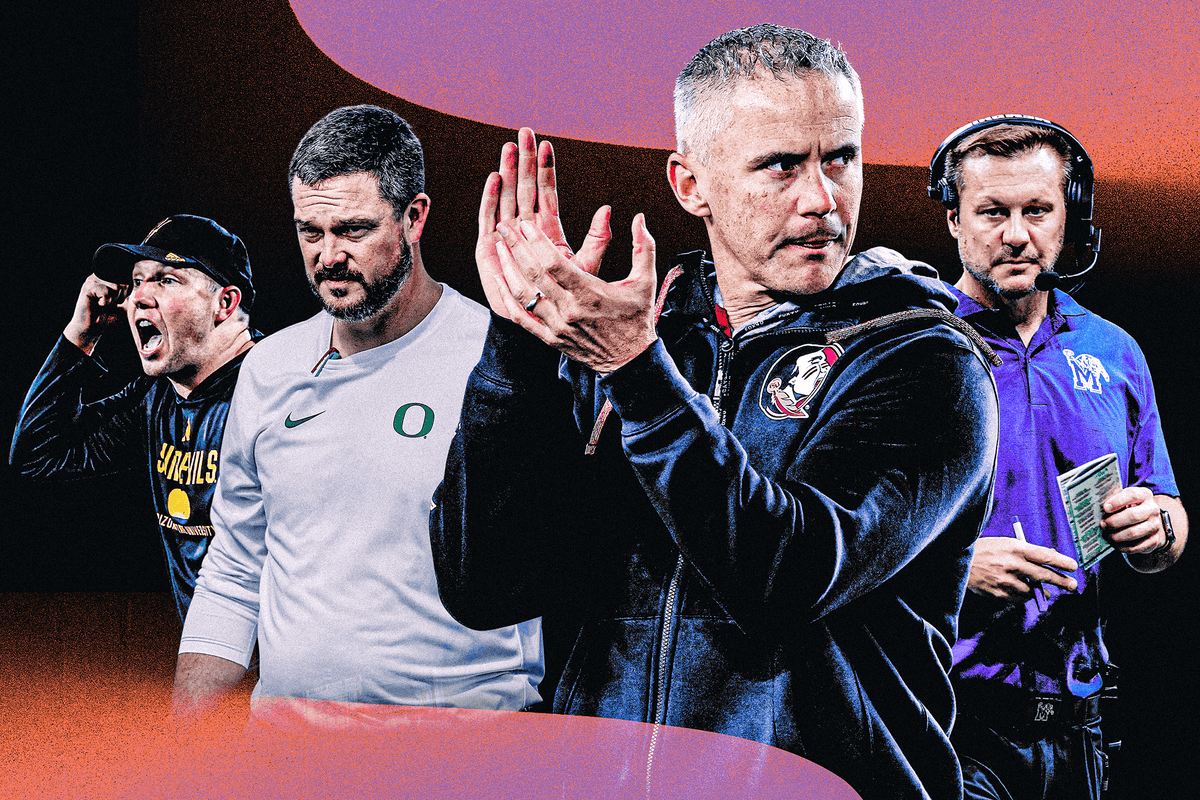
Norvell is now at Florida State, which had a 13-0 regular season in 2023. Ryan Silverfield, who was promoted to replace him at Memphis, has posted consecutive 10-win seasons. Lanning is the head coach at Oregon, which finished the 2024 regular season at No. 1. Dillingham heads Arizona State, which made the College Football Playoff in 2024. Chris Ball spent five seasons as the head coach at Northern Arizona.
“We were all learning together,” Lanning said. “Mike was learning what it was like to be a head coach. I was learning how to be a position coach. There was just a level of grit at Memphis that hardened your edge. We had moments where we were unbelievably successful, and then we also had moments where we got our ass kicked. We learned big lessons together.”
Entering Week 1 of the 2025 season, 58 of the Football Bowl Subdivision’s 136 head coaches (more than 40 percent) had been on the job for less than two full seasons. Turnover is as high as ever. Success is hard to sustain. That group of young coaches pushing each other at Memphis found a winning formula and spread it to several places, branching out an impressive coaching tree.
How does a coaching tree happen? What does it take to become a head coach? These coaches who reached the top of their field say it stemmed from the work environment under Norvell, one that brought the most out of a like-minded group of hungry coaches and prepared them for the top job.
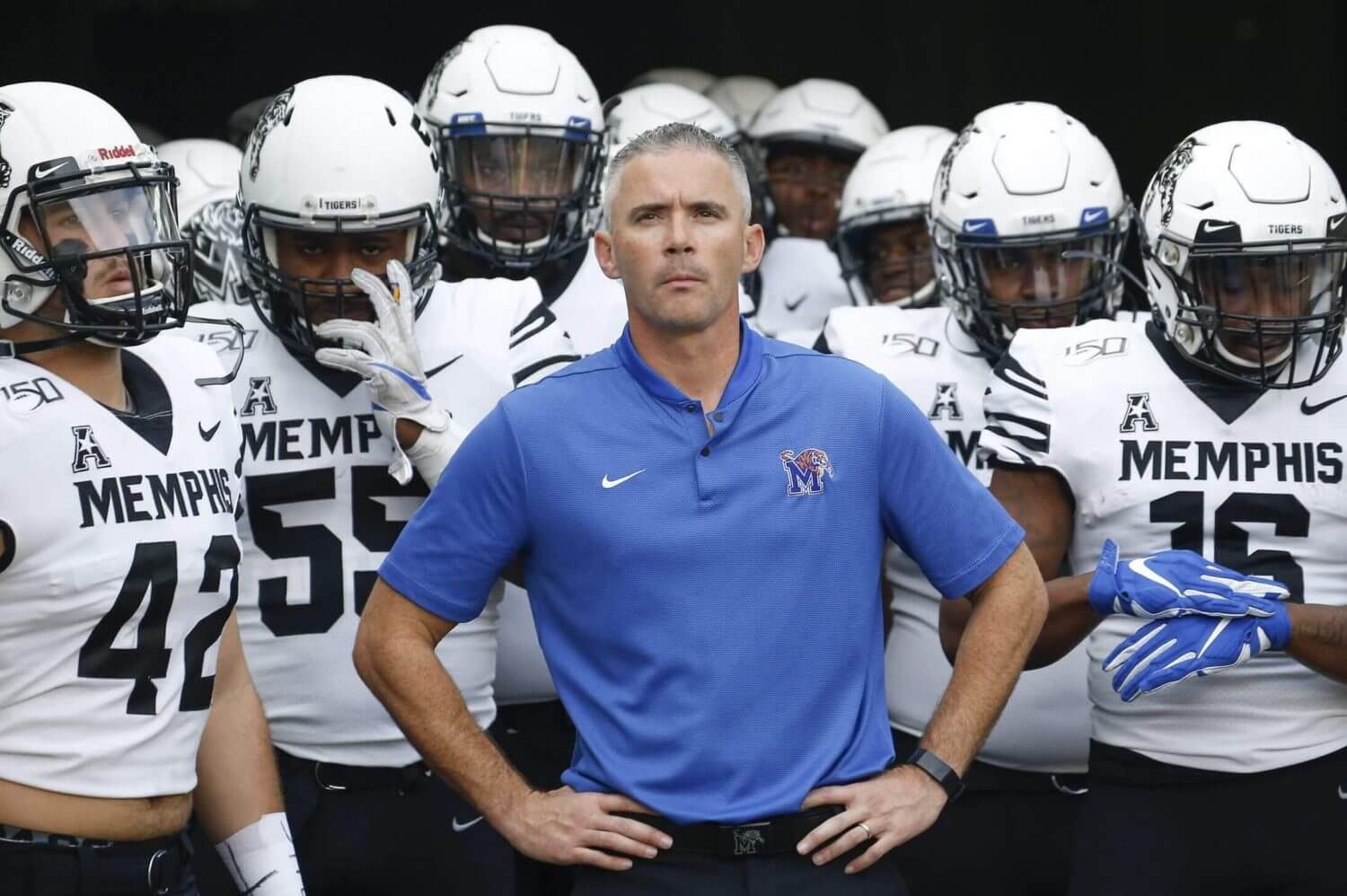
Norvell went 38-16 in four years at Memphis, including an American Conference title in 2019. (Reinhold Matay / USA Today Sports via Imagn Images)
Nearly every coach starts at the bottom rung of a program’s organizational ladder, working for little to nothing. Norvell saw characteristics in the right go-getters early on.
Lanning excelled at relationships. As a high school coach, he drove from Kansas to Pittsburgh and convinced Pitt head coach Todd Graham to hire him as an intern. He connected with players and helped land high school recruits, an unusual feat for such a low-level job. Norvell, as the co-offensive coordinator on that Pitt staff, saw the literal and metaphorical drive with Lanning.
“He poured everything he had into a task, but he was constantly seeking knowledge,” Norvell said. “He was relentless in building relationships with players and coaches.”
Dillingham was willing to do whatever it took to get a foot in the door while staying true to his convictions. He was a high school coach in Arizona when Graham, Norvell and Lanning moved to Arizona State. Dillingham kept showing up around the office to sit in on meetings and learn. Graham eventually hired him as an off-field assistant under Norvell, who found a valuable sounding board.
“I think he knew I would tell him the truth, even when I was a 22-year-old coffee boy,” Dillingham said of Norvell. “If he asked my opinion, I was going to give my opinion. I wasn’t just going to say, ‘Yes, sir.’ I would say, ‘I don’t like that,’ or ‘I like this.’ He appreciated the fact I don’t have much fake.”
Silverfield was a more experienced hand who had spent time in the NFL and could handle several duties when he joined the ASU staff as an off-field assistant.
So when Norvell landed the Memphis head coaching job in 2016 at 34 years old, becoming one of the youngest head coaches in the country, he knew exactly whom he was going to bring.
Silverfield became the Memphis offensive line coach. Dillingham started as a graduate assistant at Memphis and became quarterbacks coach. Lanning, who was an Alabama graduate assistant by this point, became the Memphis inside linebackers coach.
“Mike really created our first big breaks,” Lanning said. “We hadn’t been position coaches or coordinators before.”
Norvell trusted these new deputies could handle more duties, because they’d shown it when they were at the bottom of the org chart. They did more than what was asked of them.
“As you’re working with somebody, you get a sense of their leadership and responsibility,” Norvell said. “What kind of impact are they making around others? Are they people that are looking for more?
“Every coach says they want more, but you don’t always see that in the work. They had great work ethic, wanted to grow, wanted to lead.”
The Memphis staff had an ideal mix of guys who wanted to impress and veterans who had been through this. Offensive coordinator Darrell Dickey and defensive coordinator Chris Ball were veterans now working for a head coach two decades younger than them, but they saw someone who understood what was required to be in the big chair.
“Being in a leadership position in anything, the most exhausting thing that you have to do is hold people accountable to the standard every day,” said Ball, who’d also come from ASU. “The No. 1 thing Mike did, he held everybody accountable to the standard. He also listens. If you’ve got an idea, he’s willing to listen. If he didn’t like it, he’d tell you. If he liked it, he’d tell you. But he kept the standard, the standard.”
The relentless competition within the group, like those board wars between Lanning and Dillingham, brought the best out of everyone. Dillingham learned defensive ball from Lanning and offensive line play from Silverfield. They learned how to be better recruiters from Lanning. Silverfield brought an NFL approach to development. Dickey had previous head-coaching experiences to share.
“You were in this constant mode of, you have to have your crap together,” Dillingham said. “You better just not walk in and throw something on the board that’s a bad idea or not thought about, because you have really smart people that you’re surrounded with that are going to call you out. You get your one shot, and you better take advantage.”
Open discussion was always encouraged, but if someone didn’t agree with a final decision, there would be no hard feelings. Respect the chain of command.
“The best thing I remember about that staff, there weren’t any egos,” Ball said. “Once we made a decision, everybody was 100 percent in.”
That collaborative working environment taught the young guys what it would take to be a head coach themselves. Lanning has always written goals on his bathroom mirror. In 2012, his second year in college football coaching, he wrote: Become a head coach by age 35.
“When you see people doing a great job, take unbelievable notes,” Lanning said. “I loved how Mike handled that and (Georgia coach Kirby Smart) handled that. Journal your thoughts about process as much as you can. Save everything you can from an organizational standpoint, then ask, how will you adapt?”
Memphis won 26 games with two division championships in Norvell’s first two years, developing overlooked recruits into NFL Draft picks, and bigger opportunities arrived for those coaches. Georgia hired Lanning to coach linebackers. Auburn hired Dillingham as offensive coordinator. Northern Arizona hired Ball as head coach.
Silverfield had similar opportunities, but he stuck with Norvell because he saw a different path to his goal to become a head coach. He’d bounced around jobs early in his career. Here, he had found stability, a rarity in football. The Tigers were winning, and Norvell would soon get a bigger job himself. Rather than jump at just any job that paid more, Silverfield would stick with Norvell as his No. 2, until he got a head coaching job or a good NFL job.
So he went to offseason rotary club and fundraising dinners, or he volunteered to go in Norvell’s place. He talked with donors. He got an up-close look at the off-field responsibilities of being the head coach, then spent a week as the interim head coach after Norvell went to Florida State. When the time came for Silverfield to interview for the Memphis head job, he was ready.
“I did zero preparation for my interview because I was acting like the head coach,” he said. “I knew how this thing runs and has success. There’s nothing better preparing for the interview than sitting in the job.”
It was a lesson Norvell instilled in his staff.
“I always challenge assistants, are you coming to work every day as if you’re the head coach?” Norvell said. “When I was a GA, I prepared like I was a position coach. When I was a position coach, I prepared like I was a coordinator, then head coach. Having that mindset is something I challenge guys. Understand beyond your group and the broader scope of what it takes.”
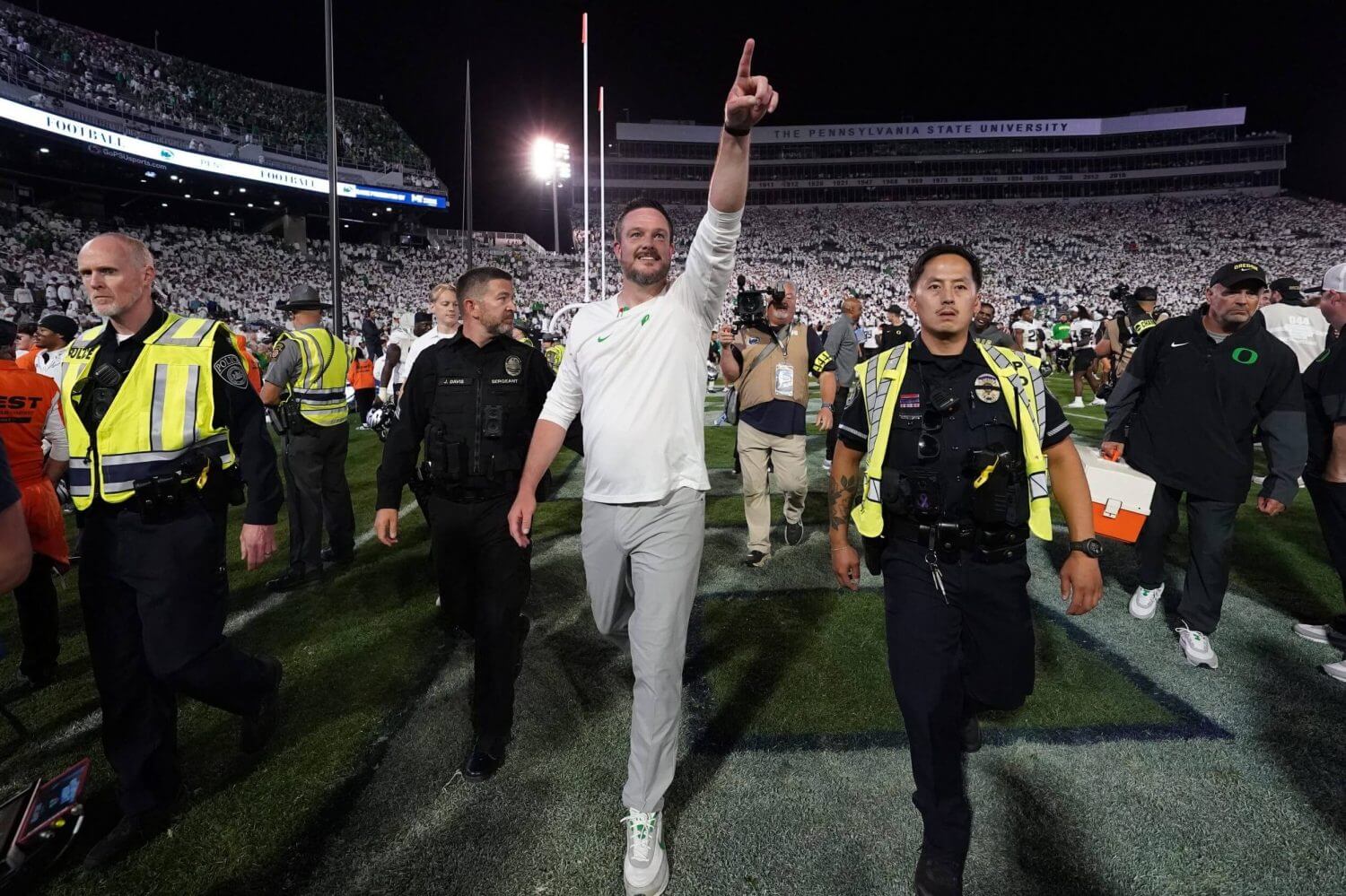
Lanning has Oregon in the thick of the CFP hunt again after knocking off Penn State. (James Lang / Imagn Images)
In late 2021 a Group of 5 school searching for a new head coach passed on hiring Lanning, who had risen to Georgia defensive coordinator in four years under Smart. A few days later, Oregon made the 35-year-old the youngest head coach in the Power 5, fulfilling that bathroom mirror goal. Lanning hired Dillingham away from Norvell to become his first offensive coordinator, and one year later, Arizona State made Dillingham the new youngest head coach in the Power 5, at 32.
They’ve all been successful. Norvell, Lanning and Dillingham have won conference championships as head coaches. Silverfield won 21 games across 2023 and 2024 — including a win over Norvell’s FSU in 2024 — and has become another candidate for Power 4 jobs. Six weeks into the 2025 season, all four coaches’ teams were in the AP Top 25.
“They were relationship guys, and that’s as critical now as it’s ever been, and harder,” Dickey said. “A lot of older coaches had a military style where he’s the boss. Today’s kid needs nurturing, needs some help with all the things they’re dealing with off the field. You’ve got to have a solid relationship.”
Norvell assistants turned head coaches
Coach2016 Memphis roleSchool
Mike Norvell
Head coach
Dan Lanning
Inside LBs/recruiting coordinator
Kenny Dillingham
GA (Quarterbacks)
Ryan Silverfield
Offensive line
Chris Ball
Defensive coordinator
The job of a college head coach has changed dramatically. From paying players to transfers to social media, nothing can fully prepare a first-time coach for all that he must be on top of, but habits honed as an assistant still translate to the bigger job. As these coaches look back on their own paths, they now look for the same characteristics Norvell saw in them.
“Are they constantly bringing problems to the head coach, or are they solving their own problems?” Silverfield said. “Are they great with people? Can they communicate well? If they’re the first one out of the building every night, they’re probably not going to last as a head coach. You can’t just be a guy who can do a PowerPoint of X’s and O’s. No. So much more is asked, and you can see those attributes in those guys.”
Three years in, Lanning’s Oregon staff is full of coaches that are drawing interest from schools for other jobs. He finds himself in the same position Norvell did, perhaps creating his own coaching branch soon.
The Memphis group stays in touch over text. Some visit one another’s programs in the offseason. They’re still always looking to find an edge, still trying to win the next battle on the whiteboard.