
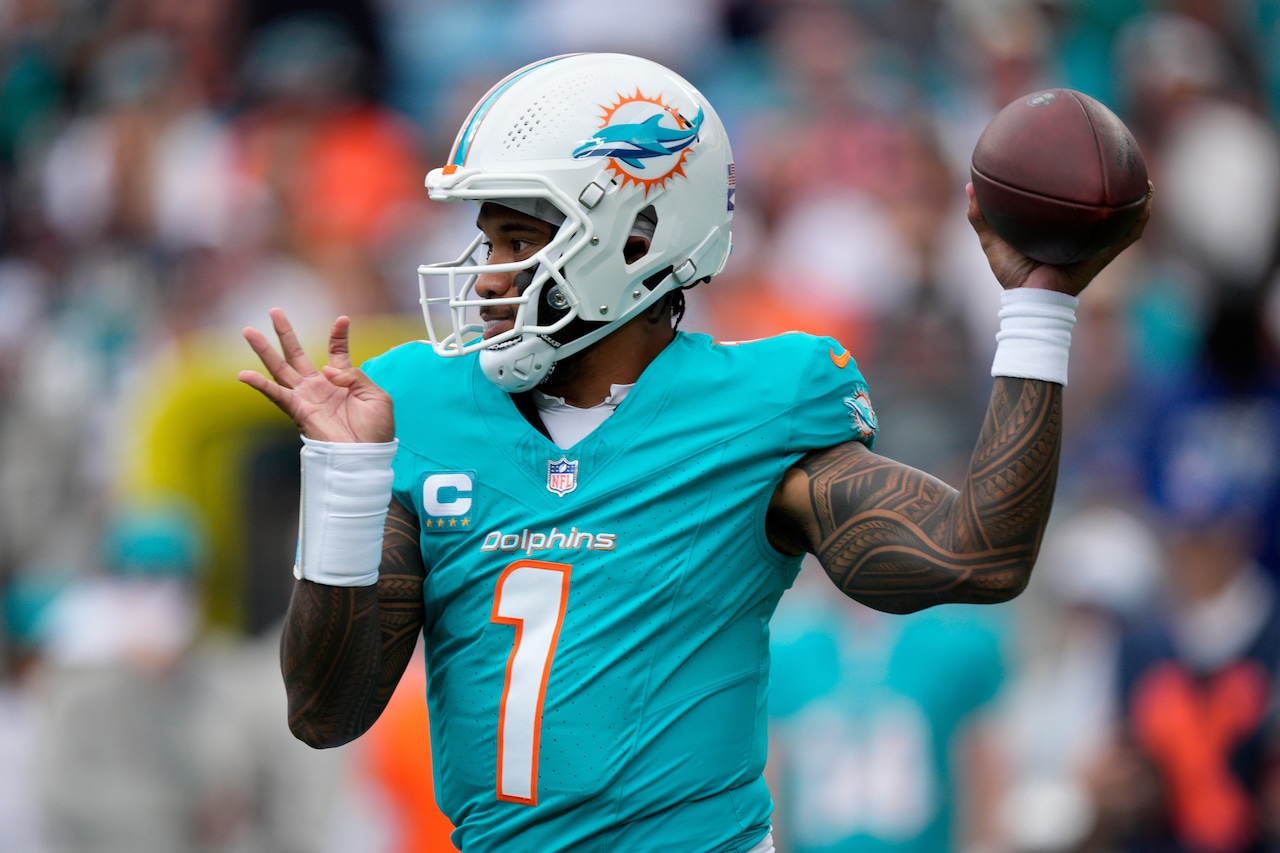
CLEVELAND, Ohio — Miami Dolphins quarterback Tua Tagovailoa provided a fascinating insider’s perspective on one of football’s most mysterious elements: the chemistry between quarterbacks and receivers.
Far from the simplified narratives fans often hear, Tagovailoa revealed the complex, nuanced process that determines where the football goes on any given play.
The Physical Connection
When asked about developing chemistry with a new receiver, Tagovailoa explained how physical attributes can dramatically impact the relationship-building process.
“It’s been cool, just because of his story, right?” Tagovailoa said. “I think for a guy of his caliber, in a way for me, makes it a little easier, when it comes to the size that he has.”
This insight reveals something fans rarely consider—how a receiver’s physical presence can accelerate chemistry development.
A tall tight end with a wider catch radius might be easier for a quarterback to locate and trust, especially in tight coverage situations.
Trust: The Foundation of Chemistry
Beyond physical traits, Tagovailoa emphasized that trust forms the bedrock of effective quarterback-receiver relationships.
“I know this guy’s here, but I know he’s going to be there. So, I got to trust that when I throw this ball, he’s going to be there,” Tagovailoa said. “And then that’s where you kind of fine-tune things with timing with certain guys.”
This statement illuminates the leap of faith quarterbacks make on every throw. The ball is often released before the receiver makes their break, requiring complete trust that both players understand the timing and positioning required.
This trust isn’t built overnight—it’s forged through repetitions, communication, and shared experiences on the field.
Beyond the “Hot Hand” Myth
Perhaps most revealing was Tagovailoa’s explanation of why a receiver who starts hot might not see continued targets throughout a game. The answer challenges the simplistic “feed the hot hand” philosophy many fans espouse.
“I wouldn’t say we weren’t trying to get him the ball,” Tagovailoa said. “It’s just within the progression of how we’re calling plays and how we’re reading it. Sometimes we don’t progress all the way through, or sometimes we like a certain matchup that we called for a play and we want to work that, instead oft rying to go through the progression.”
This explanation reveals the structured nature of NFL offenses.
Quarterbacks typically work through pre-defined progressions rather than simply looking for specific receivers.
Defensive adjustments, favorable matchups, and specific play designs often dictate where the ball goes—regardless of who had success earlier in the game.
The Bigger Picture
The media session with Tagovailoa offers fans a more sophisticated understanding of passing game dynamics.
Rather than viewing targets as simple preferences or “hot hand” decisions, we see that quarterback-receiver chemistry is a complex equation involving physical attributes, trust, timing, defensive adjustments, and structured progressions.
For those seeking to understand why their favorite receiver might disappear from the game plan despite early success, Tagovailoa’s insights provide valuable context about the realities of NFL offensive structures.
Football Insider newsletter free trial: Take a minute and sign up for a free trial of our Football Insider newsletter, featuring exclusive content from cleveland.com’s Browns reporters.
If you purchase a product or register for an account through a link on our site, we may receive compensation. By using this site, you consent to our User Agreement and agree that your clicks, interactions, and personal information may be collected, recorded, and/or stored by us and social media and other third-party partners in accordance with our Privacy Policy.