
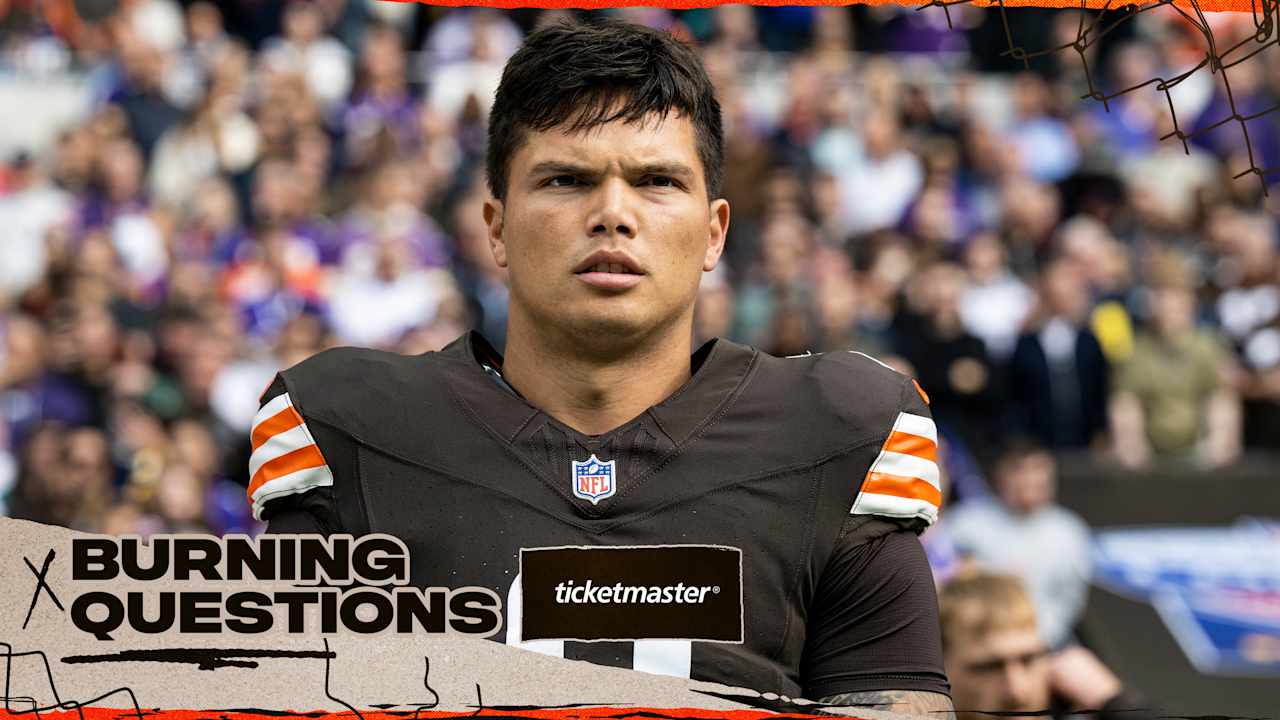
How does QB Dillon Gabriel handle the pressure of the Steelers’ defense?
QB Dillon Gabriel will face his first divisional opponent on the road when the Browns face the Steelers in Week 6.
Through the first four games of the season, the Steelers have given up 382.5 total yards per game, the fifth most in the league. They also give up the third-most passing yards per game at 260.5 yards. However, the Steelers only give up an average of 80 rushing yards per game, the second-best in the league, and they have 10 takeaways this season – including five interceptions and five fumbles.
Offensive coordinator Tommy Rees said the challenges of Pittsburgh’s defense starts with their defensive front.
“They have an excellent front across the board, usually got five covers,” Rees said. “It’s a lot of one-on-one matchups. Linebackers are aggressive, retooled secondary that has a lot of talent. So, certainly you might know where they line up, but that doesn’t mean it’s an easy task. They have really good players, and do a nice job of playing hard, physical and creating pressure on the quarterback. They do a nice job with batted balls and creating, again, the ability to push the pocket inside with who they’ve got.”
Rees said the Steelers are successful in creating takeaways because of their ability to affect the quarterback through how they can bat balls down, push the pocket and flush a quarterback into making a poor decision.
“They do a great job of affecting the quarterback, making the quarterback feel unsettled,” Rees said. “We got to – our whole group – protect the quarterback, and part of that’s playing on time, part of it is doing a good job with the edge players and the pushing side.”
As Gabriel makes his second start of the season, protecting the football and making smart reads will be points of emphasis. In his first NFL start in Week 5, Gabriel completed 19 of 33 passing attempts for 190 yards and two touchdowns and did not throw an interception.
“For Dillon, I think operationally we look to the biggest areas to improve,” Rees said. “I mean, after one start, there’s going to be things that he’s more comfortable doing, there’s going to be rhythm there that he can get on the same page with the offensive line and the rest of the skill players, and you just look to build the continuity with the rest of the group. I think every time he steps out there with those guys, you’ll see that continue to improve, whether it’s communication or physical, just connecting on things. I think that continuity will continue to improve.”