
Dan Johnson takes you through his preview, prediction, and pick for NFL Week 6’s game between the Miami Dolphins and the Los Angeles Chargers.
Hard Rock Stadium turns into a pressure cooker Sunday, and the 2020 draft debate walks back in with real stakes. The board hangs +4.5 on Miami and 43.5 on the total, daring a stand. Los Angeles arrives trying to halt a skid and clean up operation, while Miami plays for oxygen with its season tilting. Quentin Johnston is out, trimming L.A.’s vertical bite and nudging this toward timing, spacing, and leverage. Expect sharp opening scripts, fast counters, and fourth-quarter possessions that feel like verdicts. This will hinge on sequencing, field position, and which offense keeps its shape when the noise peaks. Below is my prediction for NFL Week 6’s game between the Miami Dolphins and the Los Angeles Chargers.
Here’s how I’ll play it. I’ll be pumping out these predictions for individual games all season, with plenty of coverage here on DraftKings Network. Follow my handle @dansby_edits for more betting plays.
Quarterback Tua Tagovailoa releases in 2.6 seconds and ranks 5% in quick-throw rate, so Miami can stress space before Los Angeles can heat the pocket. Miami averages 5.5 yards per play and detonates through the air on 26.2% of dropbacks, with a 13.4% explosive run rate that keeps second-level defenders flat-footed. The Chargers leak efficiency exactly where that style bites. Opponents succeed on 64.3% of passes, with Los Angeles sitting fourth-worst in EPA allowed versus the pass, third-worst on third down, second-worst on fourth down, and fourth-worst in the red zone. Miami’s throw-first profile meets a defense allowing 6.4 yards per play, and that gulf hums like a live wire. Add the context that Miami’s defense allows only 5.0 yards per play, while Los Angeles’ offense must grind at 5.2, and the efficiency ledger tilts further. Miami’s passing skew already sits 62.58% by rate, and Tua’s average throw velocity clocks at 19.2 mph, which pairs cleanly with timing-based stress.
Justin Herbert brings counterpunch credibility, and he deserves it. He sits top-five in TD rate and Total QBR, and he owns the 9th-best success rate after pressure. Defenses have reached a 42.6% pressure rate against him over the last three weeks, yet he has stayed functional inside the storm. Miami can smudge those sightlines. The defense carries a 31% pressure rate, 11th by rank, and shrinks deep-ball success to 33%, a combination that shortens windows and squeezes sidelines. Johnston’s absence narrows Los Angeles’ vertical menu and allows Miami to shade toward Keenan Allen and Ladd McConkey without constantly fearing the over-the-top gash. If this turns into down-to-down execution, remember Los Angeles’ offense throws at a 63.53% rate, second-highest, while its opponents have leaned run at 51.32%, a hint that Miami’s pressure can arrive with fewer bodies and still keep Herbert in timing binds.
Volume trends favor the home side’s script control. Miami runs 63.6 plays per game and concedes 59.0, which preserves speed for the middle eight. Los Angeles operates at 53.2 plays, with opponents logging 60.8, a quiet tax that swells when money downs fail. Opponents pass on Miami 56.95% of the time but only 48.68% on Los Angeles, which dovetails with Miami’s plan to keep the ball in Tagovailoa’s hands and let the quick game breathe. The scoreboard context reinforces it: Los Angeles allows 19.6 points per game, 6th-best, but Miami still carries 21.4 points per game on offense and converts at elite clips on the high-leverage snaps, ranking 2% on both third-down and red-zone offense in the matchup table you provided. Every catch becomes a metronome. Every compressed split becomes a lever.
Chargers vs. Dolphins pick, best bet
Skeptics will point to the Chargers’ headline scoring defense at 19.6 points allowed per game, and that rank of 6 commands respect. The stickier truth hides underneath. The air-defense structure invites sustained success, and those third- and fourth-down rankings create extra possessions. Miami pairs 21.4 points per game with 46.7% on third down and 76.9% in the red zone, a blend that flips chains and finishes drives. The yardage optics that flatter Los Angeles—172.2 passing yards allowed per game (4th) and 0.3 points per play on defense—can’t mask money-down bleed. Miami counters with 0.4 points per play on offense (eighth) and 70.7% completion from Tua Tagovailoa, which marries neatly to timing routes that punish cushion. The Dolphins’ defense allows just 5.0 yards per play and holds deep attempts to 33% success, then stiffens inside the paint with a 57.1% red-zone allowance (ninth). That matters the instant Justin Herbert needs explosives to match sequence.
Los Angeles still owns the quarterback with the stronger arm and a pass rate of 63.53% (2nd), but that aggression meets an opponent built to win the snap-to-throw race. Penalties have shredded tempo for Los Angeles, with 24 flags and 192 yards over the last two weeks. Those hidden yards push a 5.2 yards-per-play offense into longer fields and ask a red-zone unit already wobbling at 38.5% (31st) to be flawless. Herbert’s surface efficiency—65.7% completion and 235.4 pass yards per game—runs into friction when protection wobbles; the Chargers have already yielded 17 sacks. Miami’s pass defense sits midtable by yardage at 212.4 per game, but the structure erases the easy verticals and forces Los Angeles to stack precision snaps. Miami doesn’t need fireworks to score; it needs the clock, the slot, and two steps of separation.
The spread sits at +4.5, and the total steadies at 43.5. Miami games have gone over in four of five games, while their average combined score lands at 46.3. Los Angeles games have stayed under in four of five games, yet their average combined score sits at 46.1—close enough that Miami’s third-down and red-zone edge can break trend gravity. Market math assigns the Chargers a 68.6% win probability at −209, but that price underrates Miami’s situational edges and the home snap-count cushion.
The Dolphins hold the superior yards-per-play profile, the cleaner situational edges, and the tempo levers that punish Los Angeles’ air leaks. Herbert will land counters, but Miami’s spacing and success-rate engine can own the middle of the game, then squeeze late when fourth downs appear.
Final score projection: Dolphins 23, Chargers 20. The total sits near the hinge, but the moneyline is the sharper conviction because Miami’s strengths meet Los Angeles’ weakest seams. Lock it: Fins moneyline.
Best bet: Dolphins (+180) vs. Chargers
Tail it with me in the DKN Betting Group here!
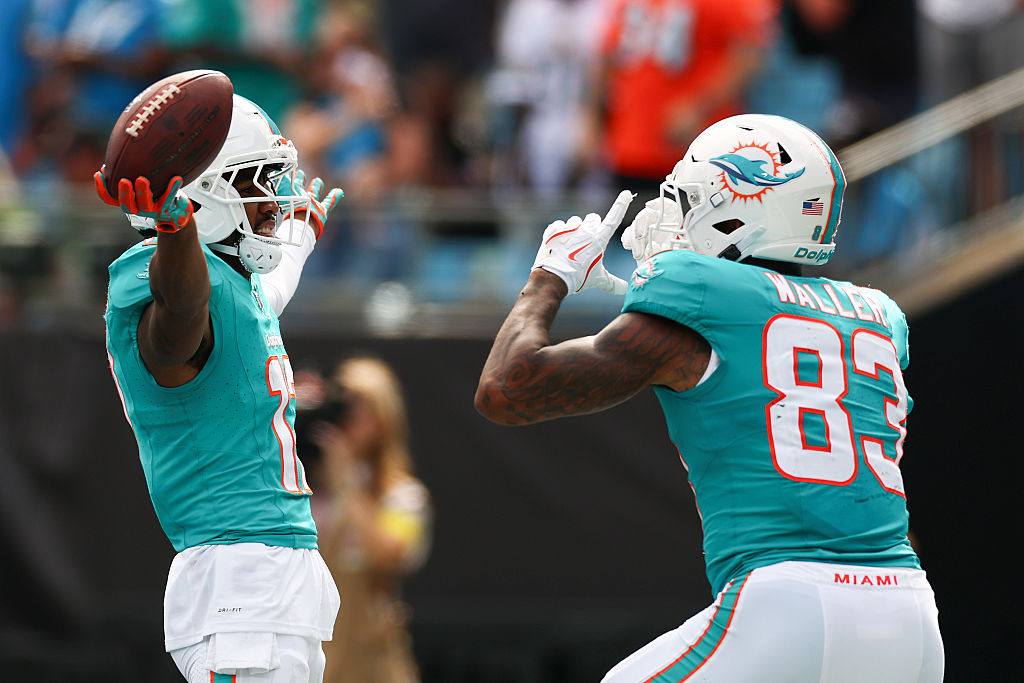
For a prop lean, Jaylen Waddle anytime touchdown. Miami throws on 62.58% of snaps (fourth) and closes drives at a ruthless 76.9% in the red zone. Tua Tagovailoa completes 70.7% with a 2.6-second release, which feeds Waddle’s quick-strike routes and motion seams. The matchup tilts his way: Los Angeles allows success on 64.3% of opponent passes and 6.4 yards per play, a profile begging for timing-based daggers. Waddle owns 23 catches for 295 yards and three touchdowns, with all three scores across the last four games. Miami’s explosive-pass rate at 26.2% supplies the ignition; Waddle supplies the finish.
Best prop lean: Jaylen Waddle to score a touchdown (+145)
Tail it with me in the DKN Betting Group here!