
“We’re dealing with a lot of (bleep).”
– Crash Davis, “Bull Durham”
The good tidings for the NBA’s 2025-26 season lasted about a fifth of a Scaramucci.
Less than 48 hours after the Oklahoma City Thunder and Houston Rockets played an epic double-overtime season opener, and Luka Dončić almost triple-doubled the Golden State Warriors in a loss, and Giannis Antetokounmpo destroyed the Washington Wizards, and Victor Wembanyama … Wembied, the excellent on-court product was disappeared by arrests, and charges levied, against one of the league’s current 30 head coaches, one of its current players and one of its former players, who also was an assistant coach.
All were implicated, according to the federal government, in a massive gambling scheme alleging rigged poker games and helping gamblers place winning bets with inside information on who was and was not going to play in games.
And money — always, always, money — is at the center.
Money lost in the poker games, where Portland Trail Blazers head coach Chauncey Billups and former Cleveland Cavaliers assistant coach Damon Jones were allegedly the “face cards” — the celebrities — whose presence compelled other players to take part in the games, which were allegedly rigged in all kinds of ways. Money proffered from wagers on games in which bettors could clean up on “prop bets” on players they were told would either not play or would take themselves out of games — info allegedly provided by Miami Heat guard Terry Rozier and Jones and an as-yet-unnamed, unindicted “co-conspirator 8,” whose profile is suspiciously similar to Billups’ CV.
Of course, we need to — need to — remember that these are just allegations, not proof. Billups, Rozier and Jones are all presumed innocent until proven guilty, and no amount of breathless news conferences by people in FBI jackets changes that fact. At first glance, for example, it would seem odd that Billups, who had teamed with the late billionaire and former NBA player Junior Bridgeman to buy dozens of fast-food franchises around the country, would need the money. Due process is still supposed to be provided to people in this country charged with crimes. Billups and Rozier asserted their innocence in statements issued Thursday. And each of them deserves their day in court.
But there is so much wrong here, it’s hard to find a toehold on which the league can pull itself out of this morass.
And, at its center, the morass presents a pulsating, seemingly intractable problem: How does the NBA deal, once and for all, with its tanking teams?
The federal indictments released Thursday involved betting on seven NBA games that occurred during the 2022-23 and 2023-24 seasons. Five of the seven games involved teams that were either already eliminated from playoff contention or were well on their way to being so. The other two involved Lakers games in which Jones, who was not an employee of the team but who was around the team much of the season, mostly because of his friendship with LeBron James, allegedly provided information about players who would be held out of games before the information went public.
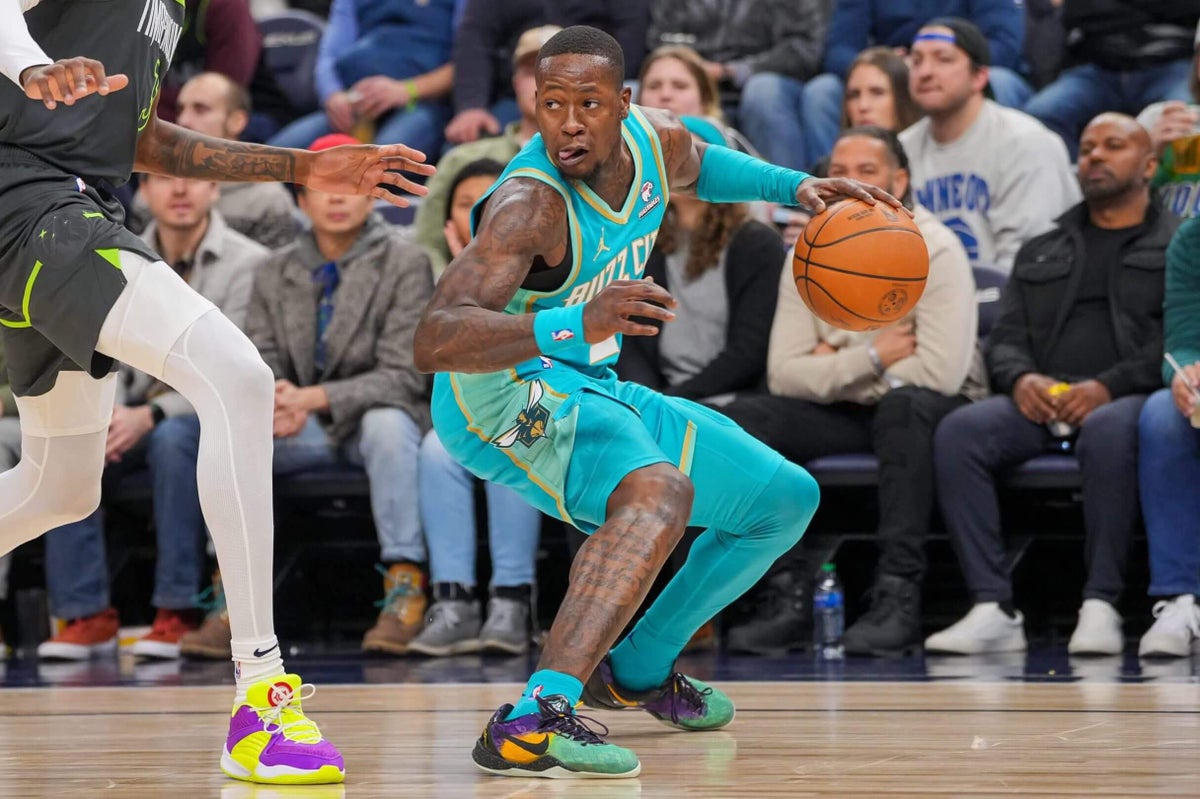
Rozier was with the Charlotte Hornets at the time of his alleged contact with gamblers before a game on March 23, 2023; the Hornets were 23-50 at the time. Former Toronto Raptors forward Jontay Porter, who was banned by the NBA in 2024 after the league determined he’d bet on games, is also part of this federal indictment for his role in two games in January and March 2024; Toronto was 16-28 and 23-45, respectively, before those games were played.
On April 6, 2023, the Magic played the Cavaliers. Orlando only had three games left in the season, and at 34-45, had been eliminated from the playoffs. Allegedly, one of the Magic’s players (this player is not accused of any crime) told someone identified as “Co-Conspirator 1” that the Magic would be resting all their starters against Cleveland, information not known to the public or Las Vegas. Bets were made that the Magic wouldn’t cover; they lost by 24.
And the feds allege that, the day after the March 23, 2023, game involving Rozier and the Hornets, “Co-Conspirator 8” told some of the same gamblers implicated in the Rozier bets that the Blazers, who were 32-40 at the time and eliminated from the playoffs, were tanking the rest of the way and wouldn’t play their best player that night. After the player was listed as “probable” and “questionable” on Portland’s injury report earlier in the day, he was suddenly listed as out a half hour before tip-off, along with Portland’s three other top leading scorers.
And Co-Conspirator 8, “an individual whose identity is known to the Grand Jury,” is listed as “a resident (sic) Oregon. Co-Conspirator 8 was an NBA player from approximately 1997 through 2014, and an NBA coach since at least 2021,” the government’s indictment read. Billups played for seven teams from 1997 through 2014 and became the Trail Blazers head coach in 2021.
Billups and Jones were also allegedly involved in poker nights where “wireless cheating technology” was used to run rigged games in the Hamptons, Las Vegas, Miami and Manhattan. The unwitting players would be offered a night playing cards with ex-NBA players like Billups and Jones — kind of like when Lawrence Taylor and Bernie Brillstein headlined Feech La Manna’s game in “The Sopranos.”
“What the victims — the fish — didn’t know, was that everybody else at the poker, from the dealer to the players, including the face cards, were in on the scam,” said Joseph Nocella Jr., the U.S. Attorney for the Eastern District of New York, in a news conference Thursday morning. (Nocella was all business, although he referred to the Raptors as the “Toronto Rangers” at one point.)
But bad players get got playing cards every night. (Didn’t any of y’all see “Rounders”?) At any rate, the NBA can’t police every card game in which one of its players or coaches participates. It can, and must, police its basketball games better.
The problem is that when so many of the NBA’s bad teams see no other way to get difference-making talent than by tanking to get better NBA Draft Lottery odds, those teams are extremely vulnerable to gamblers. Because tanking teams have no incentive to win games, and everyone involved knows it. It doesn’t take much for information on who’s being held out of a game to help increase that team’s lottery chances to get into unsavory hands, who will use it for unsavory reasons.
Even though the league has done everything possible to mitigate the lottery odds and make it less advantageous for teams to lose as much as possible to get higher draft picks, there are still, this season, multiple teams that are, uh, developing their young players. We already know who they are. And if we know, gamblers know. And that gives them months of potential runway to contact and extract information from people on those teams.
You can argue that bad teams commit to “mid-builds,” as the Indiana Pacers did, that don’t involve tanking but steady, methodical roster building over several seasons. And, indeed, Indiana should be damn proud of the team that grinded its way to within one win of the title last season without a single top-five pick on its roster.
Only a grinch like me would point out the last time Indiana was in the finals before last June was … a quarter-century prior. Or, that Milwaukee, which tried it the hearty, up-by-your-bootstraps way for generations, went 50 years (!) between titles. Or that the Wizards, seemingly chasing the eighth playoff spot in the Eastern Conference since the Carter Administration before finally embracing a full, down-to-the-studs rebuild in 2023, haven’t had a single 50-win regular season since 1979.
Or that it is extremely difficult for the Utahs and Charlottes of the NBA to sign impact free agents — not that free agency is even a thing anymore, really.
The best and cleanest way for the league to get rid of tanking is to get rid of the draft. If you have no draft, there’s no need for tanking. If every draft-eligible player could sign wherever they wanted every year, every team would have to up its game — whether hiring a top-shelf coach or building five-star practice facilities — to have a better shot at the best incoming talent. And, before you start whining about how the Lakers or Heat or Celtics would sign everyone — no, they wouldn’t. Unless those teams suddenly have 30 roster spots available each year.
There are only 450 NBA jobs available. A few incoming stars would love to play with, say, Dončić and LeBron in L.A. But guess what? A lot of them wouldn’t. They’d want to be “the man” on a team built around them. Maybe that would be in Miami. But maybe it would be in Sacramento or Washington or Toronto.
The NBA isn’t going to walk away from its betting affiliations. There’s too much money involved now; the leagues and gambling are intertwined, like plants that have been repotted with one another. Like every sports league and many media entities, including The Athletic (which has a partnership with BetMGM), the NBA has leaned into gambling and gambling partners to help raise revenues. The NBA has further made it clear that it’s cool being near gambling by bringing its premier offseason event, the NBA Summer League, to Las Vegas.
The Wizards opened a Caesar’s Sportsbook inside Capital One Arena in 2021. The Cavaliers opened a Caesar’s Sportsbook at Rocket Arena in 2023 but converted it after a year into a “fan club lounge” with no wagering, saying their data found fans preferred using betting apps rather than betting in person. The Bulls built a FanDuel Sportsbook at United Center in 2023 but are still awaiting approval from the Illinois Gaming Board before fans will be able to place in-person bets there. The Knicks, Celtics and 76ers are among the teams that have partnerships with betting companies. FanDuel and DraftKings have been the league’s betting partners since 2021.
So, the NBA is not going to get religious on gambling. But it can take away the most obvious way for gamblers to infiltrate its locker rooms and player group chats: tanking, which flashes yearly in big, red, dangerous neon lights. It’s just a matter of time before the next bad team, with a player or coach or staffer who knows what’s up and figures it doesn’t matter anyway, drops a figurative dime that leads to the next flurry of prop bets based on inside information.
And it’s just a matter of time until that player or coach is someone very, very high in the NBA firmament, whose involvement will do more than merely dim the excitement of opening week.