
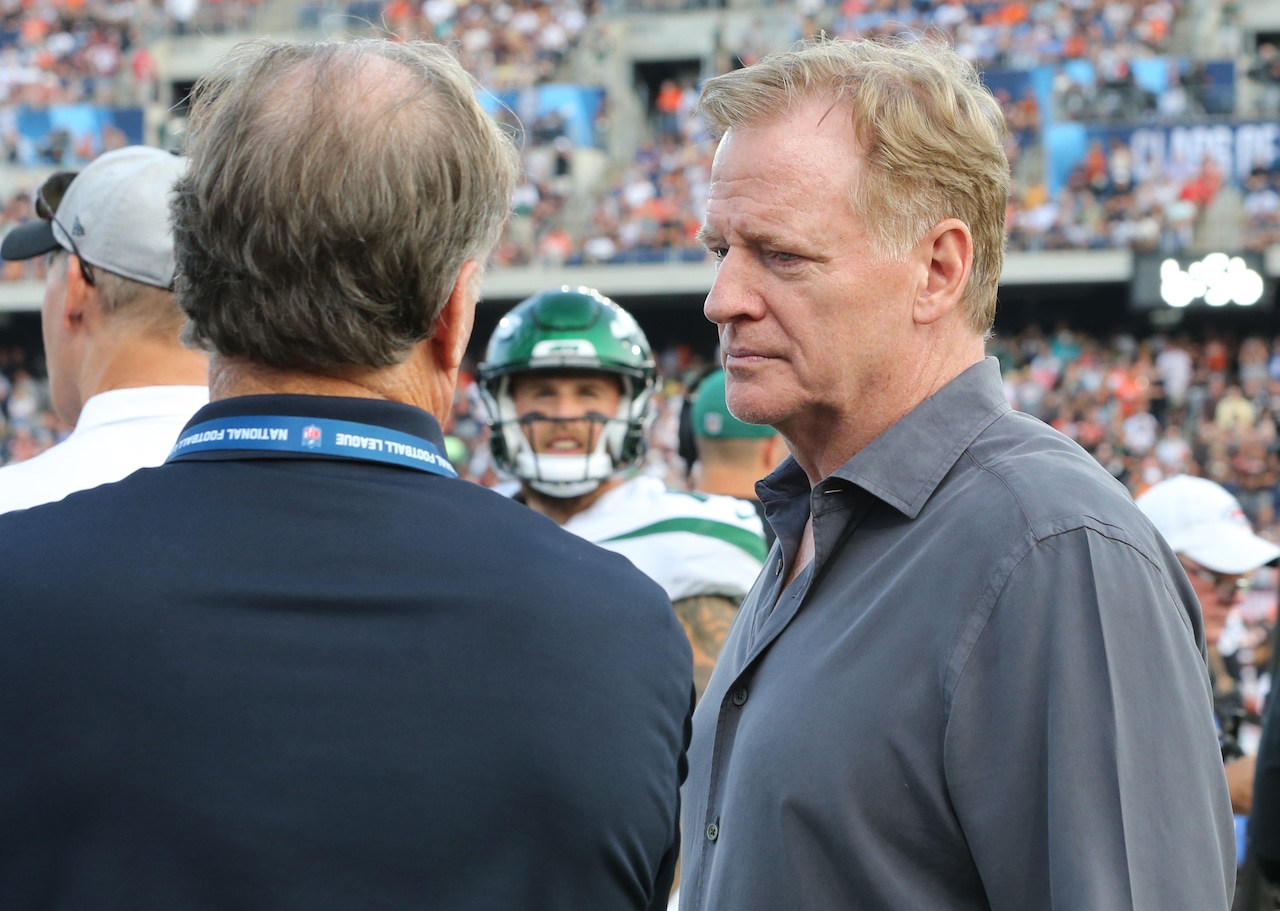
COLUMBUS, Ohio – NFL Commissioner Roger Goodell joined Browns owner Jimmy Haslam on Tuesday in meeting with Gov. Mike DeWine and other state leaders in the team’s lobbying effort to secure money for a new Browns stadium in Brook Park.
“All of the conversations have been incredibly positive. Tremendous leadership by the governor and leadership by (the General) Assembly,” Goodell told cleveland.com during a telephone interview between meetings in Columbus.
“We think this is a benefit not just to Brook Park. This is a benefit to the entire area, including downtown. People coming here for events will be staying downtown. They will be eating downtown.”
Goodell’s visit to Columbus comes as the Ohio Senate is mulling a new state budget that could include state contributions for stadiums for both the Browns and the Cincinnati Bengals.
If this money is to be included in the state budget, a decision must be made by June 30.
“There’s very strong leadership on the state level and a focus, determination to get this done, which I think is extraordinary opportunity for the state, for the community of Brook Park, and I think the NFL and the Browns,” Goodell said.
Where things stand
The House version of the budget approved in April included $600 million toward the $2.4 billion enclosed Brook Park stadium to be paid back by taxes generated at the site. This was the plan submitted by the Browns. The Browns’ plan also calls for $600 million in tax-backed borrowing by Cuyahoga County and a $1.2 billion team contribution.
Yet, there is uncertainty.
The Senate could make changes. And Gov. DeWine continues to push instead for the creation of a stadium fund fueled by his proposal to double the tax on sports gambling companies. It’s unclear how much DeWine’s sports betting tax proposal would mean for a Browns stadium.
And since the House approved its version of the budget in April, separate requests have been made to the Ohio Senate to earmark money to renovate stadiums in Cleveland and Cincinnati – $350 million for each.
The Cleveland proposal from Mayor Justin Bibb and county Executive Chris Ronayne asks the state to reject the idea for the Brook Park stadium, in part because of concerns vacating the existing lakefront stadium would hurt downtown Cleveland.
A spokesman for the Browns said Haslam and other officials joined Goodell for separate early-day meetings with Gov. DeWine and Ohio Speaker of the House Matt Huffman, with a later meeting scheduled with Senate President Rob McColley. Goodell also met with corporate leaders, the spokesman said, without releasing those names.
Super Bowl?
As to whether a new, enclosed stadium could mean a Super Bowl for the Cleveland area, Goodell said he was not prepared to answer.
“The stadium would clearly be Super Bowl material. The question really is the infrastructure,” the commissioner said, adding that work would need to be done to determine if the hotel capacity and other needs were sufficient.
The same question came up recently during the announcement of an agreement between the Washington Commanders and the mayor of Washington to build a new covered stadium there. The commissioner did not make a promise for a Super Bowl in Washington, though he said the prospects of one “dramatically” would increase with the new stadium.
In both Washington’s case (city council approval is still needed) and the Browns’ case, close to $1 billion in public money is being sought to help replace a stadium that is less than 30 years old. The Commanders moved into their Landover, Maryland, stadium in 1997.
As to why Cleveland would need to replace a 26-year-old stadium, Goodell mentioned both the difficulty in building the current stadium without an ownership group in place – the NFL during early stadium planning had not yet selected an owner for the expansion team that took the field in 1999 – and the changing stadium landscape nationally.
“I would tell you that it (the existing stadium) doesn’t match the standards or the qualities that current stadiums are matching. More importantly, I think our projects are changing from pure stadiums, but to really significant developments and mixed-use, type of developments beyond the stadium that can generate significant economic impact to the local communities.”
The Haslam Sports Group, in addition to proposing the $2.4 billion stadium, are promising about $1 billion in private investment for an adjacent, retail, hotel and housing complex built out over several years.
Goodell said that to make these developments happen, public/private partnerships are necessary.
Reports from the governor’s budget office and the non-partisan Legislative Service Commission have raised questions about the validity of some of the economic projections being made by the Browns.
Rich Exner covers regional development and transportation for cleveland.com. Read previous coverage of Browns stadium plans at this link.