
Editor’s note: This story is part of Peak, The Athletic’s desk covering leadership, personal development and performance through the lens of sports. Follow Peak here.
Jerheme Urban played nine years in the NFL, including with Jerry Rice on the Seattle Seahawks in 2004. Urban is now the head football coach at Trinity University in Texas.
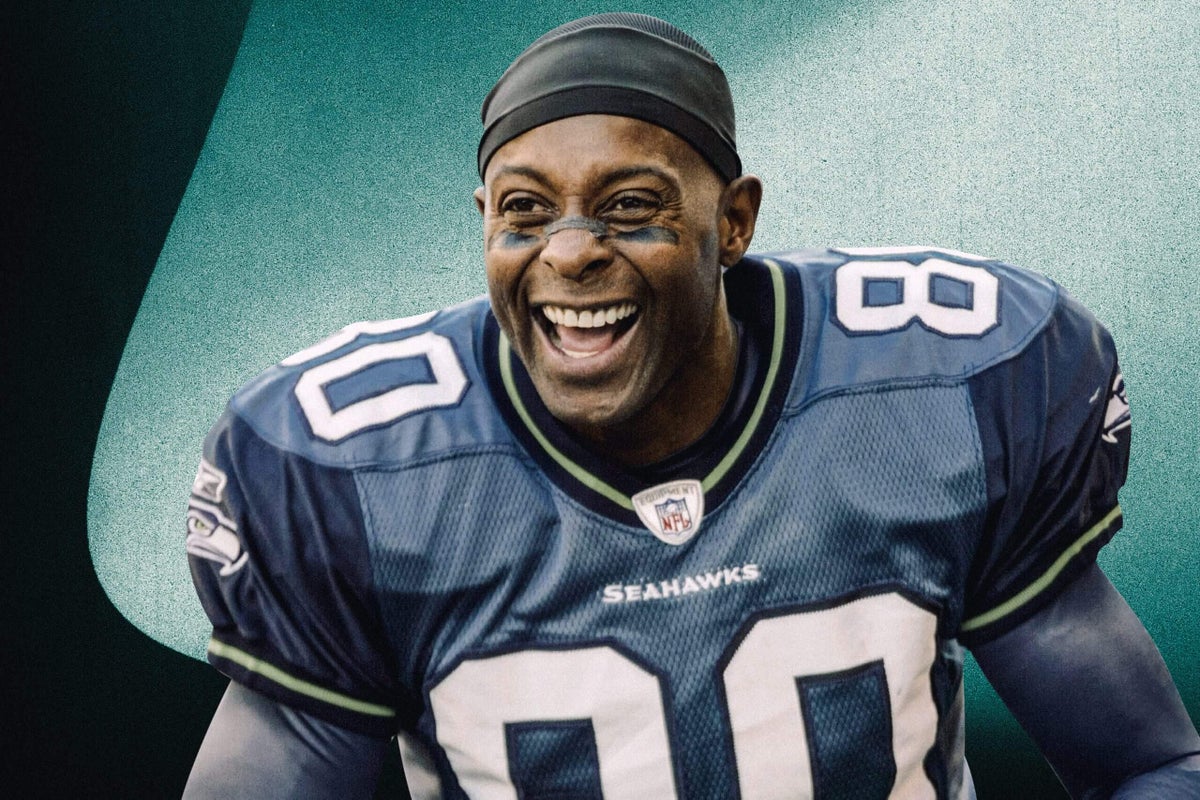
When Jerry Rice came to the Seattle Seahawks in 2004, he would literally lay his practice uniform on the ground every day before he got dressed. I’d never seen anyone do that before.
Then he’d stand there and look at it. Essentially, he’d say: I’ve got all my pieces. I’m going to go out and I’m going to look good, I’m going to feel good, and I’m going to have a great practice.
He caught a lot of flak, in a joking manner, from guys. But it was about the preparation — the reverence he had for it. His reverence for preparation was absolutely incredible, and it never changed.
It was a lesson that I carry with me to this day.
Jerry arrived in Seattle in the middle of the season. Some of the other receivers took it personally that the Seahawks brought in another receiver. It was my second year in the NFL, and I just thought: Man, this is Jerry Rice. The greatest receiver of all time. I’m going to try to learn everything I can from him.
I had a distinct memory of belly crawling out of my bedroom to watch him on Monday Night Football when I was a kid. I watched him catch a slant route against the Rams that he took for a touchdown. I got up hooping and hollering and blew my cover.
From the start, he sat in the front of the receiver meeting room and asked questions and took notes. I would sit up front with him, and he would ask me questions about the playbook. For me to stick in the NFL, I had to know every single position. I had to know all of the nuances. I had to be ready to fill in for anybody better than me if they got hurt. Some of the play names in our offense were different than Jerry was used to, so he asked me questions, trying to associate our concepts with names he remembered.
By that time, Jerry was 42. He had played tons and tons and tons of football. He had all the accolades, all the name recognition, but he was never above doing the little things to make him great.
No one else laid their uniform out before practice to see how their socks were going to align with their tights. But it worked for him, and he stayed true to it.
From there, he would get taped and go to the treadmill for 15 minutes before practice. Then he’d go out to the field and go through ladder drills. That, to me, was a true reverence for the preparation. I’m going to make sure I’m ready to practice, and if I have a great practice — from how I take notes, to how I get ready, to how I warm up — I’m going to be ready for the game. If I prepare in a great manner, I’ll be in the position to have a great game.
By the end of the season, even the players who maybe felt a little threatened at first when we brought Jerry in felt an appreciation for him because of his work ethic. Just about everyone on the team wanted his autograph. He said, “Hey guys, I’m willing to sign whatever you’ve got.” He just sat down and let the guys come over.
He never looked past those little preparations. For me, that was a great encouragement. That made me confident about the things that I needed to do that were unique to me, and if some guys questioned it, that was fine. If the consistency and preparation worked for Jerry Rice, it should work for me. That’s the mentality I took from him.
It’s something I use with our players here at Trinity. Anytime I have to put sunscreen on before a practice or game, I wear rubber gloves because I don’t want to get sunscreen on the football when I catch it. That was taught to me by a previous quarterback, but the point is, there was a reverence to the moment of getting ready to go compete and trying to have a great practice. When I would do that as a player, I would think: OK, I’m putting myself in the best position to be successful — even if it means something as silly as how I put my sunscreen on.
We use the analogy of a jigsaw puzzle here in our program. You can have a 500-piece puzzle, and everybody’s eyes are going to go to the two pieces that aren’t there. They matter. They’re uniquely cut for that specific spot. So whatever it is in your practice preparation, your game preparation, your role on the team, it all matters. And if it’s not in the right place, everybody is going to see it.
Jerry demonstrated that daily.
He validated to me what it meant to be a pro: Ask questions, take notes, physically and mentally prepare at practice, figure out what routine works for you, and believe in it. The reverence for preparation is something I’ve taken with me to this day.
— As told to Jayson Jenks